
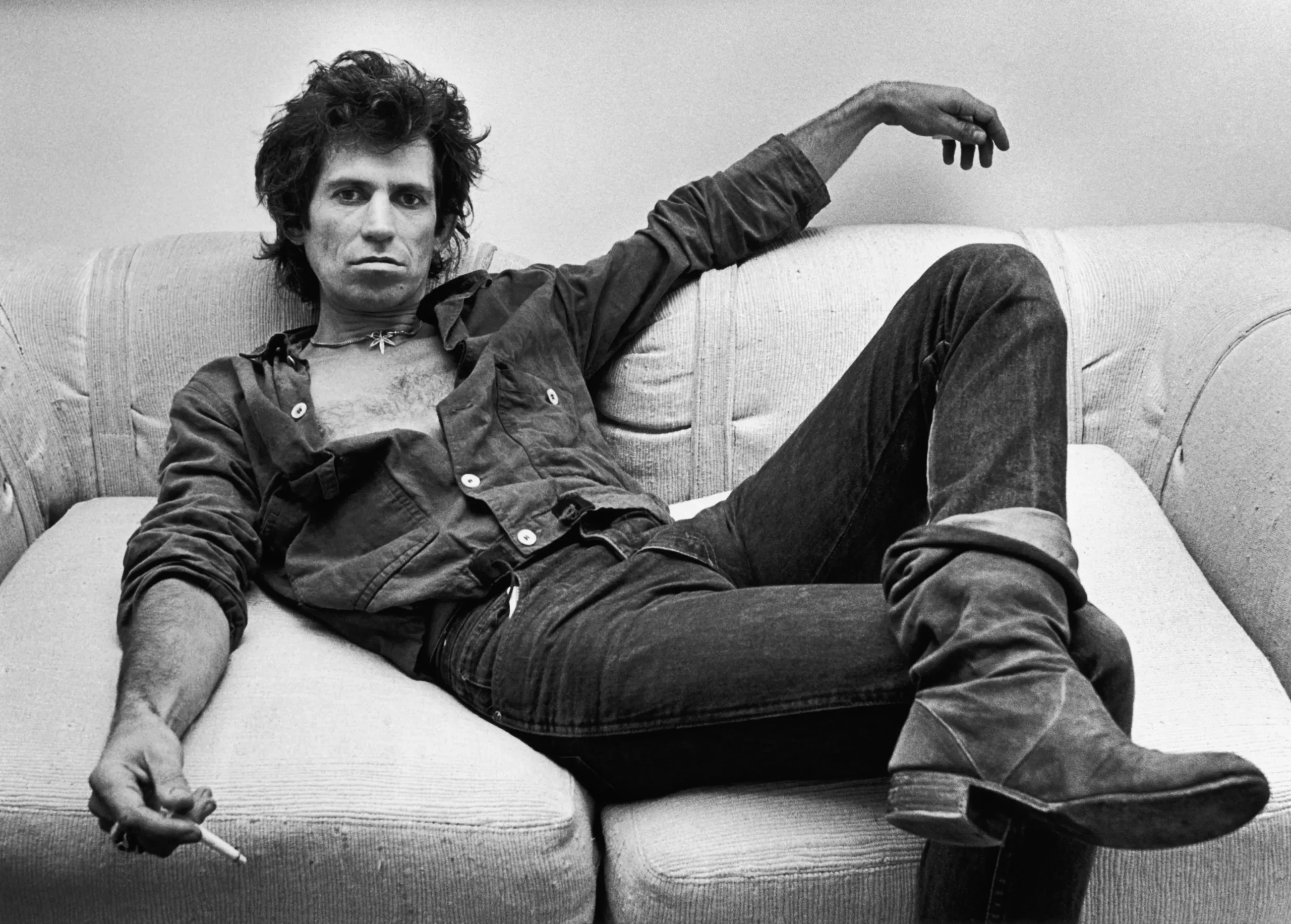
For decades, the legend of Keith Richards has existed somewhere between reality and myth. As the legendary guitarist of The Rolling Stones, he didn’t just become famous for riffs that defined rock history — he became infamous for surviving a lifestyle that, in popular storytelling, “should have been impossible.”
The stories are endless.
Detoxes, accidents, substances, near-death rumors — all attached to a man who somehow kept walking back onto stages year after year, still playing with the same loose, effortless swagger that shaped generations of rock music.
Over time, the public began to ask a strange question: how is he still here?
That question eventually turned into legend.
One of the most repeated claims in rock folklore is that even Richards’ own doctors were stunned by his resilience. In interviews over the years, Richards has often laughed off exaggerated versions of these stories, joking that his survival is less supernatural and more about genetics, stubbornness, and luck than people want to believe.
But the myth persisted — because people weren’t just fascinated by what he did, they were fascinated by what he endured.
Medical professionals who have been asked about Richards in a general sense often explain something much less dramatic, but more grounded: human resilience is highly individual. Long-term survival in extreme conditions depends on a complex mix of biology, recovery cycles, mental health, timing, and access to care. In other words, there is no single “extraordinary secret” — just a combination of unpredictable factors that sometimes produce surprising outcomes.
Still, that rational explanation has never quite replaced the myth.
Part of the legend comes from Richards’ own personality. He has always projected an image of almost unbreakable calm — someone who seems immune to panic, pressure, or even consequence. On stage, his playing style is deceptively relaxed, almost casual, yet structurally precise. That contrast between chaos and control fuels the perception that he is somehow different from ordinary limits.
There’s also the sheer longevity factor.
Many musicians from his era burned brightly and disappeared early. Richards, however, kept returning — touring, recording, and performing well into later life with the same band that defined his youth. Each return reinforced the idea that he was operating on a different level of endurance altogether.
But Richards himself has always pushed back against the mythologizing. In interviews, he often downplays the idea that there is anything “extraordinary” to explain. He frames his survival not as invincibility, but as continuation — the simple fact of still being able to do what he loves.
And yet, the legend remains stubborn.
Because people don’t just see a guitarist.
They see a figure who has lived through the full arc of rock and roll itself — from its wildest beginnings to its modern legacy — and is still standing on stage as if time negotiates with him differently.
Whether it’s science, luck, lifestyle, or sheer willpower, the fascination with Keith Richards is not really about medicine at all.
It’s about endurance.
And in the world of rock music, few stories feel more unbelievable — or more enduring — than that of Keith Richards and The Rolling Stones still refusing to fade away when so many others already have.