
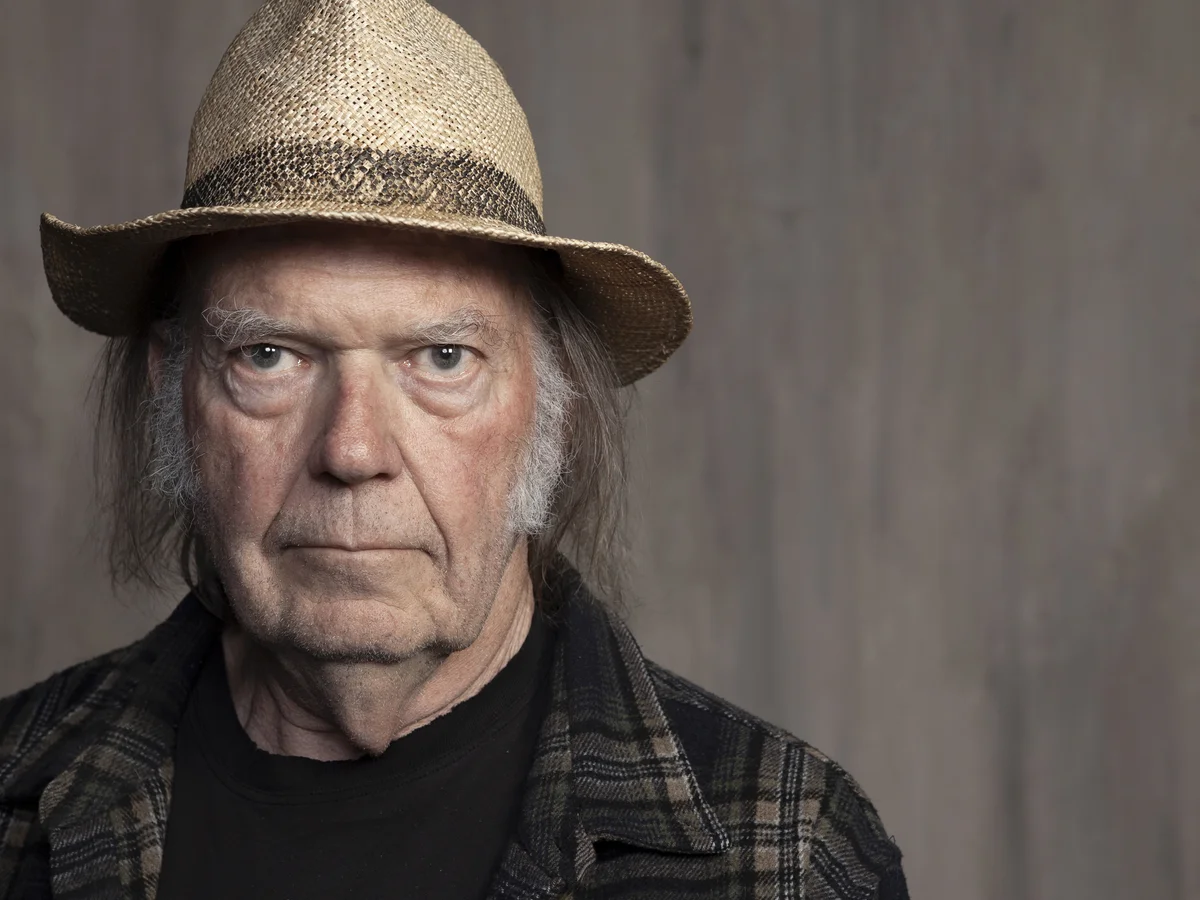
Songwriting was never meant to be a contest. The songs that last aren’t born from rivalry or one-upmanship, but from honesty—moments where an artist opens a door most people keep locked. Even when a bitter or defiant song becomes a hit, it rarely carries the same emotional weight as music that exposes something fragile and real. Neil Young understood this instinctively. Though his work has moved millions, he always knew he was continuing a conversation started long before he arrived.
Spin one of Young’s records and you can hear the echoes of those who shaped him. The influence of Bob Dylan is easy to spot, especially on albums like Harvest, where storytelling and simplicity take center stage. When Young plugged in and let his guitar snarl, there were flashes of Jimi Hendrix in the chaos—raw, unpolished, and emotionally charged, even if the technical precision wasn’t the point.
But imitation was never the destination. From the moment Young stepped away from Buffalo Springfield, he committed himself to following instinct over trends. Chart positions and rising stars didn’t interest him. What mattered was chasing whatever idea felt true in the moment, even if it led him somewhere uncomfortable or unfashionable.
Among his many influences, Gordon Lightfoot held a special place. There was something unmistakably human about Lightfoot’s writing—quiet, observant, and devastating in its clarity. Though he became widely known for epics like ‘The Wreck of the Edmund Fitzgerald,’ Lightfoot was, at heart, a poet. He took the groundwork laid by Dylan and refined it, often crafting songs that felt more intimate and emotionally precise than anything built for spectacle.
‘If You Could Read My Mind’ is a perfect example. With only a handful of chords and a gentle melody, Lightfoot sketches the aftermath of a long, unraveling love. Instead of recycling familiar declarations of devotion, he sings about emotional distance, about becoming a ghost in someone else’s life. The result is tender and crushing at the same time—a love song that hurts because it’s true.
Even with all the heartbreak Young poured into his own catalog, he never believed he surpassed Lightfoot. When news of Lightfoot’s passing broke, Young spoke with unmistakable reverence, calling him a singular voice and a songwriter without equal—someone whose melodies and words would continue teaching future generations what great writing sounds like.
Though Young was determined to carve out his own identity, he never hid where he came from. You won’t find him borrowing Lightfoot’s lyrics outright, but the emotional bruises on albums like Tonight’s the Night reveal a student who learned how to translate grief into sound by listening closely to a master.
If Lightfoot left behind a lesson, it was this: originality isn’t about reinventing the wheel—it’s about telling the truth in your own voice. Countless artists have tried to mimic their heroes and climb the charts in the process, but imitation fades quickly. What endures is the person behind the song, the humanity listeners recognize as their own.