
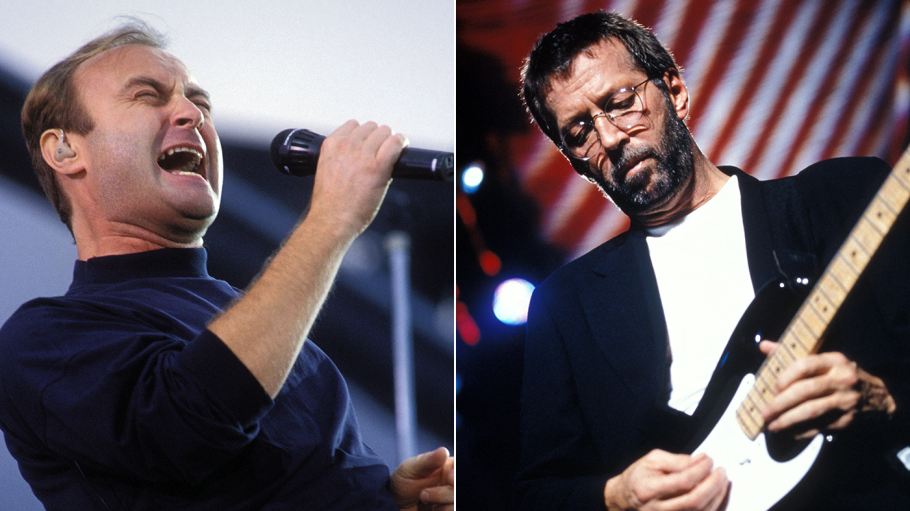
When Eric Clapton sang the words “Would you know my name, if I saw you in Heaven?” he wasn’t asking a poetic question just to sound emotional. He was speaking directly from his pain. The song “Tears in Heaven” was born from one of the most tragic moments of his life — the loss of his young son.
On March 20, 1991, Clapton’s four-year-old son, Conor, died after falling from a 53rd-floor apartment window in New York City. The accident was sudden and devastating. Clapton was supposed to spend time with his son that very day. Instead, his world completely fell apart.
Losing a child is an unimaginable trauma, and for Clapton, it felt like everything stopped making sense. He went quiet, stepped away from the public eye, and struggled deeply with grief. At that time, Clapton had recently become sober, and many around him worried that the pain might push him back into drinking. But Clapton later said that staying sober was actually the hardest — and most important — thing he could do.
Music became his way of surviving.
Out of that grief came “Tears in Heaven.” The song is not loud or dramatic. It is soft, gentle, and honest. Clapton doesn’t try to explain death or religion. Instead, he asks simple questions — questions that any grieving parent might ask. Would his son recognize him? Would they still know each other? Would love still exist beyond loss?
Because of that honesty, the song touched millions of people around the world. When Clapton performed it during his MTV Unplugged session, it became even more powerful. The stripped-down acoustic version made the pain feel closer and more real. Many listeners said the song helped them process their own grief, even if they had never experienced a loss like Clapton’s.
Despite its success, “Tears in Heaven” was never easy for Clapton to perform. For years, he avoided playing it live because it reopened wounds that never fully healed. The song was not just a hit — it was a reminder of his son.
Clapton was not alone in his pain. His close friend Phil Collins was deeply affected by the tragedy as well. Collins, who was also a father, began thinking about how fragile life is and how difficult it can be to protect the people we love, especially when distance and responsibility get in the way.
While working with Genesis on their album We Can’t Dance, Collins wrote a song called “Since I Lost You.” Although the song reflected his own fears and emotions as a father, it was inspired by what Clapton was going through. Collins made sure to speak to Clapton first, wanting to respect his privacy and pain.
When Collins played the song for Clapton, something unexpected happened. Clapton told him that he had written a song too — and then played “Tears in Heaven.” Collins later said the song was beautiful and extraordinary, especially considering the pain behind it. It made him admire Clapton even more, not just as a musician, but as a human being.
“Since I Lost You” was released on the Genesis album, but it was never pushed as a major single. Collins felt that keeping it quiet and in the background was the most respectful choice.
Today, “Tears in Heaven” remains one of the most emotional songs ever written. It is not just about death, but about love, memory, and the painful process of learning how to live after loss. Eric Clapton turned his grief into something that helped others feel less alone — and that is why the song still matters.