
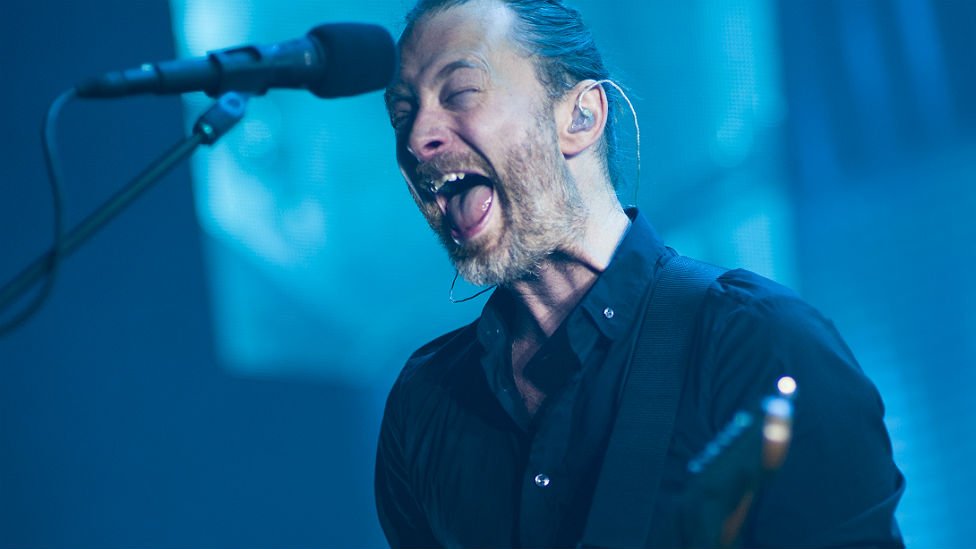
Thom Yorke, the lead singer of Radiohead, has never been comfortable with labels. Over the years, many critics have described Radiohead as a band trapped in “millennial angst” — gloomy, tortured, and obsessed with the same ideas. When Yorke was asked about this, he didn’t fully reject it, but he didn’t accept it either. He explained that maybe the band once fit that description, but they were never meant to stay still. Like Bob Dylan, Yorke believes that real artists must keep moving, changing, and searching.
However, outside opinions didn’t always slide off easily. Yorke has admitted that listening too closely to what people say about your work can become dangerous. When you start believing those impressions, they slowly begin to shape how you create. At that point, you’re no longer making art for yourself — you’re reacting to noise that never belonged to you in the first place. That realization hit Yorke hard in the late 1990s, especially around the time Radiohead released OK Computer.
The album was a huge success and is now considered one of the greatest records of all time. But while the world celebrated, Yorke was falling apart. The pressure of constant touring, interviews, expectations, and praise left him completely drained. He later admitted that he became overwhelmed by it all and mentally exhausted. During Radiohead’s famous Glastonbury performance, Yorke was so worn out that he almost walked off the stage for good. The heat, the crowd, and his own inner struggle nearly pushed him to quit music altogether.
What many fans didn’t see was how deeply Yorke absorbs the world around him. He once described himself as someone without a “shield,” meaning he feels everything intensely. This sensitivity fuels his creativity, but it also comes at a cost. Writing and recording music often leaves him in a strange emotional state, sometimes for days or even weeks. Still, he accepts this as part of who he is. For Yorke, creativity isn’t about comfort — it’s about honesty.
This emotional openness also explains why Yorke connects so strongly with certain artists. One of the most important influences in his life has been Michael Stipe of R.E.M. Yorke has mentioned Stipe many times in interviews, not just as a musical inspiration but as a role model. To him, Stipe represents authenticity. He never performs to please others, never forces a smile, and never waters himself down for approval.
Yorke has described Stipe’s lyrics as vivid and powerful — like moving through a city filled with flashing signs and hidden meanings. His words feel alive, layered, and full of wisdom. That kind of writing deeply inspired Yorke and helped him trust his own instincts. Stipe encouraged him to believe that his words mattered, without constantly questioning their value.
You can hear that influence throughout Radiohead’s music. Yorke began writing more freely about feeling like an outsider, about fear, disillusionment, and confusion — emotions he may have once tried to hide. Instead of fitting into a neat category, he allowed his music to reflect the messy reality of being human.
In the end, Thom Yorke’s journey isn’t about sadness or angst. It’s about survival, growth, and refusing to let the world decide who you are. By stepping away from the noise and holding onto authenticity, he found a way to keep moving forward — even when the weight of it all nearly stopped him.