
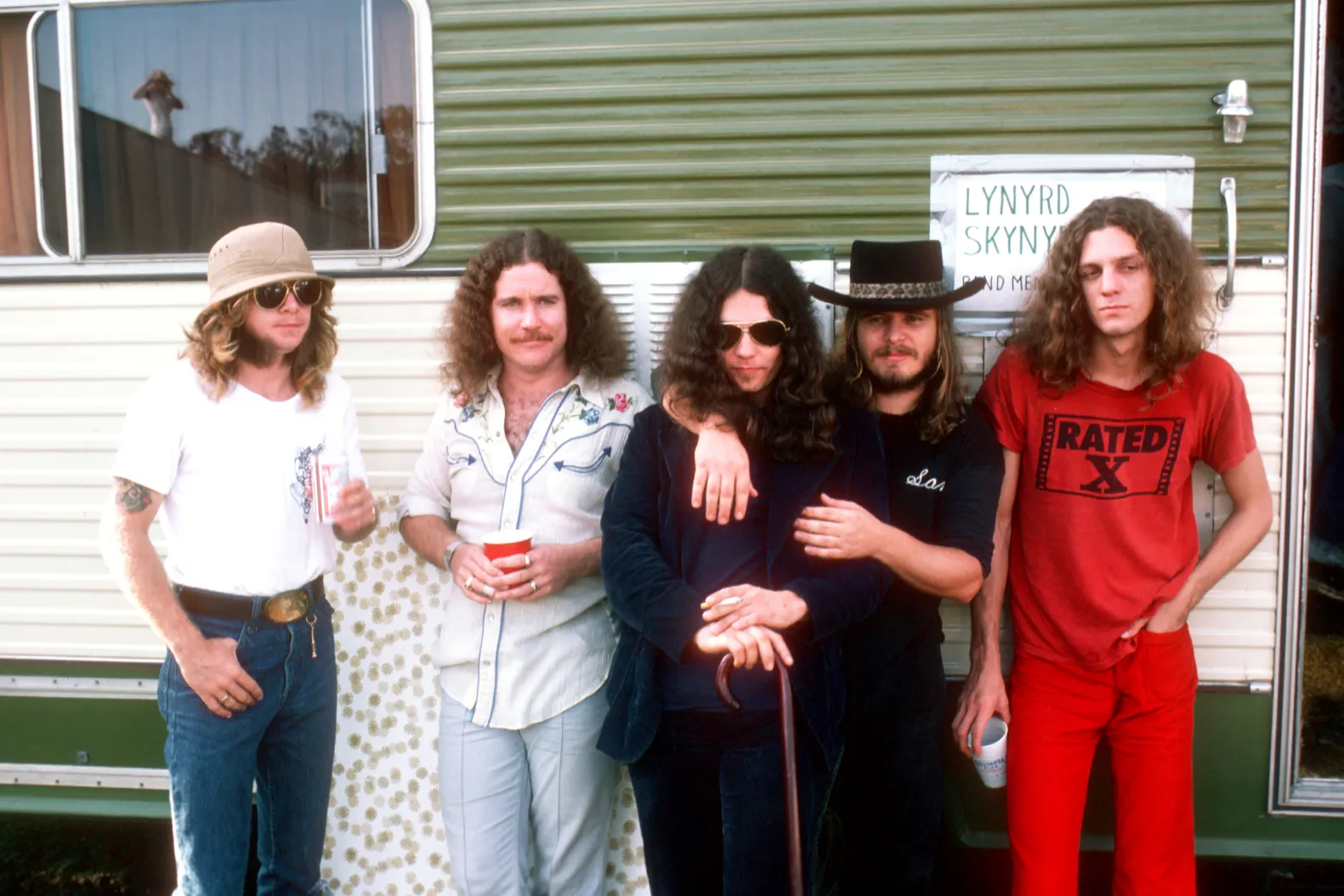
“When we went to record it, the record company said, ‘Man, they won’t play that, it’s too long.’ But we said, ‘We don’t care!’”: How the young Lynyrd Skynyrd turned a simple love song into a southern rock epic…
For Lynyrd Skynyrd, “Free Bird” is more than just a song — it’s the band’s defining anthem, often compared to the greatest rock epics ever recorded. Frequently described as the Southern rock counterpart to Stairway to Heaven, the track is famous for its soaring guitar coda, a hallmark moment in classic rock alongside songs like Hotel California.
Yet according to founding guitarist Gary Rossington, the legendary track began as something far simpler.
In a 2012 interview with Classic Rock, Rossington explained that “Free Bird” was primarily written by Allen Collins and vocalist Ronnie Van Zant, though the entire band helped shape its final form. Pianist Billy Powell, who was initially working as a roadie for the group, would later become central to the song’s signature sound.
The band’s musical ambitions began in their hometown of Jacksonville, Florida, where Rossington recalled dreaming of forming a band with Van Zant and Collins.
“We wanted to be The Beatles,” Rossington said, referring to The Beatles. “But none of us really believed we had the talent to write songs. Ronnie couldn’t really sing at first, and we thought songwriting was something only special people could do.”
Early rehearsals were built on competition as much as cooperation. Rossington and Collins would “battle” over guitar solos — whoever played the best lead earned the part. Van Zant sometimes manipulated this rivalry, encouraging each guitarist to outdo the other by assigning solos strategically.
The band members were also shaped by blues music. Rossington cited artists such as Muddy Waters, Howlin’ Wolf, Paul Butterfield, and John Mayall as major influences, reflecting the deep connection between blues traditions and Southern rock.
When “Free Bird” was first written, Rossington didn’t sense its future importance. The song began as a straightforward love story about leaving a relationship in search of freedom — a wandering spirit expressed through the metaphor of a “free bird.”
Initially, the track ended abruptly. At the time, the group performed it as a simple guitar-driven piece without the extended piano introduction or the famous closing solo section.
The extended ending emerged gradually through live performance. The band would lengthen the song on stage to help manage their demanding set schedules, sometimes stretching it from a brief guitar piece into several minutes of improvisation. Van Zant would occasionally instruct the band to keep playing until he signalled to stop.
When recording the debut album (Pronounced ‘Lĕh-‘nérd ‘Skin-‘nérd), record executives warned that the song’s length might limit radio play, since popular singles of the era were typically only two to three minutes long, following the format of early rock hits by artists such as The Rolling Stones.
The band ignored those concerns.
Ironically, they never expected “Free Bird” to become a defining classic. What started as a modest love song and club performance piece eventually evolved into one of rock music’s most celebrated guitar anthems — a song that would come to symbolize freedom, departure, and the spirit of Southern rock itself.