
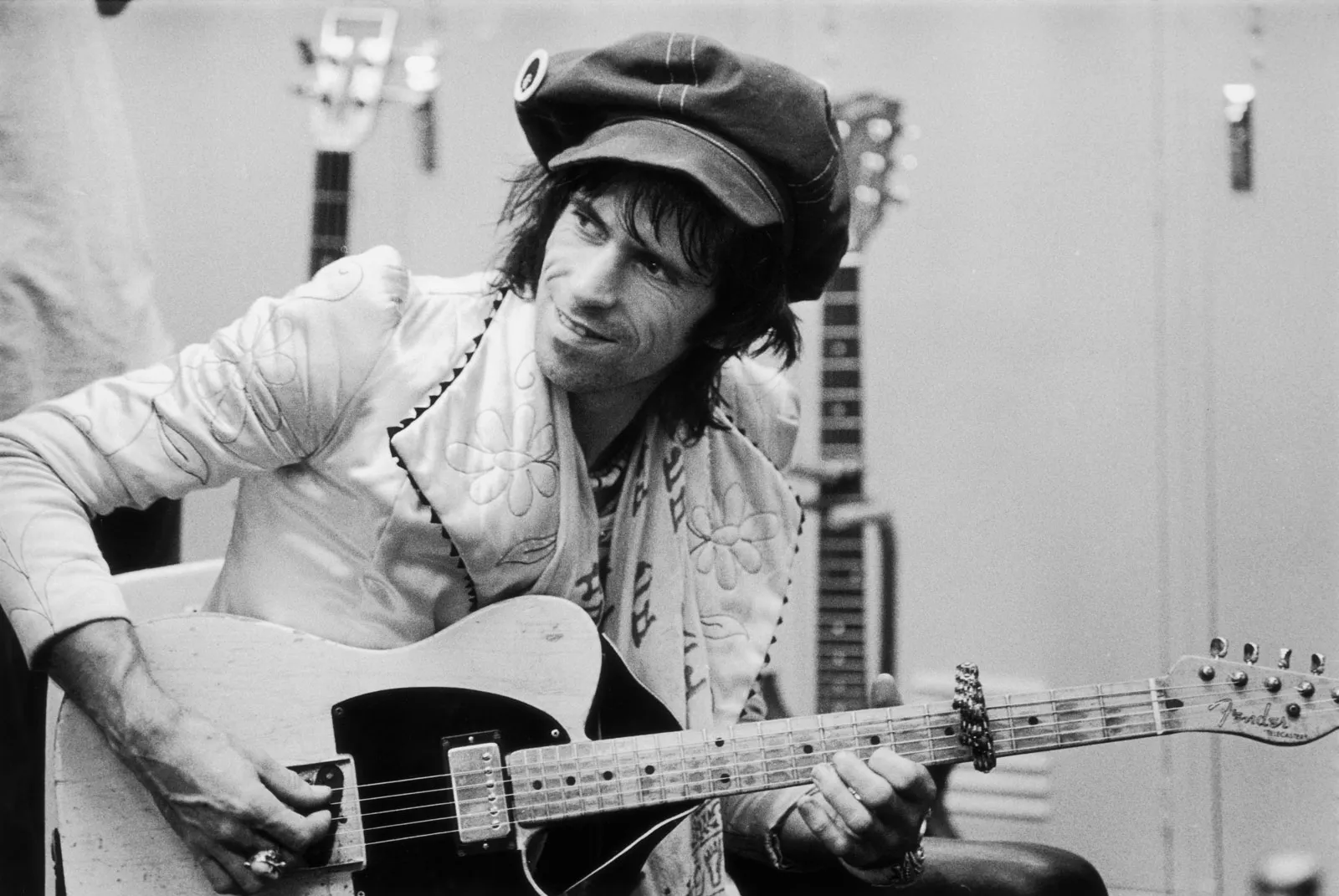
When you hear the opening chords of (I Can’t Get No) Satisfaction, you know what a perfect riff sounds like. That simple but unforgettable hook showed the world exactly what a riff could be — raw, catchy, and full of attitude. That moment wasn’t about complexity, but about feeling. It proved that sometimes a riff doesn’t need speed or fancy solos: it needs soul.
From that moment on, the idea of what a riff should be was born. Not every song that followed was a masterpiece — but what matters is the chase: the endless hunt for that “lost chord,” the one that gives chills, that hits you in the gut, that becomes unforgettable.
A Blues Heart, Reborn in Rock
This guitarist didn’t start with rock. His roots were in the blues — the old, soulful, deep blues that spoke of hardship and hopes. He drew from that history: from broken hearts, long nights, smoky bars, aching stories.
Then he did something brave. He took those blues chords, those raw rhythms, and twisted them into something new. Songs once soaked in blues feeling became electrified, gritty, urgent. A tune could still carry blues energy, but sound like modern rock. At times, rock became moody and emotional — a “blues opera,” he jokingly called it. At other times, it turned bright and catchy, with melody and energy that anyone could sing along to.
That’s the beauty of it: he didn’t reject the past. He honored it — but didn’t copy it. He transformed it. He made blues feel alive for a new generation.
Not About Perfection — About Feeling
He wasn’t a “trained” guitarist. He didn’t study music theory or chase technical perfection. Instead, he listened — to his heart, to his soul, to what felt right. He believed in the power of sound over technique.
He once said he admired other guitarists who studied classical styles and knew every scale — and admitted they may be “better” technically. But he also said there was no shame in being “second best.” Because for him, music wasn’t a contest. It was life. Emotion. Storytelling.
He didn’t play to show off. He played to speak. He played to connect. He played to make a guitar moan, howl, dance — and to make people feel something.
Why It Still Matters Today
Originality over perfection. In a world that often values flash and speed, he reminds us that it’s okay to keep things simple, soulful, and true.
Respecting roots, embracing change. He shows that you don’t have to throw away tradition — you can take it, reinvent it, make it fresh.
Emotion beats ego. Guitar riffs are not about scales or speed — they’re about music that moves you.
Legacy of honesty. He didn’t pretend to be perfect. He just stayed real. And somehow, that made him legendary.
So next time you pick up a guitar — or listen to one — remember: sometimes the simplest chord, played with heart, can change everything.