
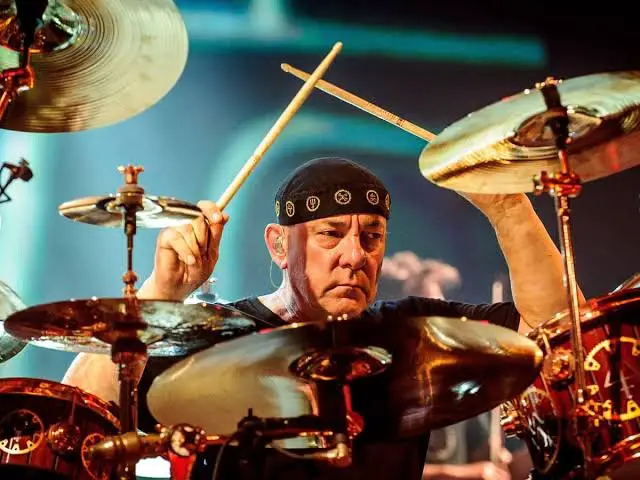
Neil Peart from Rush is often praised as one of the greatest rock drummers ever. His skills were incredible, but what truly separated him from others was his feel — that natural sense of emotion and flow that can’t be copied, even if someone practices for decades. His playing wasn’t just technical; it had heart.
Even though Peart was amazingly talented, he never treated music like a competition. He didn’t want to “beat” other drummers. Instead, he wanted to honor the drumming legends who came before him. When he nailed a Keith Moon-style fill or delivered John Bonham-level power, he felt proud because he was paying respect to the greats he admired.
Many people think early rock drumming used to be simple. But before hard rock took over, drummers like Ringo Starr and Charlie Watts were already pushing boundaries. Ringo’s heavy playing on “Helter Skelter,” for example, was louder and more aggressive than what most people imagine. Drummers like Mitch Mitchell and Ginger Baker took things even further, bringing a jazz-like freedom to rock that made the drummer almost as important as the guitarist.
And that’s where the key connection comes in: jazz. All of these early rock drummers were inspired by jazz. Ginger Baker often said he wasn’t really a “rock” drummer at all. Charlie Watts loved jazz long before he ever joined The Rolling Stones. Jazz gave these players the feel, energy, and creativity that later shaped rock drumming.
For Peart, this tradition mattered. Gene Krupa first sparked his interest in drums, but Buddy Rich blew his mind. Buddy played with unbelievable power and speed — like early heavy metal played through a jazz lens. Peart once said that when he saw Buddy Rich on TV as a teenager, he thought Buddy was almost “too far out of reach.”
Still, Peart kept learning. And even if he couldn’t reach Buddy Rich’s level, he wanted to get close. When you listen to Rush songs like “La Villa Strangiato,” you can hear that mix of rock strength and jazz swing working together. Peart wasn’t just playing complex parts — he was feeling them.
One of the most important lessons Peart took from those older drummers was this:
Technique means nothing without feeling.
You can play fast, loud, or complicated, but if there’s no groove or life in the music, it won’t touch people.
That’s why Neil Peart’s drumming still inspires musicians today. He proved that the best playing isn’t just about skill — it’s about soul. His work shows that when you mix talent, passion, and respect for the greats who came before, you can create something truly timeless.