
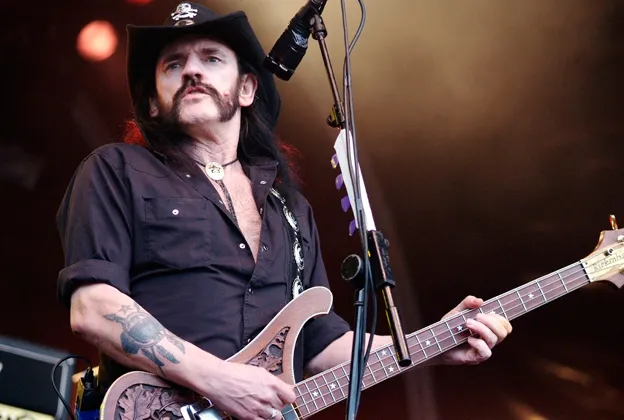
Lemmy Kilmister was more than just the frontman of Motörhead. He was a symbol of rock ’n’ roll itself. Loud, honest, stubborn, and completely dedicated to music, Lemmy became one of the most respected figures in rock and metal history. This is not a slight on the other members of Motörhead — they were all talented musicians — but Lemmy was truly something special. When he walked on stage, he didn’t just perform songs; he commanded the room.
What made Lemmy stand out was not only his skill as a musician and songwriter, but his personality. He was charismatic, confident, and completely himself. His voice was rough and unmistakable. His bass playing was aggressive and powerful. Together, these elements created a sound and image that could never be copied. Many musicians become famous for their music, but Lemmy became famous for who he was.
When Lemmy passed away in December 2015, the loss was felt across the entire music world. It wasn’t just Motörhead fans who mourned him. Artists from metal, rock, punk, and even outside heavy music paid tribute. That’s because Lemmy didn’t represent only one genre — he represented an attitude. An attitude of total dedication, honesty, and refusing to compromise your art. That kind of mindset is rare and only appears in very special musicians.
One of the most powerful examples of Lemmy’s influence comes from Metallica’s James Hetfield. Lemmy was a huge inspiration to him, both musically and personally. After Lemmy’s death, Hetfield chose to honor him in a very unique way — by getting a tattoo made with some of Lemmy’s cremation ashes. The tattoo was placed on his middle finger, both as a joke and as a tribute. Hetfield explained that without Lemmy, Metallica would not exist. In a way, Lemmy is still “flipping off the world” through that tattoo — exactly the kind of humor Lemmy would have loved.
Lemmy’s commitment to music was especially clear during the final years of his life. Motörhead drummer Mikkey Dee spoke openly about how difficult the last tour was. Lemmy was clearly unwell, but he refused to stop playing. Instead of canceling shows and disappointing fans, he pushed through with incredible determination. According to Dee, the band had to adjust many things to help Lemmy get through the performances, but Lemmy gave everything he had. While the band gave 150%, Dee believed Lemmy gave 300%.
That level of dedication shows just how seriously Lemmy took his craft. For him, music was not a job — it was life. His bond with Mikkey Dee was also special. When Dee joined Motörhead, there were challenges at first because his drumming style was much faster than Lemmy was used to. But over time, they learned how to work together, and Lemmy openly praised Dee’s ability. He once said there was no rhythm that Mikkey couldn’t play.
Even after decades of making records, Lemmy never lost his passion. Writing songs came naturally to him, and performing live remained his priority until the very end. His legacy lives on through Motörhead’s music and through the countless artists he inspired.
Lemmy Kilmister didn’t just play rock music — he was rock music. And legends like that never truly disappear.