
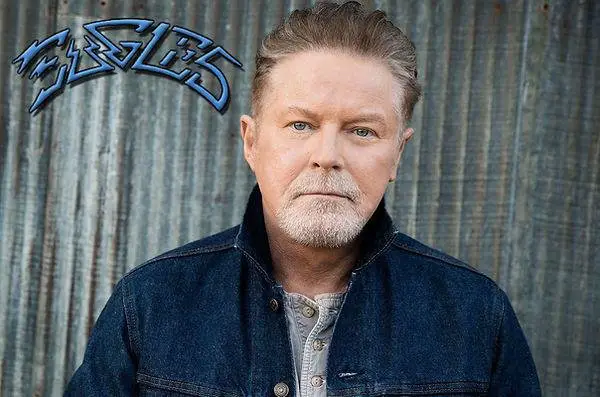
When people hear the name Don Henley, they usually think about his voice, his lyrics, and his role in The Eagles. Songs like “Hotel California,” “Desperado,” and “Life in the Fast Lane” made him one of the most respected musicians of his generation. What many fans don’t always talk about, though, is that Henley was a drummer first. Long before he became a famous singer and songwriter, he sat behind a drum kit, learning how rhythm shapes a song.
Henley’s time as a drummer deeply influenced the way he made music. Even after stepping forward as a frontman, he never forgot what it meant to play for the song rather than for attention. His philosophy was simple: don’t overplay, don’t show off, and always focus on feel. This mindset came from listening to drummers like Ringo Starr, whose playing with The Beatles proved that simplicity and timing can be more powerful than speed or flash.
As Henley’s career grew, his goals shifted. Singing and songwriting became his main focus, especially after the Eagles broke up in 1980. When he began working on his solo career, Henley made an important decision. Instead of trying to play every instrument himself, he chose to work with top musicians who could bring something special to his songs. This showed his maturity as an artist and his respect for collaboration.
One of the most important musicians Henley worked with during this period was drummer Jeff Porcaro. Porcaro was already known as one of the best session drummers in the world. He had an incredible sense of groove and an ability to make songs feel alive without ever overpowering them. His playing was tight, controlled, and full of emotion, even when it sounded simple.
Their collaboration is best heard on Henley’s solo hit “Dirty Laundry.” The drum part on this song is not loud or flashy. There are no wild fills or dramatic moments. Instead, Porcaro delivers a steady, driving beat that perfectly matches the song’s sharp and critical lyrics about media culture. The rhythm feels tense and focused, pushing the song forward while letting Henley’s message stand front and center.
Henley deeply admired Porcaro, not just for his skill, but for his attitude. He often spoke about Porcaro as a generous and humble musician who cared more about the music than fame or money. In the studio, Porcaro brought a positive energy and total commitment to every session. For Henley, this kind of mindset was just as important as talent.
Although Jeff Porcaro passed away in 1992, his influence is still felt today. In a modern music world filled with digital editing and perfectly timed beats, his playing reminds listeners of the power of human feel. There is something honest and emotional in the way he played, something that technology can’t fully replace.
Don Henley’s legacy isn’t just about his voice or lyrics. It’s also about his deep understanding of rhythm and his respect for musicians who serve the song. Through his work with Jeff Porcaro, Henley showed that great music is often built not on flash, but on feel, trust, and quiet excellence.