
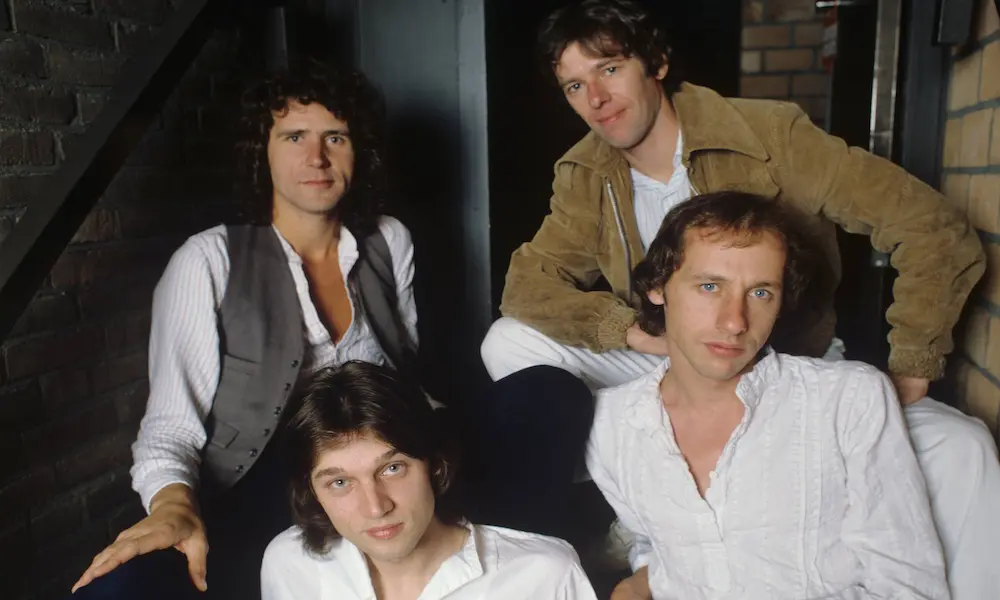
When Dire Straits released their self-titled debut in 1978, it immediately marked them out as something different. At a time when punk was still reverberating and arena rock leaned toward spectacle, the band’s sound felt controlled, deliberate, and quietly confident. Much of that identity stemmed from Mark Knopfler, whose fingerpicked guitar style and understated delivery gave the music a conversational intimacy.
Knopfler didn’t set out to build a commercial juggernaut. By his own admission, he simply loved writing songs and exploring ideas through music. Yet global success arrived quickly. Songs like “Romeo and Juliet” (from Making Movies) and “Money for Nothing” (from Brothers in Arms) propelled the band into stadium territory, turning a subtle pub-rock outfit into one of the biggest acts in the world.
Ironically, that scale became part of the problem. Knopfler has spoken candidly about how the machinery of success—massive tours, expanding crews, relentless schedules—created a sense of detachment. What began as an organic creative outlet started to feel industrial. He once reflected that he had “an absolute ball” until it grew so large he no longer knew the names of the road crew. For a songwriter who valued connection and reflection, that loss of intimacy mattered.
This tension is particularly clear when he discusses Communiqué. Although commercially successful—selling millions and outperforming the debut in some territories—Knopfler has never considered it a strong record. The issue wasn’t sales; it was process. Much of the album was effectively completed before the debut exploded, leaving little room for reflection. It didn’t feel lived-in. It didn’t feel considered.
By contrast, he has expressed far more affection for Making Movies, which followed a break that allowed him to process the whirlwind of fame. That pause gave him time to turn turbulence into storytelling. Songs from that era feel expansive yet precise—shaped by retrospection rather than pressure.
Knopfler’s approach to individual tracks also reflected his mindset. He deliberately recorded “Solid Rock” and “Expresso Love” quickly, matching their urgency to his emotional state at the time. “Romeo and Juliet,” however, demanded patience and special care. For him, the recording process had to mirror the spirit of the song. If the method felt mechanical, the result felt hollow.
That philosophy ultimately explains both his dissatisfaction with certain projects and his gradual retreat from large-scale touring. For Knopfler, music was never about sustaining a brand or feeding a machine. It was about preserving the thread between experience and expression. Once that thread thinned, stepping back wasn’t failure—it was consistency with the values that shaped Dire Straits in the first place.