
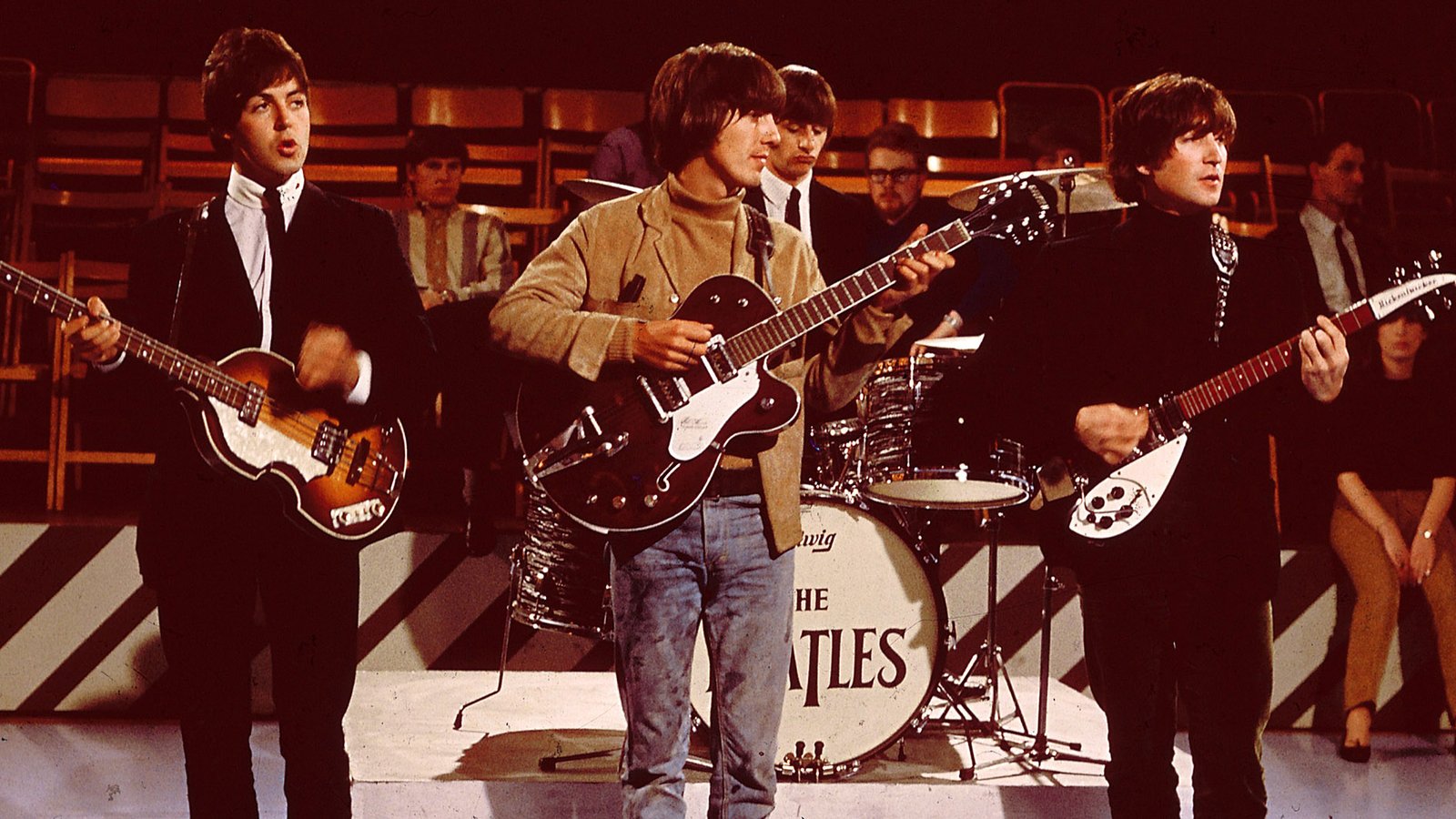
For a band that redefined live music in the 1960s, it’s almost unthinkable that one of its core members quietly dreaded the very stage that made them legends. The image of screaming crowds, flashing cameras, and four sharply dressed young men soaking in global adoration has become one of the most enduring symbols of modern music. But beneath that electrifying surface, not every Beatle felt at home under the spotlight.
In fact, one of them came to deeply resent it.
At the height of Beatlemania, live performances were less about music and more about survival. Stadiums filled with tens of thousands of fans would erupt into such deafening screams that the band could barely hear themselves play. Monitors were primitive. Sound systems struggled to keep up. Precision—the thing musicians pride themselves on—was nearly impossible.
For one Beatle in particular, this chaos wasn’t thrilling. It was frustrating.
He was, at heart, a craftsman. Someone who valued detail, nuance, and the evolving possibilities of sound. While the crowds wanted energy and charisma, he longed for control and clarity. Studio recording, with its endless potential for experimentation, began to feel like home. The stage, by contrast, felt limiting—almost pointless.
Over time, his discomfort turned into quiet resistance.
Touring became exhausting, not just physically but creatively. The repetition of the same setlists, the inability to reproduce increasingly complex songs live, and the overwhelming noise of fans created a disconnect between the music he wanted to make and the experience he was living.
Eventually, the breaking point came.
The band made the radical decision to stop touring altogether—a move almost unheard of for a group at the peak of its fame. While many factors contributed to that decision, his growing disdain for live performance played a significant role. It marked a turning point, not just for the band, but for the future of music itself.
Freed from the constraints of the stage, they retreated into the studio and began creating work that would push boundaries far beyond what live performance could accommodate. Albums became more ambitious, more layered, more daring. Music transformed from something performed into something constructed—carefully, obsessively, and with limitless imagination.
Years later, he would finally admit what had long been felt but rarely said outright: he didn’t enjoy performing live. Not in the way people expected. Not in the way fans imagined.
And in that honesty lies something deeply human.
Because even at the highest level of success—surrounded by fame, fortune, and adoration—artists are still driven by what fulfills them creatively. For him, it wasn’t the roar of the crowd. It was the quiet intensity of creation. The studio, not the stage, was where the real magic happened.
In a way, his reluctance helped reshape music forever.
By stepping away from live performance, he and his bandmates opened the door to a new era—one where recorded music could be more than a reproduction of live sound. It could be something entirely its own: layered, experimental, and unconstrained.
So while fans remember the hysteria of those early concerts, it’s worth remembering the quieter truth behind the scenes: not every legend loved the spotlight. And sometimes, stepping away from it is what allows greatness to truly take shape.