
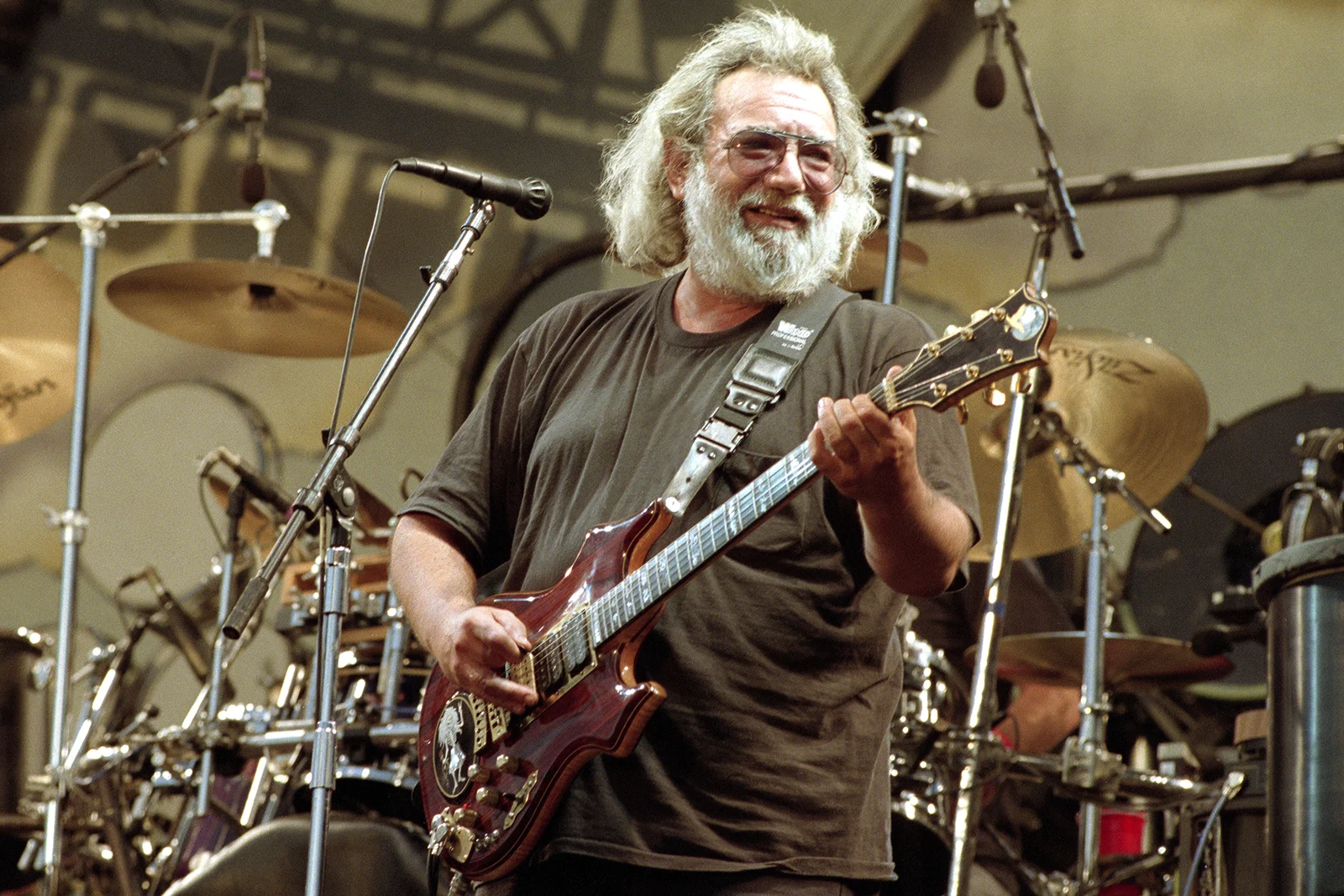
Jerry Garcia, the legendary guitarist and frontman of the Grateful Dead, is remembered as one of rock music’s most curious and adventurous figures. He wasn’t just a guitarist who played songs — he was a musician who believed in exploration, freedom, and constant discovery. Garcia approached music as an open road rather than a fixed destination. Because of this mindset, not every famous band impressed him, even if they were wildly successful. In fact, one of the biggest rock bands of all time simply didn’t interest him: The Rolling Stones.
To understand why, it helps to understand how Garcia viewed music. From the very beginning, Garcia was less concerned with perfection or popularity and more focused on experimentation. With the Grateful Dead, he helped create a style that blended psychedelic rock, blues, jazz, folk, and Americana. Their songs were rarely played the same way twice. Concerts often featured long jams, unexpected turns, and moments that felt completely spontaneous. For Garcia, music was about discovery — finding something new each time you played.
Because of this, Garcia wasn’t drawn to music that felt familiar or predictable. He had grown up listening to old blues and rhythm-and-blues records, especially those released by Chess Records. When he heard early Rolling Stones songs, he felt like he already knew that sound. In an interview, Garcia explained that The Stones were mostly revisiting music that already existed. To him, their early work didn’t feel like a leap forward — it felt like a repeat of something he had heard before.
Garcia wasn’t saying The Rolling Stones were bad musicians. He understood their talent and recognized their success. His issue wasn’t with their skill, but with their creative direction. Their music didn’t surprise him. It didn’t challenge his imagination. It didn’t make him curious about where it might go next. And for Garcia, curiosity was everything.
This way of thinking shows up throughout Garcia’s career. Even when he worked with other artists, he always brought something unique. A great example is his pedal steel guitar work on Crosby, Stills, Nash & Young’s song “Teach Your Children.” Instead of showing off technical skill, Garcia focused on mood and emotion. His playing added warmth and depth to the song, proving that he cared more about feeling than flash.
Interestingly, Garcia did admire artists who evolved and took risks. He spoke more positively about bands like The Beatles, especially as they moved away from simple pop songs and began experimenting with studio techniques and new sounds. That kind of growth matched Garcia’s own philosophy.
Over time, even The Rolling Stones moved beyond their early blues-based sound and created more original and ambitious music. Albums like Between the Buttons and Their Satanic Majesties Request showed a willingness to experiment, and later songs like Gimme Shelter and Brown Sugar became classics. Still, Garcia’s comment reminds us that great musicians don’t all value the same things.
In the end, Jerry Garcia’s lack of interest in The Rolling Stones wasn’t about disrespect. It was about creative hunger. Garcia wanted music to feel alive, unpredictable, and full of possibility. That desire drove everything he did and helped make the Grateful Dead one of the most unique bands in rock history. His opinion simply reflects the mindset of an artist who was always searching for something new.