
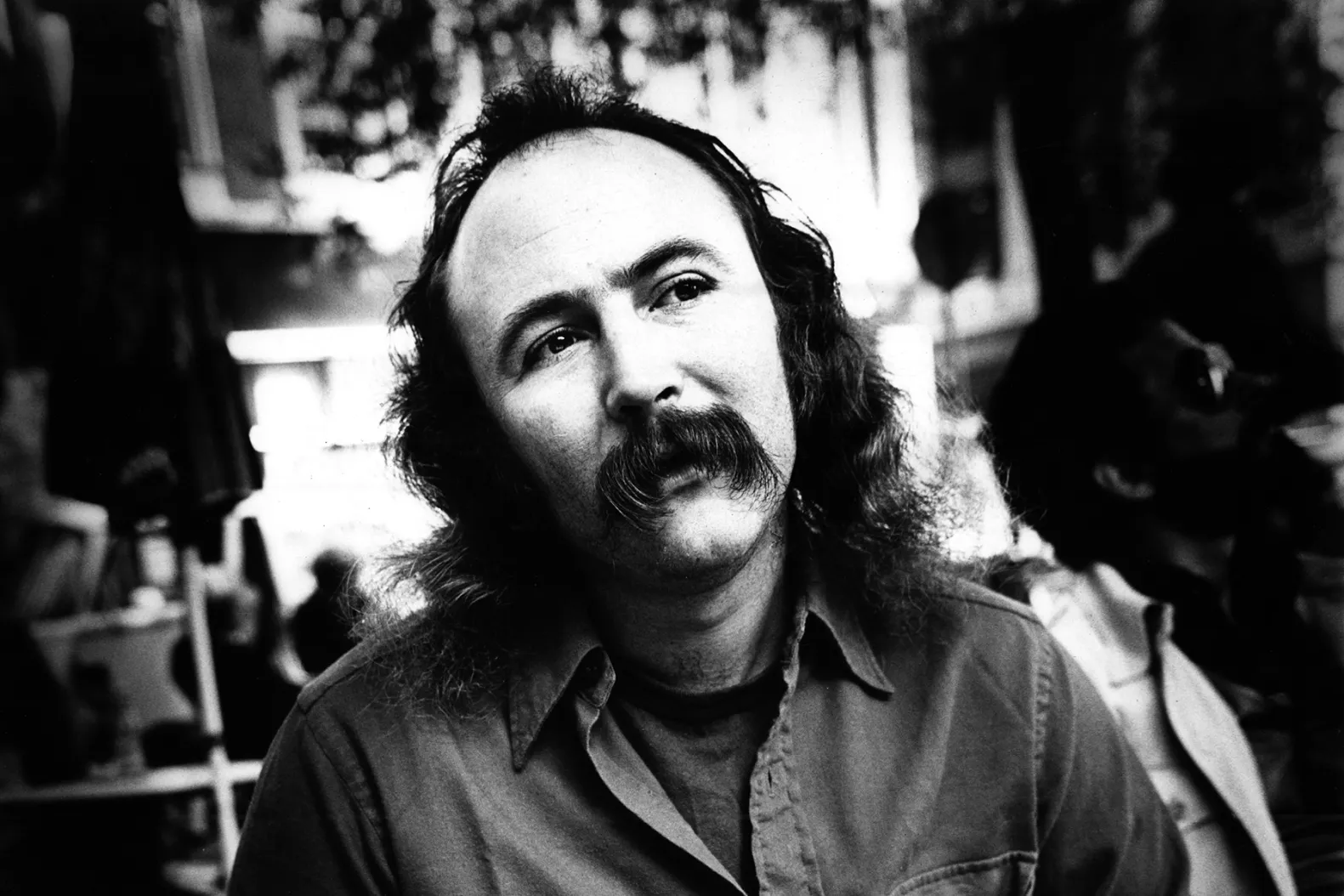
The 1960s and ’70s music world wasn’t just about songs — it was about deep emotions, creative fire, and volatile relationships. One of the most unforgettable and complicated stories from that era is the triangle between Joni Mitchell, David Crosby and Grace Slick.
✨ A Brief, Electric Spark: Mitchell and Crosby
At first, it was magic. David Crosby discovered Joni Mitchell performing at a small club, and he instantly saw something different in her — not just a singer, but someone whose words could carry you to another world. For him, she wasn’t just talented; she wrote poetry with music.
Their romance was short but intense: “like falling into a cement mixer,” Crosby confessed once. It was passionate, raw, and deeply creative. Their personal story fed directly into Mitchell’s songwriting — heartbreak, longing, art. But it didn’t end gently. When their relationship fell apart — partly because of Crosby’s infidelity — Mitchell didn’t walk away quietly. Instead, she turned her pain into art. She performed a brand-new song at a party, a sharp, public goodbye.
Despite the heartbreak, the admiration endured. Even later in life, Crosby praised Mitchell as one of the greatest singer-songwriters of their generation. Their romantic chapter ended — but their creative and musical respect stayed.
🔥 Clash of Icons: Mitchell vs. Slick
Then came Grace Slick. For many, including Crosby, she was a force — rock’s “queen,” raw, magnetic, powerful. Her voice and stage presence weren’t polite or subtle. They were unapologetic, bold, rebellious. Crosby admired that: he saw in Slick a “ceiling-shattering feminist counterculture icon.”
But Joni Mitchell didn’t see it the same way. She judged Slick — and the legendary Janis Joplin — not just for their music, but for what she felt was a self-destructive lifestyle: “sleeping with their whole bands and falling down drunk,” she once said. To Mitchell, that wasn’t art. It was chaos.
Slick didn’t stay silent. She fired back, feeding into a different kind of authenticity — one defined by power, emotion, and freedom to be flawed. And when Mitchell romanticized events like Woodstock in poetic, idyllic tones, Slick pushed back — reminding people that reality was messy, imperfect, and far from the fairy tale.
🎯 Different Visions of What Rock Should Be
At heart, this wasn’t just a personal feud — it was a clash of philosophies.
For Joni Mitchell, music was quiet introspection, poetry, vulnerability. It was about stories, feelings, subtle emotional truths.
For Grace Slick, music was raw energy, rebellion, power. It was loud, confrontational, and defied norms.
And for David Crosby? He loved them both — each for what she brought to the table. He believed in Mitchell’s poetic genius and in Slick’s fierce energy.
Their conflicts — personal and creative — mirrored a larger tension in the counterculture: between introspective folk and explosive psychedelic rock; between gentle pain and loud rebellion.
🎶 Why Their Story Still Matters
Looking back, this tangled triangle isn’t just gossip from rock history. It tells us about art, identity, and the messy beauty of being human.
Their relationships influenced songs that still move people today.
Their disagreements show how art can be deeply personal — and deeply political.
Their story shows that music isn’t a single path; it’s many colliding roads of emotion, experience, and expression.
Whether you lean toward introspective lyrics or rebellious riffs, you’re still part of their legacy. Because in the end, music — like life — is rarely clean or simple. It’s messy, emotional, unpredictable.