
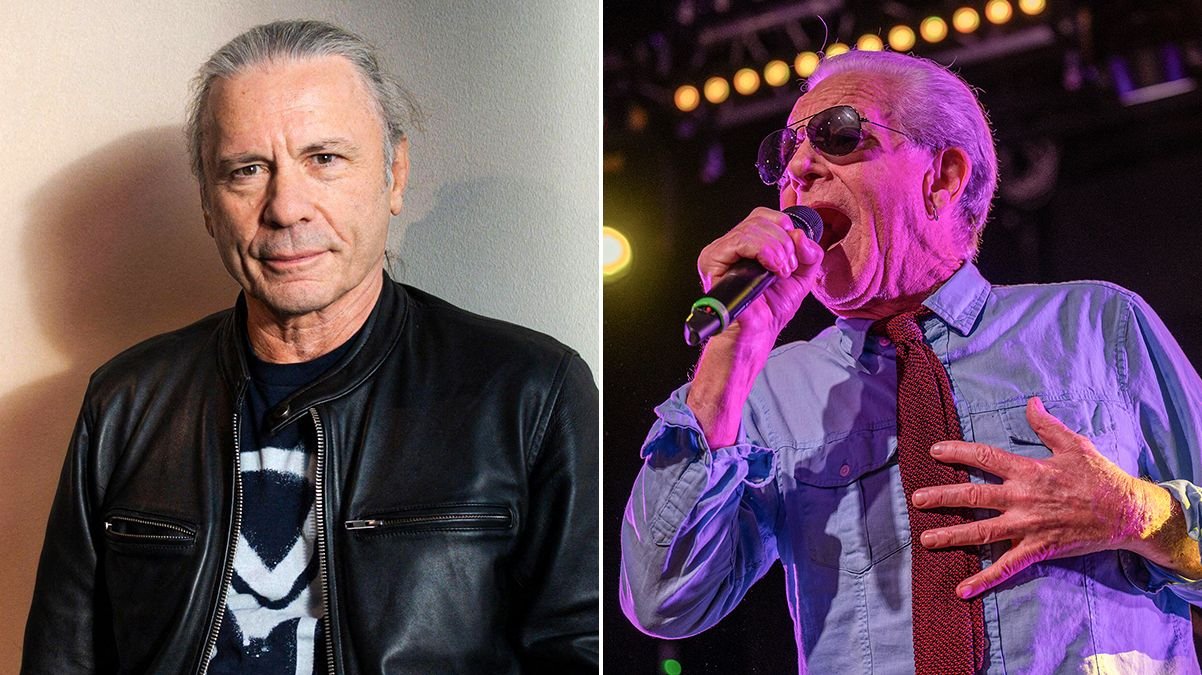
The crowd at the Smith/Kotzen show thought they were witnessing a moment of pure spontaneity when Bruce Dickinson suddenly stormed the stage. What seemed like rock-and-roll swagger was, in fact, a 10-second crisis unfolding right before their eyes. There had been no rehearsal, no soundcheck run-through, and no agreed-upon setlist change. The cameo was real—and so was the risk.
At the heart of the moment was Adrian Smith, balancing raw instinct with decades of live experience. As Dickinson seized the microphone, greeted by an eruption of cheers, Smith reportedly shot him a sharp, almost panicked look. Backstage sources say that in the chaos of the audience’s roar, Smith began mouthing possible song titles, cycling rapidly through five potential classics they could attempt on the fly.
The issue was simple but terrifying: without rehearsal, even seasoned musicians can find themselves off course. The Smith/Kotzen setup didn’t come with the full production safety net of a major arena tour. No elaborate backing tracks. No click-track cues in their ears. Just raw instruments, live amps, and muscle memory. Choosing the wrong song could have meant missed transitions, awkward timing, or a shaky start that would break the illusion of seamlessness.
Among the five mental options were heavy epics and fan-favorites with shifting tempos, but each carried potential landmines—complicated intros, layered harmonies, or intricate timing that demanded perfect synchronization. In that fleeting shared glance, both men arrived at the same conclusion: Wasted Years.
It was the safest risk they could take.
“Wasted Years” was a song that needed no second thought. Its instantly recognizable guitar line was something Smith could nail without hesitation. Dickinson, too, knew the phrasing inside and out, having performed it countless times with Iron Maiden. More importantly, the song’s structure was straightforward and driving, a perfect fit for a trio format that could lock in quickly without needing any added production elements.
The decision happened in less than ten seconds. A subtle nod. A half-smile. Smith struck the opening riff—and just like that, the tension evaporated. To the audience, it felt like destiny. In reality, it was decades of shared history condensed into a split-second calculation.
What makes this story so compelling isn’t just the choice of song, but the trust that underpinned it. Dickinson and Smith have spent years performing together in high-pressure environments, yet even seasoned professionals can feel the uncertainty when stepping into the unknown. That moment onstage was a reminder that live music, at its most thrilling, is controlled chaos.
The euphoria that followed disguised the razor-thin margin for error. But perhaps that’s exactly what made it electric. There was no script, no safety net—just instinct, eye contact, and a riff both men knew would carry them through.
https://www.facebook.com/photo/?fbid=850425058034551&set=a.162924676784596