
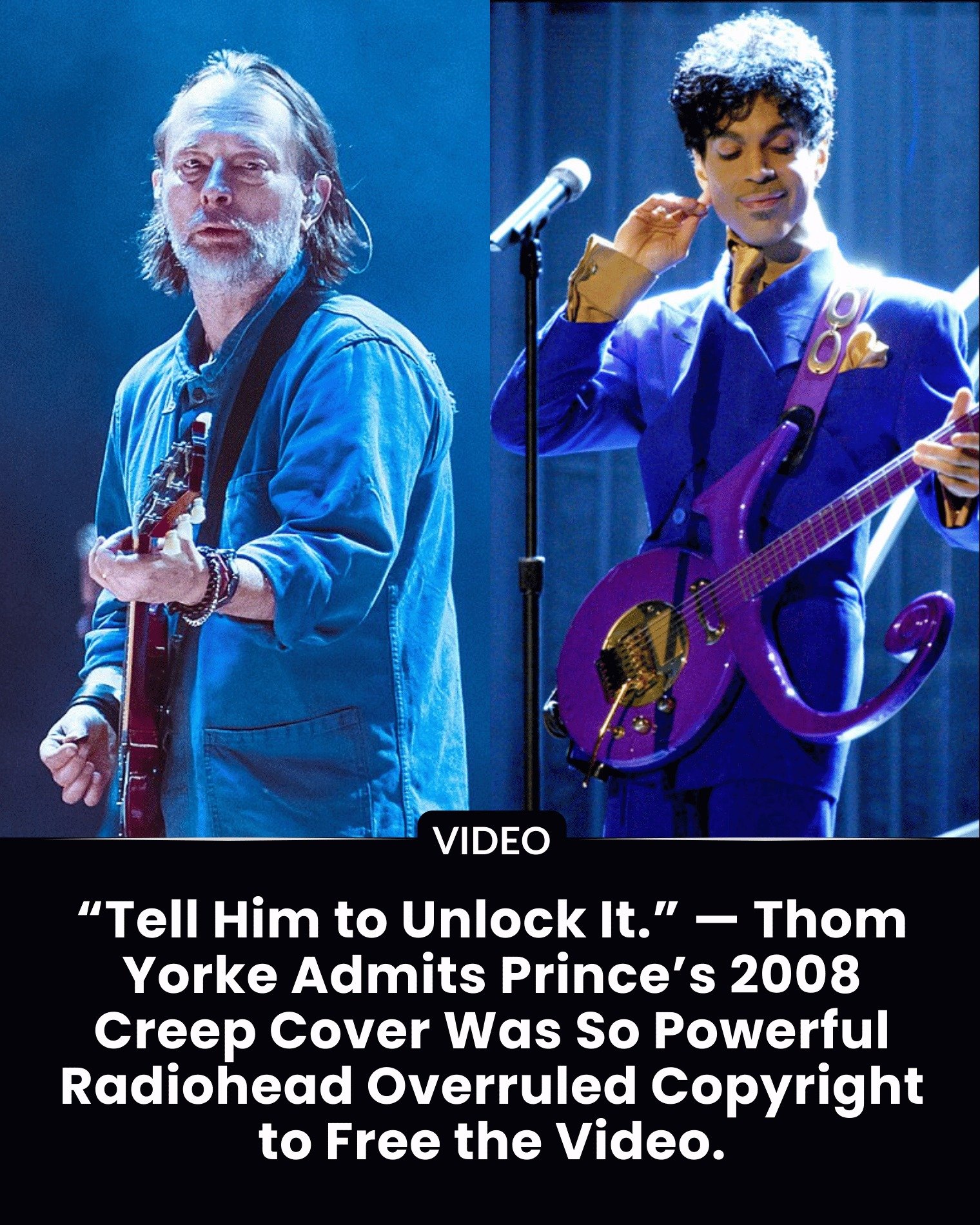
Music history is full of great cover songs, but some performances go beyond a simple remake. One of the most talked-about examples is Prince’s live cover of Radiohead’s “Creep” at the 2008 Coachella Valley Music and Arts Festival. What happened that night became legendary, not just because of Prince’s performance, but because of how the original songwriter, Thom Yorke, reacted afterward.
Radiohead released “Creep” in 1992. The song became an anthem for outsiders and people who felt they did not belong. With its raw lyrics and emotional delivery, “Creep” helped define alternative rock in the 1990s. While the band later had a complicated relationship with the song, it remained one of their most recognizable tracks.
Prince, on the other hand, was known for constantly breaking musical boundaries. He blended funk, rock, pop, soul, and gospel into his own unique sound. When he headlined Coachella in 2008, fans already expected something special. What they did not expect was Prince choosing to perform “Creep” — and completely transforming it.
Instead of copying Radiohead’s version, Prince slowed the song down and reshaped it. He added long guitar solos filled with emotion, powerful vocals, and dramatic pauses. His performance felt almost spiritual, like a gospel revival mixed with rock. The sadness and insecurity of the original song were still there, but Prince turned them into something bigger and more confident. It sounded like a man claiming strength from vulnerability.
Many fans who witnessed the performance said it felt unforgettable. However, shortly after clips of the show appeared online, they began disappearing. Prince was famously protective of his music and performances, and his team removed videos from platforms like YouTube. This meant many people could not see what had become one of his most talked-about live moments.
That is when the story took an unexpected turn.
Instead of being upset about Prince covering his song, Thom Yorke loved it. He reportedly became frustrated that the video was blocked from public view. According to industry stories, Yorke encouraged Prince to allow the video to stay online. His reaction became famous when he reportedly said that after Prince’s performance, “it’s his song now.”
This statement was powerful. Songwriters usually protect their work closely, but Yorke saw Prince’s version as a sign of deep respect and artistic brilliance. He felt honored that a musician like Prince connected so strongly with “Creep” and made it his own.
The moment became a symbol of artistic respect across genres. A rock song from the early ’90s was reborn through the voice and guitar of a funk and soul legend. It also showed how music can evolve beyond ownership. Sometimes, a song grows when another artist brings their truth into it.
Today, Prince’s “Creep” cover is remembered as one of the greatest live performances of the modern era. It reminds fans that music is not just about who wrote a song — it’s about who can make people feel something when they play it.
In that desert night at Coachella, Prince didn’t just cover “Creep.”
He redefined it.