
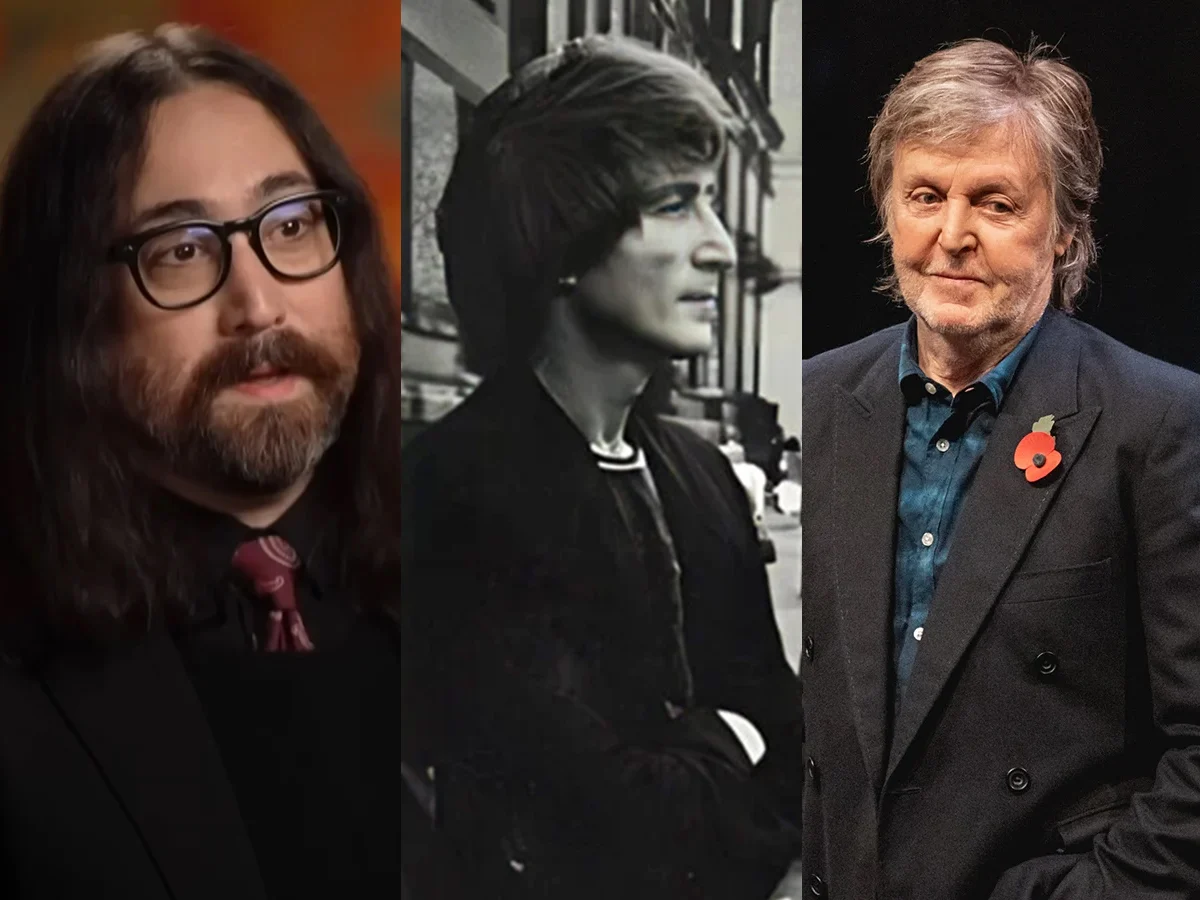
The murder of John Lennon on December 8, 1980, shocked the entire world. Lennon was shot outside the Dakota Building in New York City, and the news spread quickly across television, radio, and newspapers. Fans everywhere were heartbroken. For Paul McCartney, the loss was deeply personal. John was not just a former bandmate — he was a close friend, creative partner, and someone Paul had shared years of intense experiences with in The Beatles.
However, in the hours after Lennon’s death, Paul McCartney found himself in an impossible situation. Reporters surrounded him almost immediately and demanded a reaction. Paul had not been given time to process the tragedy or grieve in private. When asked for a comment, he briefly said, “It’s a drag, isn’t it?” and then walked away.
That short response caused confusion and criticism. Many people felt his words sounded cold or uncaring. Some believed he did not fully understand the seriousness of what had happened. But years later, Paul explained that this was not true at all. He said he was simply not good at showing grief in public. In that moment, he was in shock and could not find the right words to express his pain.
Paul later admitted that having a microphone suddenly pushed into his face made everything worse. He wasn’t prepared to speak. His mind was overwhelmed, and his emotions were still raw. Like many people experiencing sudden loss, he shut down instead of opening up.
A new documentary titled Man on the Run helps explain this moment more clearly. In the film, Sean Ono Lennon, John Lennon’s son, reflects on Paul’s reaction. Sean says that when he watches the footage, he doesn’t see coldness. Instead, he sees someone who looks unable to process what just happened. Paul appears almost robotic, frozen by shock rather than emotionless.
Sean explains that when something extremely traumatic happens, people respond differently. Some cry openly, while others go numb. He believes Paul fell into the second group — someone whose grief was real but not immediately visible.
Paul’s daughter Stella McCartney also shares a powerful memory in the documentary. She recalls the moment their family learned about John Lennon’s death. Stella describes hearing the phone ring and seeing her father react in a way she had never seen before. Paul left the kitchen and went outside, completely overwhelmed. She says it was truly heartbreaking and showed how deeply he was affected behind closed doors.
These personal memories reveal a very different side of Paul McCartney — one that the cameras never captured. While the public saw only a few seconds of awkward silence, his family witnessed intense private grief.
The documentary Man on the Run focuses on Paul McCartney’s life after the breakup of The Beatles. It explores how he struggled emotionally in the early 1970s, rebuilt his confidence, and found new success with his band Wings. John Lennon’s death was one of the most painful events in Paul’s life, and the film shows how it affected him as both an artist and a human being.
Today, many fans see that moment from 1980 in a different light. Paul McCartney’s reaction was not a lack of care — it was the response of someone in shock, trying to survive the worst news of his life. His story reminds us that grief does not always look the same. Sometimes it is loud, and sometimes it is quiet. Both are real.