
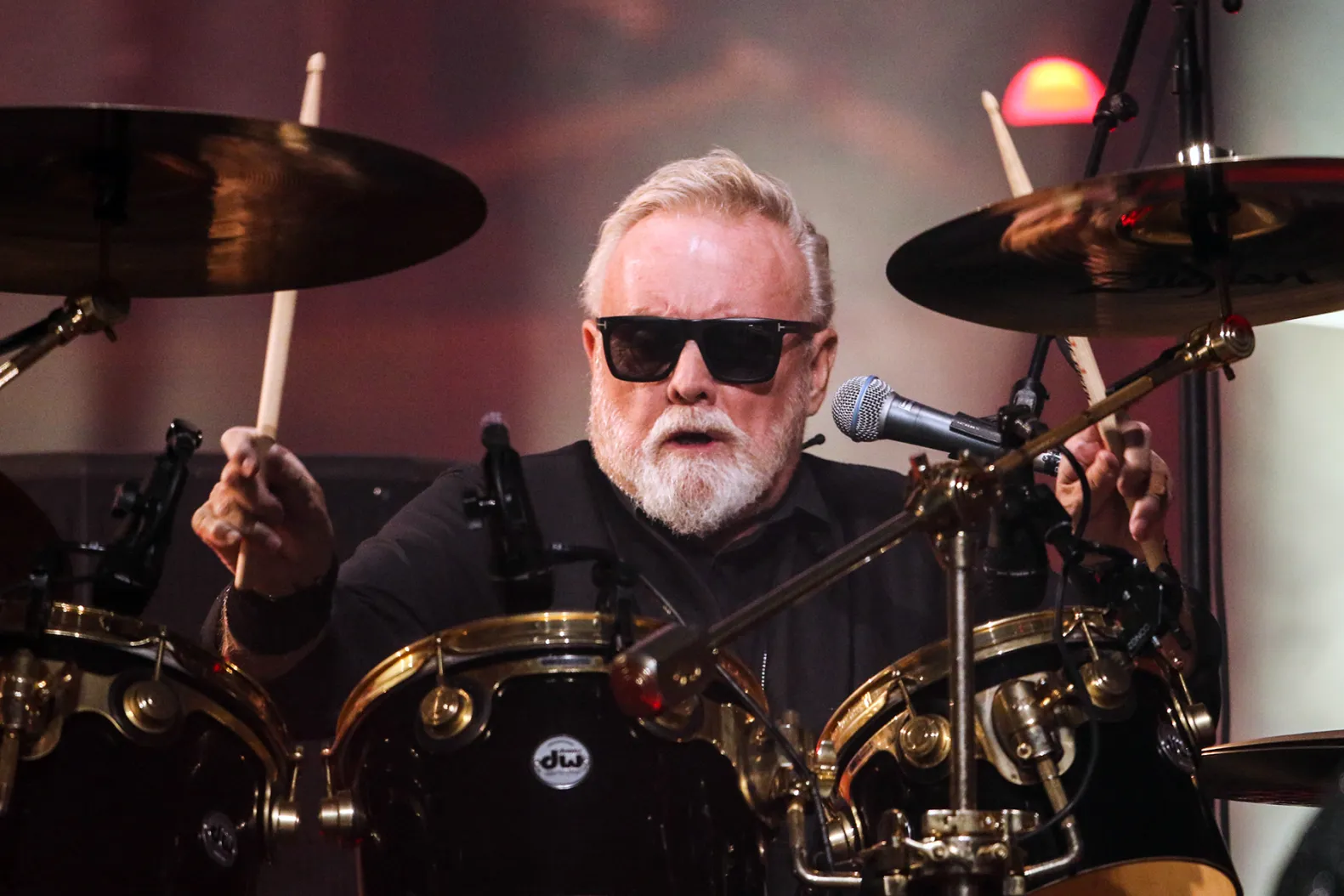
More than fifty years after he first sang beneath cathedral arches as a young choirboy, Roger Taylor returned to that same sacred space—not as a boy soprano, but as a 76-year-old musician reflecting on the passage of a lifetime.
For decades, Taylor has been known as the powerful rhythmic force behind Queen, performing in front of massive crowds where thunderous drums and stadium-sized anthems define the atmosphere. But the filming of the short film Journey’s End offered a very different experience. Set inside a cathedral in Cornwall, the project traded arena lights and roaring fans for quiet reflection and emotional vulnerability.
Those involved in the production say the film was originally imagined as a thoughtful meditation on life’s later chapters—touching on faith, memory, and the idea of endings. Taylor appeared in the project alongside his wife, Sarina Taylor, adding a deeply personal dimension. The cathedral itself—with towering stone pillars and sunlight spilling through stained glass—created an atmosphere of calm introspection.
Yet during filming, one moment reportedly turned unexpectedly emotional.
While standing beneath the same stained-glass windows he had once looked up at as a child, Taylor paused in the middle of a scene. The cameras continued recording as he gazed upward, tracing familiar shapes and colors that had once seemed enormous to a young boy singing in the choir. Decades earlier, that boy had possessed a clear treble voice. Now, the same person stood there older, shaped by years of music, fame, and experience.
Members of the film crew later described the pause as completely unscripted. Taylor appeared visibly moved—not by stage fright, but by the overwhelming sense of time passing. Reflecting on the moment privately, he reportedly acknowledged that memories of his entire life seemed to rush through his mind all at once.
The contrast was striking. Taylor’s public image has long been tied to noise and spectacle—driving rhythms, explosive performances, and the stadium roar of songs like We Will Rock You. In that environment, thoughts about time and mortality rarely break through the adrenaline of performance.
But the cathedral offered the opposite setting. Inside its vast stillness, every sound lingered. Footsteps echoed across the stone floor, and silence filled the space between moments. Without the distractions of a concert stage, Taylor was left alone with memory and reflection.
The title Journey’s End began to take on a deeper meaning. Although the project was never intended as a final statement, people close to the production say Taylor became aware that the film captured themes artists often grapple with later in life—legacy, spirituality, love, and the acceptance that every journey eventually slows.
Having Sarina by his side during filming added even more emotional weight. Their shared presence transformed the film from a personal reflection into something more intimate: a moment of connection between partners looking back at the paths that shaped them.
There’s a certain poetic symmetry in Taylor’s story. A young choirboy once sang beneath those cathedral windows, unaware that he would one day travel the world as part of one of rock’s most celebrated bands. Many decades later, he returned not to celebrate fame, but to quietly reflect on where the journey had taken him.
For Roger Taylor, one of rock’s loudest drummers, the most powerful realization didn’t arrive behind a drum kit.
It arrived in silence—inside a cathedral where time, memory, and music finally met.