
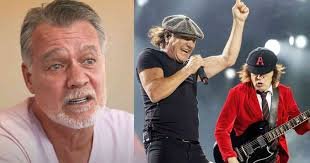
In the late 1970s, Van Halen were quickly becoming one of the most exciting new rock bands in the world. They were known for three powerful qualities that usually guaranteed a great live show: incredible technical skill, explosive energy, and a bold, fearless attitude. Eddie Van Halen’s guitar playing alone was enough to stop people in their tracks. Everything seemed to be going perfectly for the band—until one particular show in 1978 made Eddie genuinely nervous.
At the time, Van Halen had just finished opening for Black Sabbath. Despite having short sets, little preparation, and no proper sound checks, they managed to blow audiences away. Eddie later recalled that they played extremely loud, stacked their Marshall amps high, and left crowds stunned. Word spread fast about how intense and exciting Van Halen were onstage. Naturally, the band felt confident.
Then came an offer to play Day on the Green, a massive outdoor festival organized by legendary promoter Bill Graham. This was a huge opportunity. The lineup included some of the biggest rock bands of the era, such as Aerosmith and Foreigner. For a young band like Van Halen, this felt like the next big step toward rock stardom. They left the Black Sabbath tour behind, convinced they were ready to dominate an even larger stage.
Backstage at Day on the Green, Van Halen felt good—until Eddie watched the band playing before them: AC/DC.
AC/DC took the stage earlier in the day, and Eddie stood watching from the side. What he saw changed everything. Tens of thousands of people were jumping up and down, completely locked into AC/DC’s music. Their sound was simple, loud, and powerful. There were no fancy tricks, no complicated solos—just pure rock and roll energy. The crowd was hypnotized.
That’s when Eddie felt it: fear.
He realized that following a band like AC/DC was not going to be easy. Their music didn’t rely on technical showmanship. Instead, it hit people on a deep, physical level. The rhythm, the attitude, and the raw drive connected instantly with the audience. Eddie thought to himself, “How do we follow this?”
Van Halen did go on to play their set, but Eddie later admitted that they didn’t “blow them away” like they had hoped. And surprisingly, he didn’t entirely regret that. Watching AC/DC taught him an important lesson: sometimes simplicity is more powerful than complexity. Rock and roll doesn’t always need to be flashy to be effective. It needs to feel right.
Eddie respected AC/DC deeply. He admired how they stayed true to the basics of rock music—strong rhythms, confidence, and no unnecessary frills. Even though Eddie was known for pushing the limits of guitar technique, he understood that underneath it all, Van Halen’s music was also rooted in the same basic rock spirit.
Other legendary musicians felt the same way about AC/DC. Even famously tough critics like Keith Richards admired them, especially for how well they performed at festivals. Their ability to command massive crowds with straightforward rock songs earned them respect across the music world.
Looking back, Day on the Green in 1978 was not a failure for Van Halen. It was a learning moment. It showed Eddie Van Halen that technical brilliance alone doesn’t guarantee total crowd control—connection does. Energy, rhythm, and attitude can sometimes matter more than how many notes you play.
In the end, that experience helped shape Van Halen into an even stronger live band. It reminded them why rock and roll works in the first place. And it proved that even the greatest musicians can feel humbled when they see pure rock power done right.