
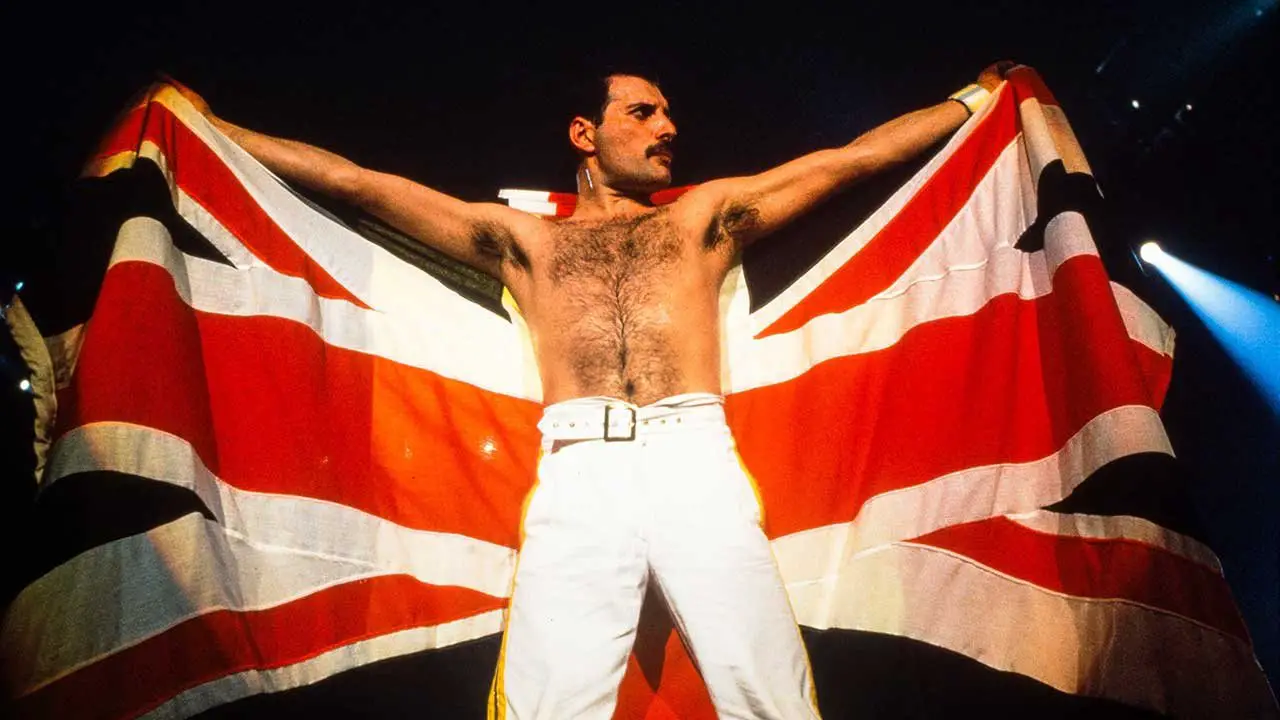
In 1974, Queen appeared on BBC’s Top of the Pops to promote their breakthrough hit, “Killer Queen.” The show was known for strict rules: artists were expected to lip-sync perfectly, follow directions, and deliver a polished performance. But Freddie Mercury had other plans.
Instead of playing along, Freddie turned the broadcast into a bold statement. Dressed in a flamboyant fur coat and holding his microphone stand like a scepter, he exaggerated gestures, mocked the pre-recorded track, and injected personality and energy into every moment. He refused to be a “perfect” mime and instead claimed the stage as his own.
The audience of 15 million was stunned. Freddie had shed the “newcomer” image, revealing a confident, daring artist. Mick Rock, who later photographed the band, recalled that Freddie’s performance shocked viewers but also captivated them, proving that charisma and authenticity mattered more than technical perfection. That single performance helped push “Killer Queen” to Number 2 on the UK Singles Chart and redefined Queen as a force in rock music.
That 1974 performance was more than a TV appearance. It was Freddie reclaiming rock and roll, showing the world that chaos and personality could be more powerful than perfection. By the time “Killer Queen” ended, Queen had made their mark. They survived the broadcast, entertained millions, and restored the theatrical spirit of rock for a new generation.
Freddie Mercury didn’t just perform that night—he transformed it into a defining moment that helped launch Queen into superstardom. It proved that true artistry often comes from boldness, creativity, and the courage to defy expectations.