
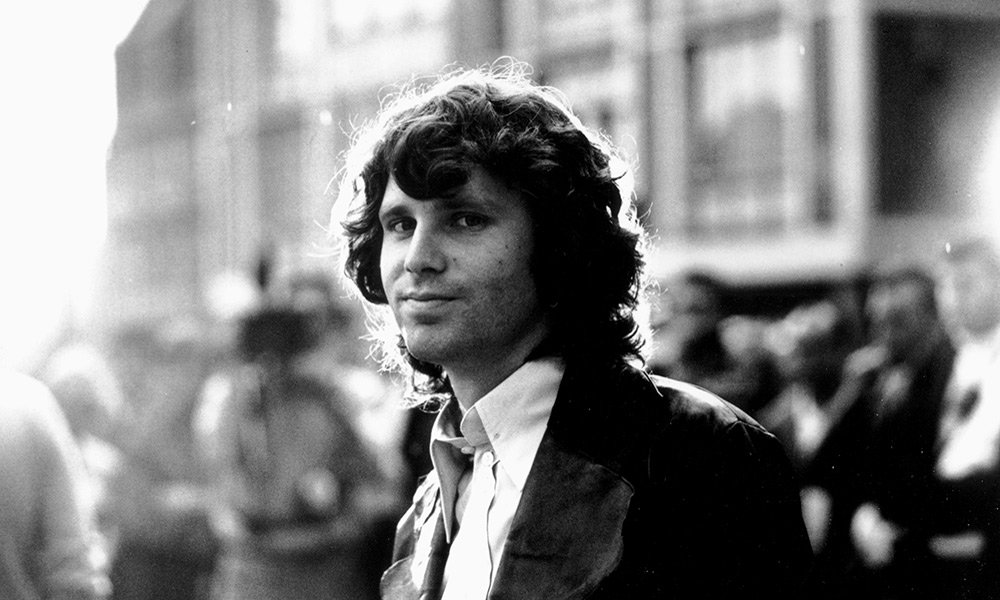
There’s a persistent myth about rock stars—that chaos fuels genius, that self-destruction is somehow inseparable from creativity. Few figures embody this contradiction more intensely than Jim Morrison.
He wasn’t just a wild frontman. He was something far more unsettling: a deeply intelligent, introspective mind who seemed to understand exactly what he was doing… and did it anyway.
The Mind Behind the Madness
Before he became the leather-clad poet of The Doors, Morrison was a serious student of film and literature. At UCLA, professors noted his unusually sharp intellect. Stories circulated about his near-photographic memory—his ability to absorb and recall vast passages of text, philosophy, and poetry with eerie precision.
He devoured the works of Friedrich Nietzsche, Arthur Rimbaud, and William Blake—writers obsessed with transcendence, chaos, and the limits of human experience. These weren’t casual interests. They became the foundation of his worldview.
Morrison didn’t just want to perform music. He wanted to break reality open.
The Lure of the Abyss
For Morrison, life wasn’t something to be lived safely—it was something to be tested. He believed that truth lay beyond social norms, beyond comfort, beyond control. And that belief came at a cost.
Alcohol wasn’t just indulgence. It was a tool—at least at first. A way to lower inhibitions, to access something raw and primal during performances. But over time, the tool became the master.
His onstage persona—the unpredictable, often confrontational “Lizard King”—blurred into his real identity. The line between performance and self dissolved. Arrests, erratic behavior, and increasingly self-destructive choices followed.
And here’s the uncomfortable truth: Morrison likely understood the trajectory.
Intelligence Without Restraint
It’s tempting to ask: If he was so smart, why didn’t he stop?
But intelligence doesn’t guarantee self-preservation. In Morrison’s case, it may have done the opposite. His deep awareness of existence—its absurdity, its constraints—seemed to push him toward extremes rather than away from them.
He wasn’t blindly spiraling. He was leaning in.
Writers like Nietzsche spoke of confronting chaos to become something greater. But Morrison didn’t just confront chaos—he lived inside it. And chaos doesn’t negotiate.
The Weight of Persona
Fame accelerated everything. Audiences didn’t just want Morrison’s poetry—they wanted his unpredictability, his danger. The industry rewarded the very traits that were tearing him apart.
Imagine being celebrated for your worst impulses. Imagine knowing it’s unsustainable… and still being unable, or unwilling, to step away.
By the early 1970s, Morrison seemed exhausted by the role he had created. He moved to Paris, hoping to reconnect with writing and distance himself from the chaos. But the damage—physical, psychological, and emotional—was already deep.
A Deliberate Descent?
So did Jim Morrison destroy himself deliberately?
Not in the simple sense of wanting to die. But perhaps in the deeper sense of refusing to compromise. He chased intensity over stability, experience over longevity, truth—however painful—over comfort.
There’s a haunting consistency in that.
The Legacy of a Restless Mind
Morrison died at 27, joining the infamous 27 Club—a label that often oversimplifies complex lives into tragic symbols.
But reducing him to a cautionary tale misses the point.
Jim Morrison represents something more unsettling: the idea that brilliance, when paired with obsession and a refusal to self-limit, can become self-destructive. Not by accident—but by design, or at least by acceptance.
He didn’t just burn out.
He chose to burn bright enough that the cost became inevitable.
And maybe that’s why he still fascinates us.
Because somewhere between the poetry and the chaos, he forces us to ask a question most people avoid: