
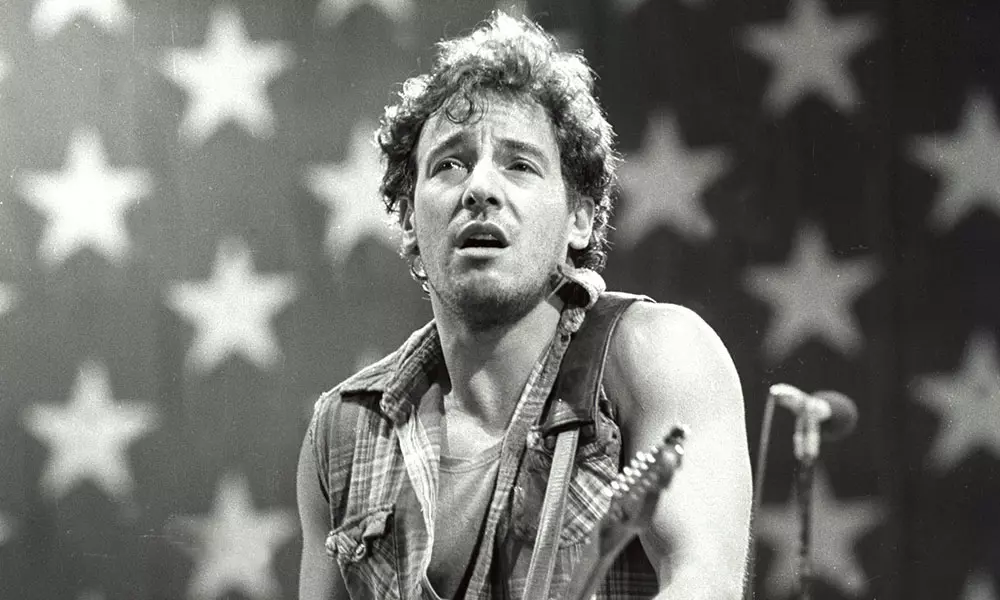
There’s something fascinating about watching greatness admire greatness. Even artists who have reached the very top still look upward—still searching, still learning, still inspired. Few examples capture that better than Bruce Springsteen reflecting on the influence of Bob Dylan and the brilliance of Prince.
Springsteen has never hidden his admiration for Dylan. In fact, he credits Dylan with shaping the very lens through which he saw the world. Dylan didn’t just write songs—he painted reality. His lyrics carried the weight of truth, reflecting a version of America that felt raw, honest, and deeply human. For Springsteen, that was a revelation. It wasn’t about crafting perfect melodies; it was about telling stories that felt lived-in, stories that people could recognize as their own.
That philosophy would go on to define Springsteen’s own work. His music became a mirror—of working-class struggles, fleeting dreams, and the quiet resilience of everyday life. And yet, for all his songwriting brilliance, Springsteen has always insisted that the real magic happens somewhere else: on stage.
To him, live performance isn’t just part of the job—it is the job.
“My business is show business,” he once said. “And that is the business of showing. You don’t tell people anything. You show them and let them decide.”
It’s a simple idea, but one that carries weight. Music, in this sense, isn’t about explanation. It’s about experience. It’s about creating a moment so powerful that the audience feels it before they even understand it.
And if there was ever an artist who embodied that philosophy to its fullest, it was Prince.
Prince wasn’t just a musician; he was a force of nature on stage. His performances weren’t confined to songs—they were spectacles. Every movement, every note, every flash of charisma demanded attention. You didn’t just watch a Prince concert—you were pulled into it, completely and irresistibly.
Springsteen recognized that immediately.
When speaking about Prince after his passing, he didn’t just mourn the loss—he acknowledged the challenge. Watching Prince perform wasn’t a passive experience; it was a wake-up call. It made even someone like Springsteen think, I need to step it up.
That kind of respect says everything.
He recalled a performance on The Arsenio Hall Show—a medley of songs delivered with such precision and flair that it became a masterclass in showmanship. Prince didn’t just understand performance; he mastered it. He knew how to command a stage, how to control a room, how to turn a fleeting moment—like a 30-second guitar solo—into something unforgettable.
That’s the rarest kind of artist. The kind who doesn’t just meet expectations but reshapes them.
After decades of relentless touring and iconic performances, Springsteen has earned his place among the greatest to ever do it. His shows are legendary for their energy, their emotional depth, and their connection with audiences. But even he acknowledges that true greatness is something you never fully conquer—you just keep chasing it.
And in that pursuit, Prince stands as one of the few who could match him step for step.
Some artists define an era. Others transcend it.
Springsteen and Prince? They remind us what it means to own a stage—and why we may not see anything quite like them again anytime soon.