
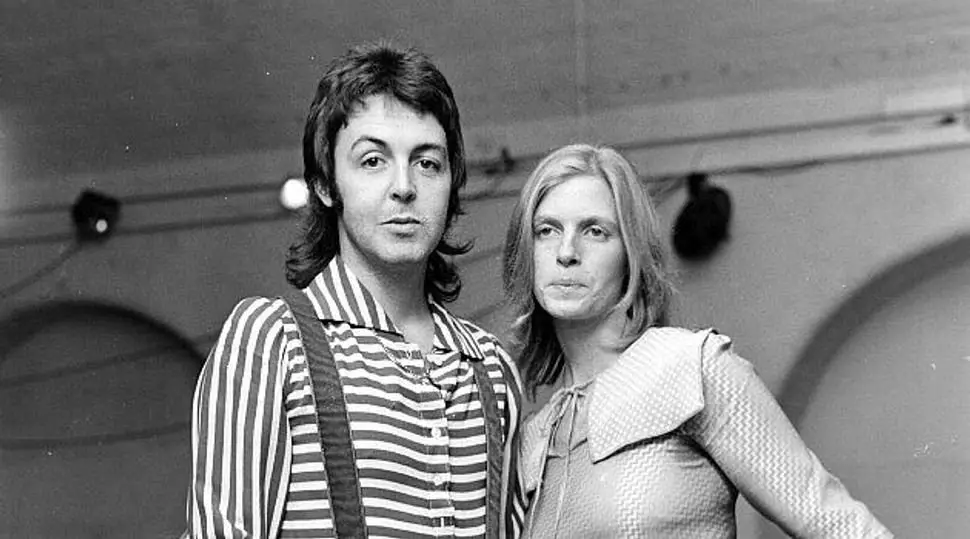
When Paul McCartney stepped onto the stage for his first major solo tour after the breakup of The Beatles, the world saw confidence. They saw a legend beginning a new chapter. What they didn’t see was the fear quietly building behind the scenes — or the one person holding him together: Linda McCartney.
The early 1970s were a turbulent time for Paul. After the Beatles’ split, he faced intense criticism, legal battles, and the crushing weight of proving himself without his former bandmates. His new group, Wings, was still finding its footing, and many critics were skeptical. Every performance felt like a test — not just of his music, but of his identity.
Behind the curtain, things weren’t as steady as they seemed. Paul later admitted he struggled with anxiety and self-doubt during this period. The pressure of stepping out alone, after years of global dominance with the Beatles, nearly overwhelmed him. There were moments before shows when he felt physically sick, unsure if he could even walk on stage.
That’s where Linda came in.
While audiences saw her as a keyboard player and backing vocalist, her real role went far deeper. Linda became Paul’s emotional anchor — a calming presence in the chaos of touring life. She stayed close backstage before every show, offering quiet reassurance when his nerves spiked. Sometimes, it wasn’t about saying anything profound. It was simply about being there.
Crew members from those early tours often recalled how Linda would sense Paul’s mood instantly. If he seemed overwhelmed, she would gently pull him aside, distract him with small talk, or remind him why he started making music in the first place. In moments when he felt like everything was falling apart, she helped him regain focus.
One particularly difficult night, as the pressure reached its peak, Paul reportedly considered canceling a performance. The expectations, the criticism, the fear of failure — it all became too much. But Linda refused to let him retreat. Instead of pushing him, she grounded him. She reminded him that he didn’t have to prove anything to anyone — he just had to be himself.
That simple shift changed everything.
Paul walked on stage that night not as “the ex-Beatle trying to succeed,” but as an artist rediscovering his voice. The performance wasn’t perfect, but it was real — and it marked a turning point. Slowly, show by show, his confidence began to rebuild.
Over time, Wings would go on to achieve massive success, producing hit albums and sold-out tours. But those early, fragile moments could have gone very differently without Linda’s quiet strength behind the scenes.
Paul would later speak openly about how much he relied on her during those years. Not just as a bandmate, but as a partner who truly understood him. In a world full of noise, expectations, and pressure, Linda was his constant — the one person who never doubted him, even when he doubted himself.
To the fans, it was just another tour. Another chapter in rock history.
But behind the stage lights, it was something much more personal — a story of love, resilience, and the unseen force that kept a legend from breaking.