
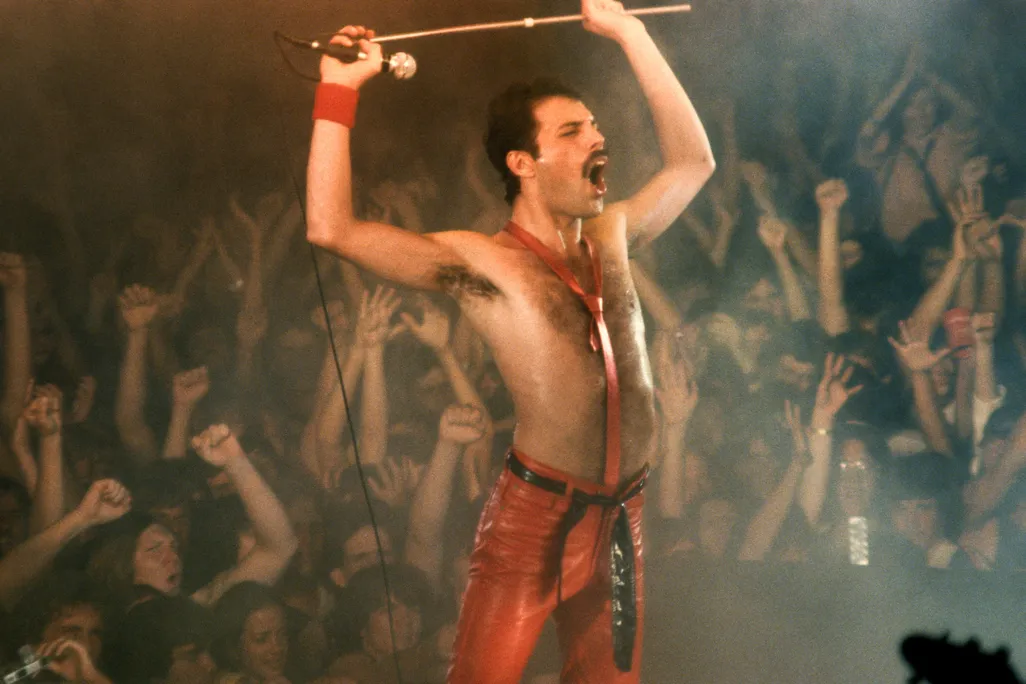
The Hole in the Wall public house on Bedfont Lane in Feltham, Middlesex was not a place that rewarded ambition.
It had been serving the same rotating population of factory workers, mechanics, and shift supervisors since 1954, and its relationship with live music was essentially functional: something to fill the space between the jukebox’s last song and closing time, background noise that shouldn’t cost too much or ask too much of anyone present.
The landlord, a heavyset man named Dennis Prichard, booked acts through a contact he had at a local agency. He paid twenty pounds for an evening. He provided a stage that was roughly the size of a generous bathroom, a PA system that had been adequate in 1961 and had declined steadily in the years since, and a microphone stand with a lean to the left that nobody had ever fixed because nobody had ever cared enough.
On the third Thursday of March in 1969, Dennis Prichard had a booking for a band that called itself Smile.
The band included Tim Staffell on bass and vocals, Roger Taylor on drums, and Brian May on guitar. The vocalist and frontman who stepped onto that tilted stage was Farrokh Bulsara, twenty-two years old, born in Zanzibar to Parsi Indian parents, educated at a boarding school in Panchgani where he had discovered both his singing voice and his hunger for an audience, and presently living in a flat in Feltham that he shared with several other young people and a growing collection of album sleeves that covered every available wall surface.
He had not yet taken the name Freddie Mercury. That was still ahead of him, part of a transformation that was already underway but not yet complete, like a photograph still developing in the dark.
He had, however, already designed his own stage clothes.
The shirt he was wearing that night was made from fabric he had bought at a market stall the previous weekend, a swirling pattern in burgundy and gold that he had cut and sewn himself in his bedroom over the course of two evenings. In the context of his flat, among friends who understood what he was reaching toward, it looked extraordinary. On the stage of the Hole in the Wall, to an audience of factory workers nursing pints under fluorescent lights, it looked like a provocation.
The band opened with an original composition. Brian May had barely played the opening notes when a beer mat sailed from somewhere in the middle of the room and skipped across the stage floor.
Not aimed at anyone specifically. More of an announcement. A declaration of the room’s position.
The second song drew consistent booing. Not a single voice but several, coordinated by the shared instinct of an audience that had decided collectively it was not interested and saw no reason to keep that information private.
The bass player looked at the drummer. The drummer looked at the guitarist. The unspoken calculation happening between them was legible: how long before we stop, how bad does this have to get, what is the protocol for a failure this immediate.
Freddie Mercury turned to face the audience.
He did not stop.
He did not apologize. He did not transition to a simpler song, a safer sound, something designed to meet the room where it was rather than ask it to come somewhere else. He did not turn the volume down or adjust his stage presence toward the invisible or stop being exactly what he had come there to be.
He gripped that leaning microphone stand with both hands. He planted his feet on the stage with the stance of someone who had decided where they stood and was not planning to move. And he sang.
Not performing for an audience that had accepted him. Performing for an audience that had rejected him, which is an entirely different thing. The kind of performing that requires a belief in yourself so complete and so specific that the crowd’s response — even a crowd throwing things, even a crowd actively hostile — becomes secondary to the internal compulsion that drives you to the stage in the first place.
Song by song. The booing was inconsistent now. Some of the crowd were still at it. But others had fallen quiet. Not converted, not won over, but something had shifted in the room’s relationship to the stage. The spectacle of genuine commitment, of someone refusing to be diminished by rejection, had produced in some members of the audience a reluctant attention.
By the seventh song, the booing had largely stopped.
By the ninth song, The Hole in the Wall was quiet in the particular way that pubs go quiet when something is happening that doesn’t fit the available categories.
The set ended. The band played the last note. The silence held for a moment that felt longer than it was.
There was applause. Not rapturous. Not standing ovation. The measured, slightly bewildered applause of people who had arrived expecting one thing and received another and were not entirely sure how to file it.
Freddie stepped off the stage. He was sweating through the handmade shirt. His hands were trembling slightly, the adrenaline finding its exit.
He passed the table nearest the stage steps. A man in his forties, heavy work jacket, a half-finished pint in front of him, looked up at him. He was one of the men who had been booing in the early songs.
“You’re completely mad,” the man said. Not cruelly. With a kind of grudging wonder.
Freddie looked at him. The transformation that would eventually produce Freddie Mercury — the full theatrical extravagance, the stadium crowds, the operatic excess — was still years away. But something of it was already present in the way he smiled at this man in the pub in Feltham on this Thursday night in March.
“Yes,” Freddie said. “Isn’t it wonderful.”
He went back to his flat. He told his flatmates it had been a rough crowd. He hung the shirt on the back of his door. He put an album on and lay on his bed and stared at the ceiling covered in album sleeves.
He was back on stage the following week.
And the week after that.
The Hole in the Wall booked Smile three more times that year because Dennis Prichard, whatever his aesthetic limitations, understood one thing clearly: a room that talked about a band after they left was worth more than a room that forgot them before last orders.
Nobody forgot that first night.