
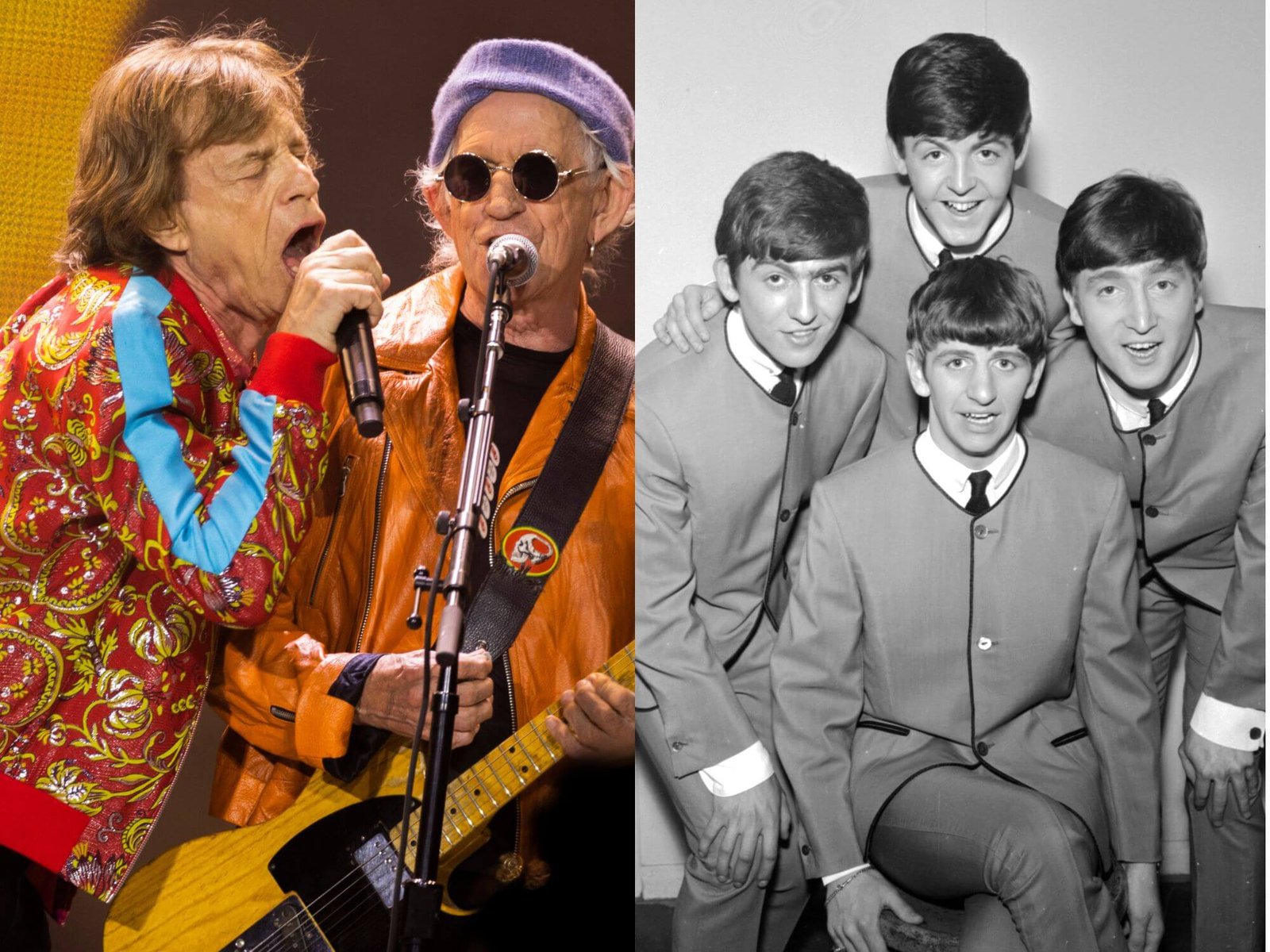
It’s one of the most iconic rivalries in music history—two bands, two sounds, two identities that seemed to clash at every turn. On one side: The Beatles, polished, melodic, and endlessly innovative. On the other: The Rolling Stones, raw, rebellious, and unapologetically gritty.
But the truth behind this “rivalry” is far more interesting than a simple battle for dominance. According to the people who lived it, the competition between these two legendary bands wasn’t fueled by hatred—it was driven by mutual respect, quiet ambition, and a shared desire to outdo each other creatively.
And in the end, that tension didn’t divide them—it elevated them.
A Rivalry Born More in the Media Than Reality
From the outside, the contrast seemed obvious. The Beatles wore suits and smiled for the cameras; the Stones looked like they had just walked out of a sleepless night. Fans were encouraged to “pick a side,” as if supporting one meant rejecting the other.
But behind the scenes, the story was very different.
Members of both bands have recalled that the so-called rivalry was often exaggerated by the press. In fact, early in their careers, there was a sense of camaraderie. They moved in similar circles, shared studios, and even supported each other’s work.
There was no war—at least not in the way people imagined.
Friendly Competition with Real Stakes
Even if the rivalry wasn’t personal, it was undeniably competitive.
When one band released something groundbreaking, the other paid attention. Closely.
If The Beatles pushed boundaries in songwriting or studio experimentation, The Rolling Stones felt the pressure to respond—not by copying, but by sharpening their own identity. And when the Stones leaned deeper into their blues-driven, rebellious sound, it challenged The Beatles to evolve beyond their early pop image.
This wasn’t imitation—it was escalation.
Each band became a mirror, reflecting what the other could never be, and in doing so, forcing both to grow.
Inspiration Disguised as Competition
People who were there often describe moments where one band’s success sparked something in the other.
A new album. A bold stylistic shift. An unexpected hit.
These moments didn’t create resentment—they created urgency.
The Beatles began experimenting more boldly in the studio, embracing new sounds and ideas. The Rolling Stones doubled down on their edge, refining a persona that felt dangerous and authentic. Each move raised the bar, not just for each other, but for the entire music industry.
Without that pressure, it’s hard to imagine either band evolving quite as rapidly—or as radically.
Different Paths, Same Goal
What made this dynamic so powerful was how different the bands truly were.
The Beatles chased transformation. They reinvented themselves constantly, moving from simple love songs to complex, genre-defying compositions.
The Rolling Stones chased identity. They dug deeper into their roots, perfecting a sound that felt timeless, gritty, and real.
One looked forward. The other looked inward.
And somehow, that contrast made both approaches stronger.
Respect Beneath the Surface
Despite the narratives, there was always a layer of mutual respect.
Stories from insiders often highlight moments of admiration—quiet acknowledgments of each other’s achievements. There was an understanding that both bands were part of something bigger than themselves: a cultural shift that was redefining music, art, and youth identity.
They weren’t just competing—they were co-leading a revolution.
The Legacy of a Rivalry That Wasn’t
In hindsight, the “rivalry” between The Beatles and The Rolling Stones feels less like a conflict and more like a creative partnership in disguise.
They didn’t collaborate in the traditional sense, but they influenced each other in ways that shaped their music—and, ultimately, music history itself.
Without that tension, that drive to push further and do better, we might not have seen the same level of innovation, risk-taking, and artistic growth.
Sometimes, the greatest progress doesn’t come from working together.
It comes from standing side by side, looking at what the other is doing—and deciding you can go even further.
Final Thought
The story of The Beatles and The Rolling Stones isn’t about who was better.
It’s about how both became better—because the other existed.
And maybe that’s the real lesson behind their legendary “rivalry”: