
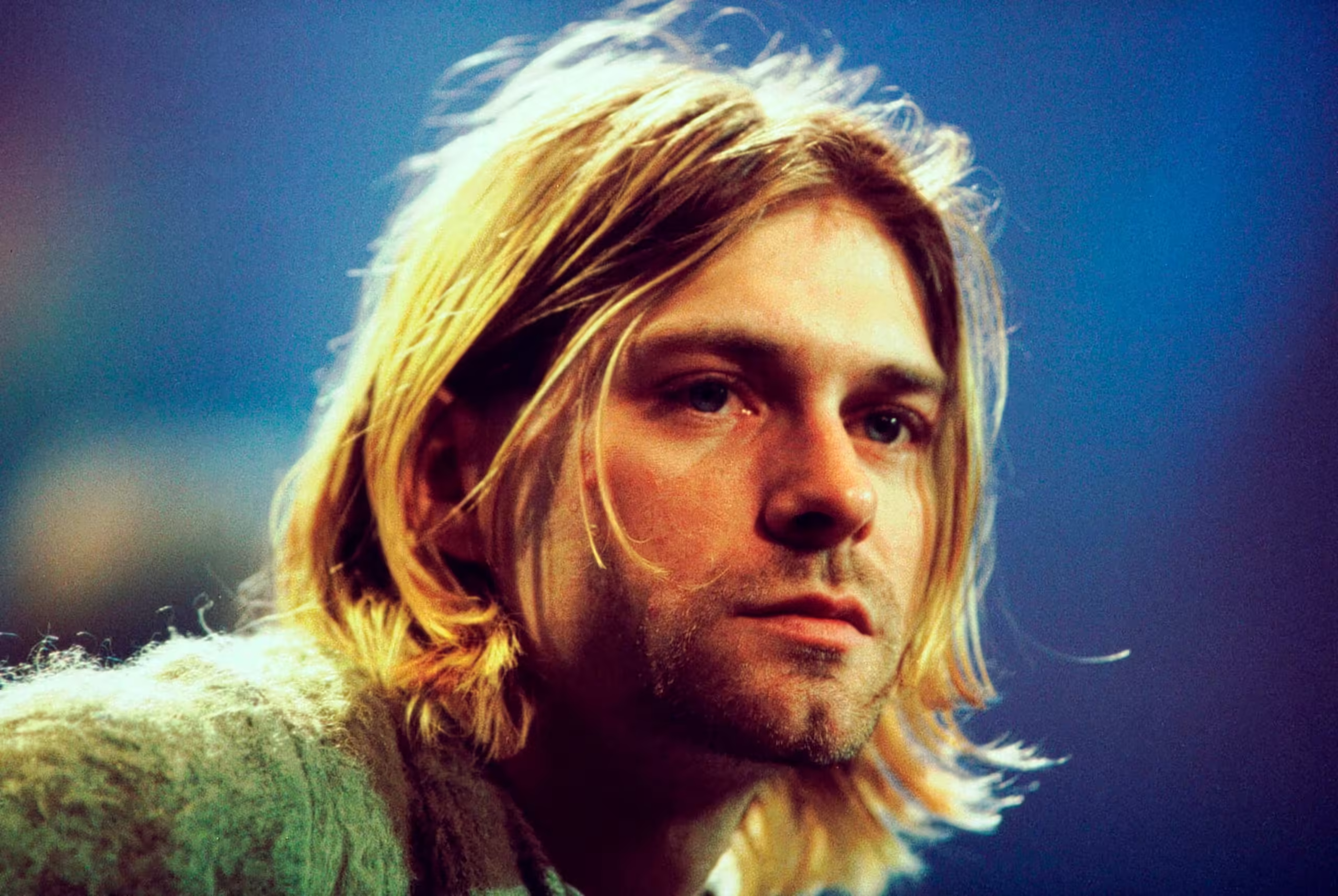
In January 1994, a few months before his death, Kurt Cobain sat for an interview with Rolling Stone journalist David Fricke. The piece was published in January of that year, and it contained something that many readers either glossed over or didn’t know how to interpret at the time.
Cobain was candid throughout — more candid than he often was in interviews — about his relationship with fame, his physical pain from a chronic stomach condition that had plagued him for years, and his complicated feelings about Nirvana’s position in the culture. He talked about how the success of Nevermind had frightened him more than it had gratified him, and how the gap between the music he cared about and the audience that had found him felt impossible to close.
But the passage that has been returned to most often in the years since his death was his description of his own emotional state. He didn’t dramatize it or present it as a confession. He spoke about it almost clinically — the way someone describes a condition they have learned to manage rather than resolve. He talked about feeling disconnected. About not being able to fully inhabit his own experience. About a persistent sense that the things which were supposed to matter didn’t reach him the way they reached other people.
At the time, the interview was read largely as the candor of an artist uncomfortable with his own fame — something that fit a familiar narrative about Cobain and about alternative rock more broadly. The introspective, self-critical musician who resisted success. The punk ethos applied to celebrity.
In the context of what happened three months later, those same words read differently. Not as confirmation of anything — grief has a tendency to turn ambiguous statements into prophecy, and that should be resisted — but as a portrait of someone in genuine pain, speaking openly in a forum where openness was possible, at a moment when the industry around him had no adequate response to what he was describing.
Cobain was 27 years old. In Utero, Nirvana’s final studio album, had been released four months before the interview. It remains one of the most emotionally raw major-label records ever made — an album that sounds, in retrospect, like someone trying to push far enough into the noise to find something quiet on the other side. Whether they found it or not is the question the music leaves open. It always will be.