
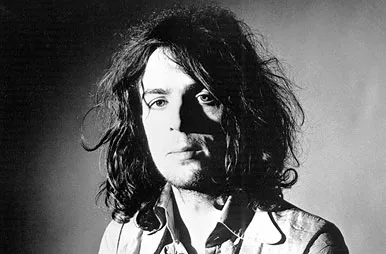
Sometime in 1967, the members of Pink Floyd began to understand that something was happening to Syd Barrett that none of them knew how to stop. He was still their lead singer and primary songwriter. He was still, on his better days, one of the most original musical minds any of them had ever encountered. But the person they had known — brilliant, warm, magnetic — was disappearing in front of them, and no one had the tools to intervene.
Barrett had been the architect of Pink Floyd’s early identity. His songs were strange and wonderful: full of English whimsy, psychedelic colour, and a genuine poetic sensibility that set the band apart from everything else happening in London at the time. The Piper at the Gates of Dawn, released in 1967, captured that voice at its peak — a record of genuine imagination, made by a young man who seemed to hear music differently from everyone else.
But the recording of their second album, A Saucerful of Secrets, told a different story. By late 1967, Barrett was erratic in ways that had gone beyond eccentricity. He would arrive at rehearsals and stand motionless, guitar in hand, playing the same chord repeatedly for hours. He would change his songs so completely from night to night that the rest of the band could not follow him. At one notorious American TV appearance, he detuned his guitar strings during the performance and stood there, unmoving, while the others played around him.
His bandmates — Roger Waters, Richard Wright, Nick Mason, and the newly added David Gilmour — were in an impossible position. These were young men in their early twenties, watching a friend they loved unravel in real time, with no medical framework to understand what was happening and no industry support structure to help. The music business of 1967 was not equipped to recognize the difference between artistic eccentricity and a genuine mental health crisis. Barrett’s increasing use of LSD was widely observed but not yet understood as a possible contributing factor.
The decision to quietly bring Gilmour in as a second guitarist, and eventually to stop inviting Barrett to shows altogether, was made with grief rather than calculation. Waters in particular has spoken over the years about the lasting weight of that period. There was no clean break, no final conversation, no moment of resolution. Barrett simply faded from the band the way he had faded from himself — gradually, then completely.
He went on to make two solo albums in the early 1970s, produced by his former bandmates in sessions that were, by all accounts, deeply difficult. Then he went home to Cambridge, where he lived quietly until his death in 2006. Pink Floyd went on to become one of the greatest bands in rock history, carrying the shadow of their beginning with them everywhere they went. The songs Barrett wrote before he disappeared — “Arnold Layne,” “See Emily Play,” “Astronomy Domine” — remain among the most original pieces of music the 1960s produced. Forty years after he wrote them, they still sound like nothing else.