
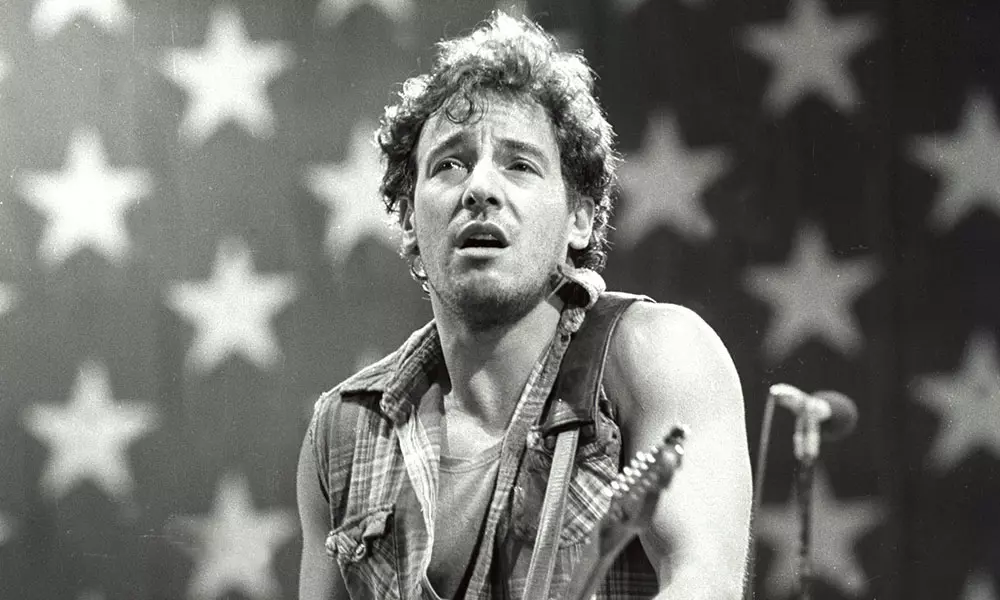
There is a moment Bruce Springsteen has described many times over the years, one that happened long before the stadium lights and the sold-out arenas. It happened in a small club, on a night when almost nobody showed up. And he played as hard as he ever had.
Before Born to Run changed everything in 1975, Springsteen was a working musician scraping by on the East Coast circuit. He and the E Street Band played anywhere they could — clubs, bars, college venues — often to thin crowds who didn’t know who he was. Money was tight. His manager Mike Appel frequently had to borrow funds just to pay the road crew. But none of that seemed to matter once Springsteen walked on stage.
Even in those early, near-empty rooms, Springsteen played with everything he had. Bandmates from that era have spoken about how he treated every performance as if it were Madison Square Garden — jumping into crowds, singing on tables, pulling stories from his childhood in Freehold, New Jersey into long, improvised narratives before the songs. The performances were often three hours long, sometimes more, with no setlist and no ceiling.
That ethic never left him. By 2016, Springsteen had turned four-hour concerts into a documented, record-breaking habit. Over a sixteen-day stretch that August, he and the E Street Band broke his own record for the longest American show — on four separate occasions. On August 30 at MetLife Stadium, they played for four hours and one minute without a break. Not a pause. Not an intermission. Just music, at full throttle, for an entire evening and beyond.
It wasn’t just endurance. Those who were there describe something closer to a covenant between Springsteen and the audience — the sense that he had made a silent promise, somewhere back in those early empty clubs, that he would never give anything less than everything.
Joining Springsteen were Roy Bittan, Nils Lofgren, Patti Scialfa, Garry Tallent, Steven Van Zandt, and Max Weinberg, along with Jake Clemons, Soozie Tyrell, Charles Giordano, and Sam Bardfeld. The band matched his intensity note for note, the way they always have.
What drives a man to play four hours when two would satisfy any audience? Part of the answer lies in those early years, when there was no audience to satisfy. When you learn to perform that way — fully, generously, without calculation — it becomes the only way you know how to do it. The size of the crowd stops mattering. The clock stops mattering.
Springsteen has never named one show as definitively the best. But the philosophy he formed in those small rooms — that every night is the only night — is the answer. It doesn’t matter if it’s twelve people or a hundred thousand. The show is always the same show. That’s the promise he made to himself before anyone knew his name. And in forty years of performing, he has never broken it.