
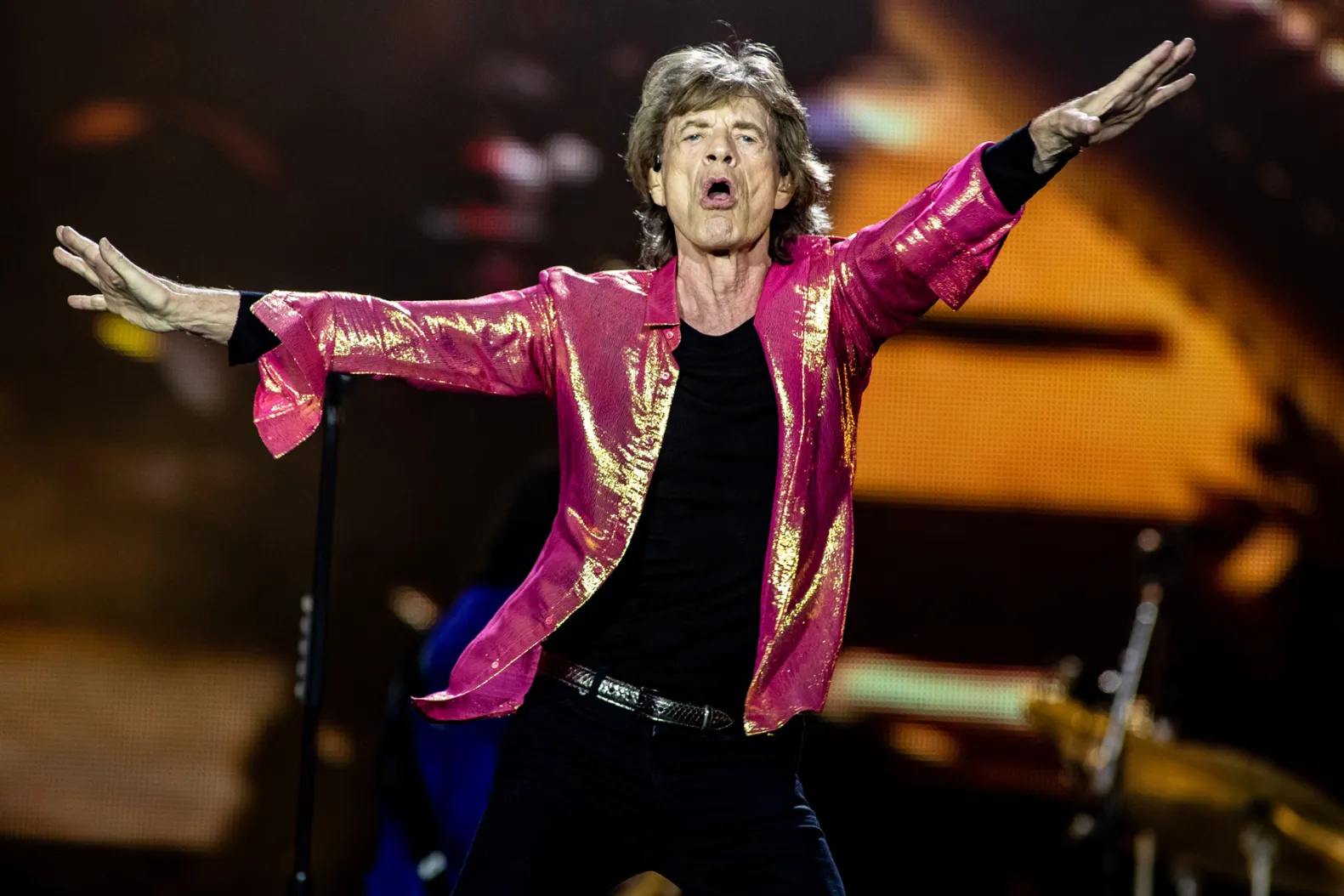
At 81, “Mick Jagger” has survived everything the music industry could throw at him — scandal, tragedy, reinvention, and decades of speculation about when, exactly, the Rolling Stones would finally stop. He has outlasted trends, critics, and bandmates. But there is one decision, buried deep in the band’s history, that Jagger has never been fully able to justify. Not publicly. Not until now.
In a rare moment of unguarded reflection, Jagger spoke candidly about a chapter the Stones have long preferred to leave unexamined. The admission wasn’t dramatic. It wasn’t a press conference or a carefully managed revelation. It came quietly, the way the most honest things usually do — in a conversation where he seemed, for once, less like a rock icon and more like a man taking stock.
“I should have walked away,” he said. And the weight behind those five words carried everything he hadn’t said in forty years.
The decision in question centers on the band’s turbulent mid-1980s period — specifically, the breakdown of his relationship with **Keith Richards** and the parallel solo careers both men pursued while the Stones effectively fractured. Jagger’s 1985 debut solo album *She’s the Boss* was released to mixed reviews, and his decision to continue pushing his solo identity rather than prioritizing the band’s unity sent a rupture through the Stones that took years to repair. Richards, famously, was furious. He referred to the period in his own memoir with language that left little room for interpretation.
What Jagger now appears to regret isn’t the album itself — but the silence that followed. The years of not picking up the phone. The pride that kept two men who built something irreplaceable from simply sitting in a room together and fixing it. “You think there’s always more time,” he reflected, in a tone that suggested he no longer believes that with the same confidence.
The admission carries particular weight in the aftermath of **Charlie Watts**’ death in 2021. Watts, the band’s drummer and quiet moral center for nearly six decades, was by many accounts the person who kept Jagger and Richards from fully destroying what they had. His absence has changed things. It has made certain conversations feel more urgent, and certain silences feel less acceptable.
Those who know Jagger well have noted a shift in him since Watts passed — a softening that doesn’t come from weakness, but from clarity. At a certain age, legacy stops being abstract. It becomes the actual shape of your life. And when you look at that shape honestly, some corners are harder to look at than others.
For Jagger, the 1980s fracture is one of those corners. Not because the music failed. Not because the Stones didn’t recover. They did recover — spectacularly, with *Tattoo You* already behind them and *Steel Wheels* still ahead. But the cost of that fracture, measured in lost years and unspoken words between two people who understood each other better than anyone else on earth, is not something a reunion tour can fully repay.
What makes this moment significant isn’t the revelation itself. Fans of the Stones have long known the 1980s were difficult. What’s significant is that Jagger is saying it out loud, without spin, without the armour of irony he has worn for most of his public life. That armour has always been part of his genius — the ability to be completely present on a stage while remaining somehow unreachable. This is different.
At 81, Mick Jagger isn’t asking for sympathy. He’s not rewriting history. He is simply doing what very few people in his position ever allow themselves to do: admitting that even at the top of the world, with everything, there were moments where he chose wrong — and that those moments mattered.
The Rolling Stones have always been about survival. But survival, as Jagger seems to understand now, isn’t just about enduring. It’s about reckoning with what the enduring cost you.
Some things, it turns out, take 40 years to say out loud.