
There has always been a divide among fans of Queen. For some, the band ended in 1991 when Freddie Mercury passed away. They feel that his voice, his presence, and his energy were so unique that no one should ever try to step into his place. Because of this, they have never fully accepted Adam Lambert as part of Queen’s live performances.
But the reality is a bit more complicated — and much more interesting.
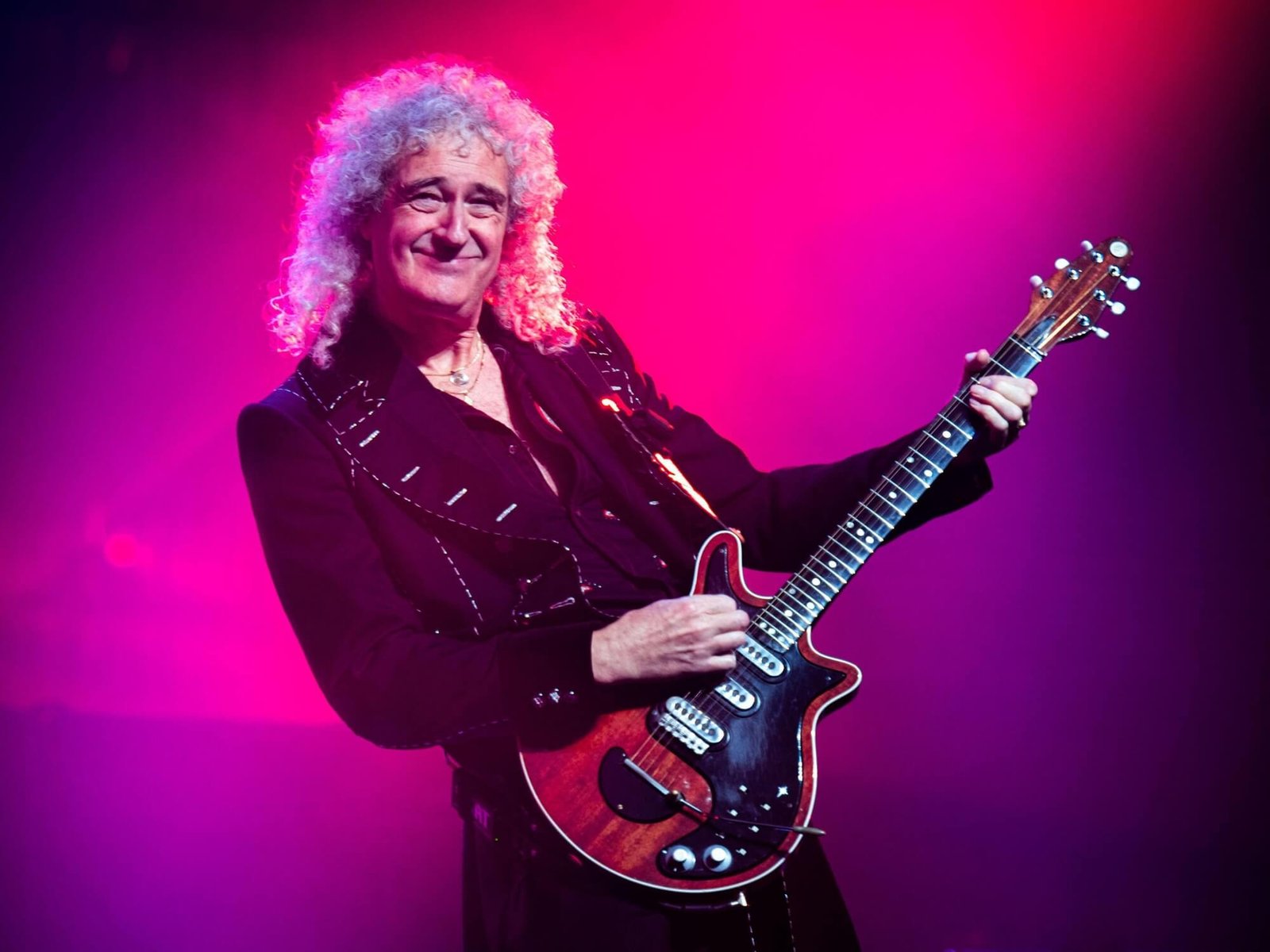
Brian May, Queen’s legendary guitarist, has heard all the criticism over the years. At first, he responded politely. But over time, his message became clearer and more direct. He has openly said that touring with a Freddie Mercury impersonator would have been the wrong decision. For him, that would feel fake — like trying to recreate something that can never truly be repeated.
Instead, Queen chose a different path.
Adam Lambert is not there to replace Freddie Mercury. He is there to celebrate the music while being himself. That is exactly why Brian May and Roger Taylor chose him. Lambert has a powerful and unique voice, but more importantly, he respects Freddie’s legacy without copying him.
And that approach has worked.
The collaboration between Queen and Adam Lambert began back in 2009 when Brian May and Roger Taylor appeared on American Idol, the show where Lambert was a contestant. May was impressed after hearing Lambert perform “Bohemian Rhapsody,” one of Queen’s most iconic songs. That moment turned into something much bigger over time — a full touring partnership that has lasted for more than a decade.
Since then, they have performed all over the world, playing to sold-out arenas across North America, Europe, Australia, and beyond. Their Rhapsody Tour, which ran from 2019 to 2024, became one of the most successful rock tours in recent years. That alone says a lot. No matter what critics say, audiences continue to show up.
Brian May has also been very clear about how important Adam Lambert is to Queen today. He has described him as “the reason we are still alive as a functioning rock band.” That is a strong statement. It shows that Lambert is not just a guest — he is a key part of keeping Queen’s live performances going.
One of the most powerful things May has said is that Freddie Mercury would have approved of Adam Lambert. For fans who question the collaboration in the name of protecting Freddie’s legacy, this changes the perspective completely. After all, May knew Freddie personally, worked with him closely, and understood his spirit better than almost anyone.
On stage, the chemistry between Brian May, Roger Taylor, and Adam Lambert has only grown stronger over time. They perform without relying heavily on backing tracks, which means every show feels real and slightly different. That sense of live energy is something Queen has always been known for.
Of course, not everyone will ever accept this version of Queen. And that’s okay. Music is personal, and people connect to it in different ways. But Brian May’s message is simple: Adam Lambert is part of Queen’s present, not a replacement for its past.
In the end, Queen is not trying to recreate what once was. Instead, they are keeping the music alive in a new way — one that respects the past while still moving forward.