
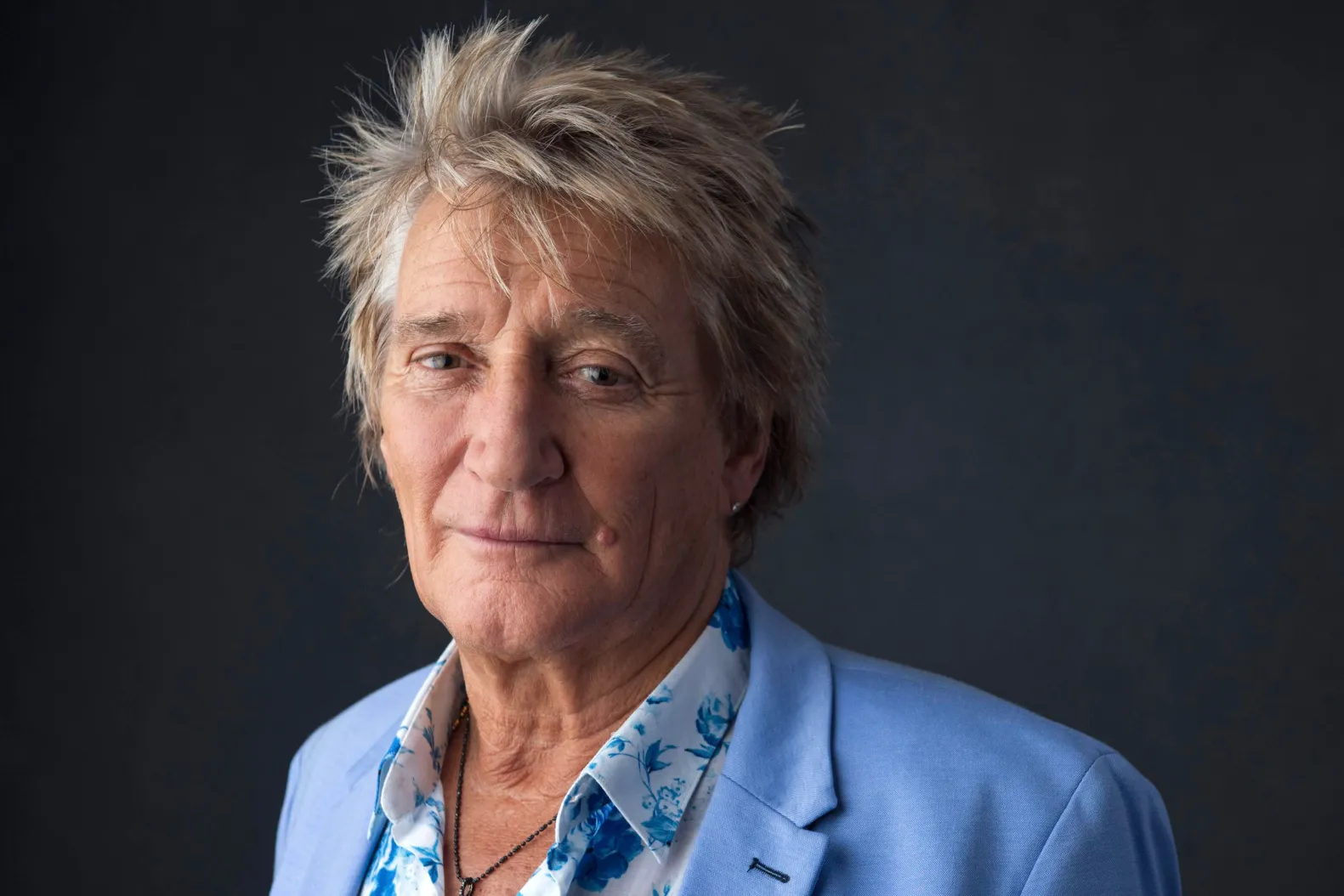
In 2018, rock icon Rod Stewart reignited a powerful conversation about history, censorship, and the ability of music to transcend political barriers. After the BBC allegedly refused to broadcast his cover of the beloved Irish ballad Grace, citing concerns over its sensitivity regarding the 1916 Easter Rising, Stewart delivered an unforgettable artistic retort. In a spine-tingling live performance in Dublin, Stewart united a crowd of thousands in a powerful, emotional tribute. His rendition of Grace became not just a highlight of his set, but a political statement, delivered directly to the hearts of the people. In response to the BBC’s ban, Stewart’s performance at Celtic Park had the 60,000-strong crowd singing along in tears.
Grace, written in 1985 by Frank and Seán O’Meara, tells the tragic true love story of Grace Gifford and Joseph Mary Plunkett. Plunkett was one of the leaders of the 1916 Easter Rising, a pivotal event in Ireland’s fight against British rule. The song recounts the poignant scene of Grace marrying Joseph in Kilmainham Gaol, just hours before his execution by firing squad. Stewart recorded his version for his 2018 album Blood Red Roses. However, Stewart claimed the BBC declined to air his performance of the song on a radio show, deeming it too “controversial” because of its subject matter.
Rather than backing down, Stewart took the song directly to his fans. As a known supporter of Celtic F.C., he performed Grace at concerts across Ireland, particularly in Dublin and Belfast. His performances were met with overwhelming support, with tens of thousands of fans singing every word. Footage from these live shows captures the emotional power of the performance. Instead of delivering it as a typical rock song, Stewart presented Grace as a haunting, folk-inspired ballad. Cameras captured thousands of audience members with their arms around one another, tearfully singing along to the poignant tale of love and sacrifice. This collective emotional outpouring proved that the song was, above all, a powerful love story, deeply cherished by the Irish community.
Stewart’s commitment to the song was evident when he revealed he had visited Kilmainham Gaol and the chapel where Grace and Joseph were married, expressing how deeply moved he was by the history behind it.
Rod Stewart’s defiance illustrated the futility of censoring a powerful cultural narrative. Despite the controversy surrounding the BBC’s ban, Blood Red Roses peaked at No. 2 on the UK Albums Chart, and Grace quickly became a fan favorite. The incident highlighted the tension between historical narratives and media sensitivity in the UK regarding Irish history. Stewart’s decision to champion the song was a potent reminder that artists have the power to amplify historically marginalized voices and stories.
Stewart’s performance of Grace went beyond being just another song in his setlist. It became a powerful act of solidarity, turning a media controversy into one of the most memorable and emotionally charged moments of his later career.
https://www.facebook.com/photo/?fbid=122250670142137694&set=a.122140721102137694