
For decades, a forgotten reel sat gathering dust in a box in Perth—warped, mislabeled, and marked for destruction. The tape was listed simply as “junk,” a degraded 1979 rehearsal recording thought to be beyond saving. But what three senior engineers at Neumann uncovered recently has rocked the foundation of rock history: a previously unheard vocal performance from Bon Scott, isolated and restored using cutting-edge 2026 audio technology.
The discovery began as part of what seemed to be a routine commemorative collaboration—a special anniversary microphone designed to honor Scott’s legacy. Behind the scenes, however, Neumann’s research division was testing a groundbreaking new AI-analog hybrid processing system, designed to extract usable signals from severely damaged recordings. The technology was initially intended to showcase the clarity of the limited-edition microphone. What it revealed, though, was nothing short of a revelation.
According to the engineers involved, the tape’s magnetic coating had deteriorated to the point where traditional digitization methods could only yield distortion and hiss. For years, archivists assumed no usable audio remained. But the 2026 system—fusing machine-learning separation models with classic analog signal restoration—approached the tape differently. Instead of trying to “clean” the noise, it mapped the harmonic fingerprints of Scott’s voice against the surviving waveform fragments.
What emerged left everyone stunned.
Beneath the layers of rehearsal bleed and mechanical decay was the unmistakable raw power of Bon Scott’s voice. It wasn’t a demo, nor was it a bootleg. It was a raw studio run-through of a song no one had ever cataloged—likely an abandoned track from the sessions following Highway to Hell.
The engineers reportedly played the restored vocals through a modern reference monitor system before routing the sound back through a vintage analog chain to preserve the grit and texture of the original. What they didn’t produce was a polished, artificial recreation. What they uncovered was urgent, alive, and undeniably real. Every rasp, every laugh between lines, every breath felt tangible.
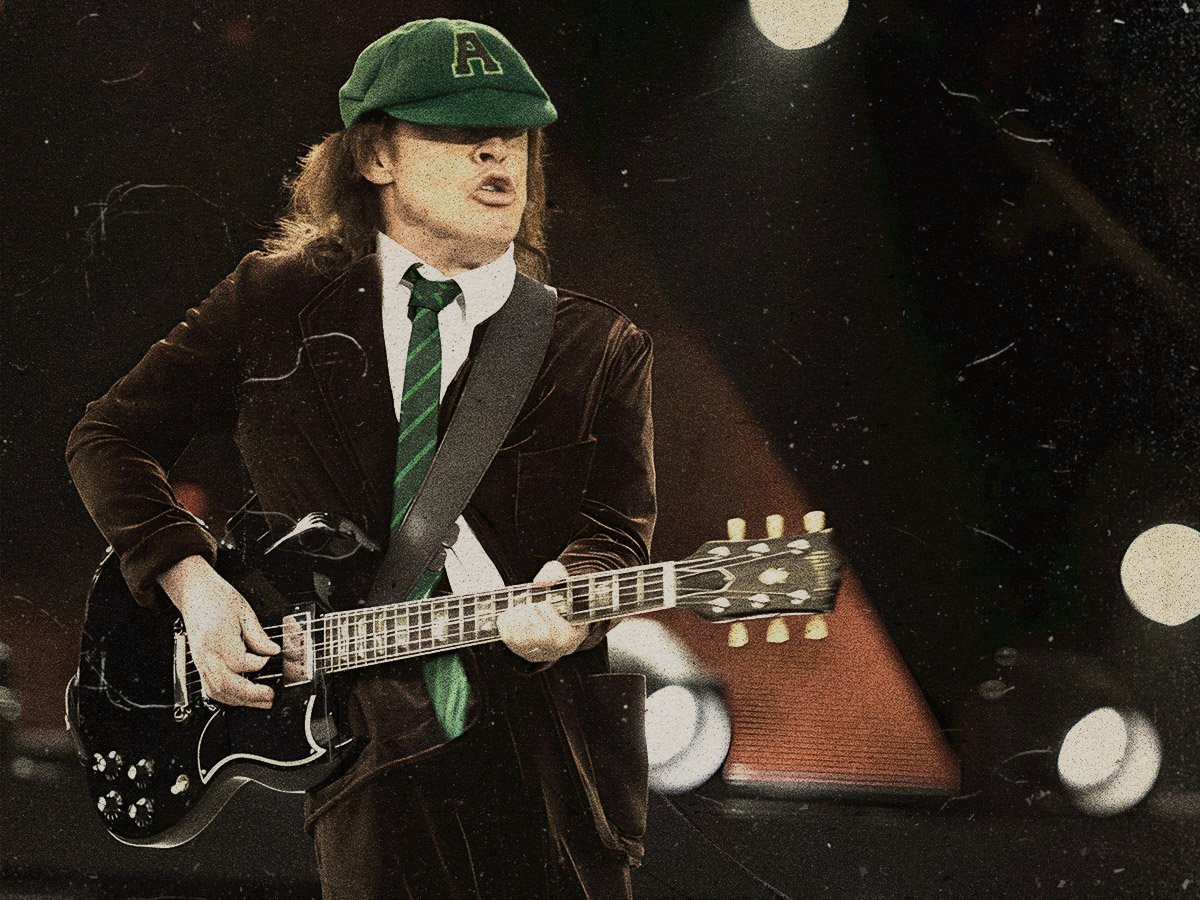
When Angus Young was invited to hear the playback, sources say the entire atmosphere shifted. Known for his stoic commitment to the band’s legacy, Young stood motionless as the opening chords played. Then, Scott’s voice cut through the speakers—clear, centered, and hauntingly immediate.
After the final note faded, sources describe a long silence.
Young, who has kept AC/DC alive for more than four decades since Scott’s death in 1980, reportedly wept openly. One insider quoted him as calling it “the ghost in the machine we’ve been waiting for.” For a band that has been defined by relentless riffs and tours, the moment was profoundly intimate.
While the ethics of posthumous releases are often debated, those close to the project insist this isn’t about creating nostalgia. The vocal wasn’t synthesized or artificially generated. It had been there all along—buried beneath technological limitations that only now had been overcome.
Industry analysts believe the restored track could become one of the most significant archival releases in rock history. But for the engineers involved, the breakthrough feels more spiritual than commercial. They describe the experience not as creating something new, but as uncovering something that had refused to vanish.
In an age when artificial intelligence often raises concerns about authenticity, this project presents a different narrative—one where technology serves to preserve rather than replace. The AI didn’t invent Bon Scott’s voice. It uncovered it.
As discussions begin about whether the track will be officially released under the AC/DC name, one thing is clear: the past is no longer as silent as it once was. A moment lost in 1979, once destined for disposal, has been brought back into the present—proof that sometimes, the loudest echoes come from tapes nearly thrown away.
https://www.facebook.com/photo/?fbid=847908988286158&set=a.162924676784596