
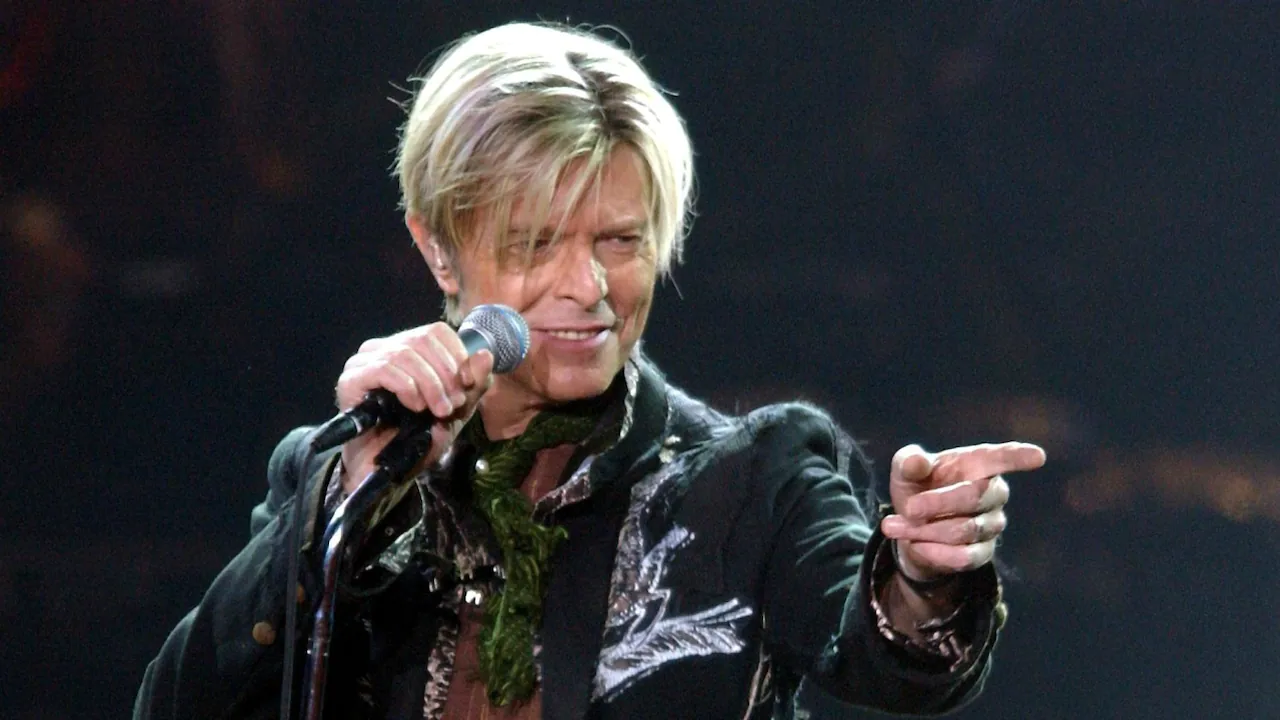
In February 2016, only weeks after the world learned of the death of David Bowie, the music community was still in shock. Bowie, whose creativity reshaped music, fashion, and identity for generations, had quietly battled liver cancer before passing away. His death left fans and fellow artists grieving the loss of one of the most imaginative figures in modern culture.
That year’s Brit Awards became the setting for an unforgettable tribute—one that many viewers would later describe as one of the ceremony’s most emotional moments.
The tribute began with actor Gary Oldman, a longtime friend of Bowie, stepping onto the stage. Speaking to a silent arena, Oldman shared heartfelt reflections about the artist he admired so deeply. He remembered Bowie not only as a global icon but also as a fearless innovator who constantly reinvented himself and inspired others to think differently about music and identity.
As Oldman finished his moving words, Bowie’s longtime touring musicians quietly took their places on stage. Rather than beginning with a full performance right away, they started with an instrumental medley built from several of Bowie’s most recognizable songs. One melody blended into the next, reminding the audience of the extraordinary body of work Bowie created during his lifetime.
The atmosphere inside the arena grew more emotional with each passing moment. As the music reached its final section, the lights slowly dimmed, leaving the stage in near darkness. The crowd waited in anticipation.
Then a single spotlight appeared.
Under the light stood Lorde, just nineteen years old at the time. Her presence was especially meaningful. A few years earlier, Bowie had openly praised the young singer, even describing her as “the future of music.” For Lorde, performing in his honor was clearly both a privilege and a heavy responsibility.
Instead of delivering a dramatic performance, she chose a more delicate approach. With calm composure, she began singing Life on Mars?, one of Bowie’s most beloved songs. Her voice was soft and controlled, letting the melody unfold gently rather than trying to match the theatrical power of Bowie’s original version.
The arrangement remained simple, allowing every lyric to linger in the quiet space of the arena. Lorde’s performance carried a sense of reflection and sadness that fit the moment perfectly. Rather than transforming the song, she treated it with deep respect, letting its beauty speak on its own.
Backstage, Gary Oldman watched the performance unfold. Cameras briefly captured him wiping away tears as the song continued. The emotion in the room was undeniable—part sorrow over Bowie’s passing, part gratitude for the incredible legacy he had left behind.
When the final notes faded, the audience rose to their feet in a powerful standing ovation. Millions more were watching from home, and many felt they had witnessed something truly special.
What made the tribute stand out was its sincerity. Lorde didn’t try to imitate Bowie’s unique voice or style. Instead, she offered a quiet, heartfelt interpretation that honored the spirit of the song.
In many ways, the moment felt symbolic. A young artist once encouraged by Bowie stood on stage celebrating his life and music. It wasn’t just a performance—it felt like a respectful farewell to the legendary Ziggy Stardust, delivered with grace and genuine emotion.