
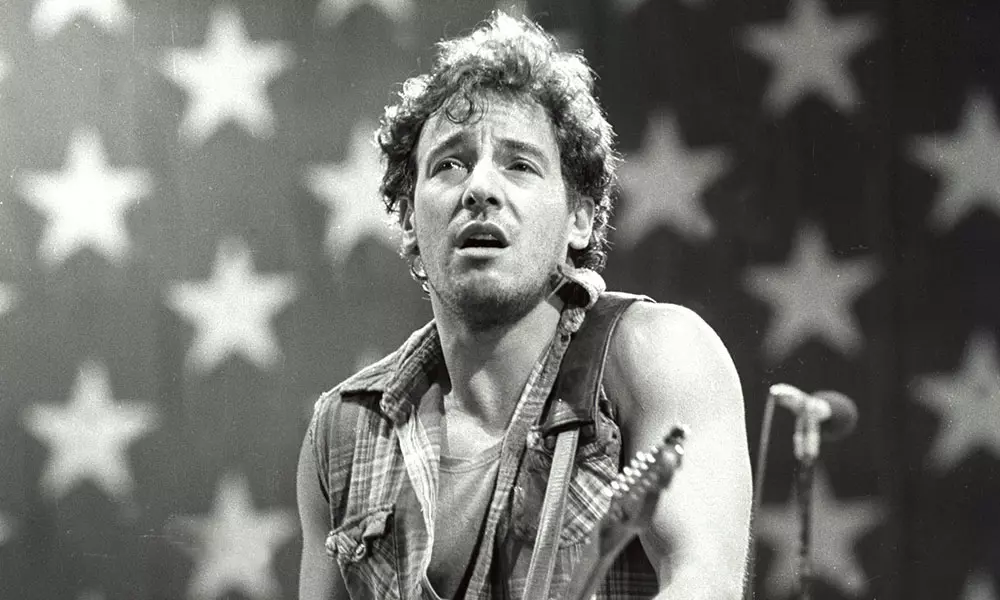
Bruce Springsteen, also known as “The Boss,” is famous not just for his music, but for the stories he tells through his songs. When you listen to albums like Born to Run or Darkness on the Edge of Town, the stories could be about almost anyone. They talk about ordinary people — workers, dreamers, people struggling to get by — especially those who never get a chance to tell their own stories. That is what made Springsteen special. He gave a voice to a side of America that was often ignored.
Springsteen did not create this style of storytelling from nothing. He followed a long tradition in American music. From the beginning, great rock and roll artists used songs to describe real life. Chuck Berry, one of the founders of rock music, wrote about teenage life, school, cars, and playing guitar. His songs felt like short stories set to music. He helped listeners picture scenes from everyday life, and that approach shaped many artists who came after him.
For Springsteen, music always had to mean something. He admired artists who made listeners feel every word. One of those artists was Van Morrison, especially on albums like Astral Weeks, where emotion mattered more than perfection. Another huge influence was Bob Dylan. In Springsteen’s early albums, you can clearly hear Dylan’s shadow. The long verses, the detailed lyrics, and the feeling that the song is telling a full story all connect back to Dylan’s work in the 1960s.
Before Born to Run made him a superstar, many people saw Springsteen as the next Bob Dylan. Like Dylan, he wrote long songs filled with images and characters. However, Springsteen was not trying to lecture people or make political speeches. Instead, he focused on emotion, movement, and the feeling of wanting something more out of life. His songs felt like movies playing in your head.
As Springsteen grew as an artist, he began looking even further back into music history. One of his most important influences became Woody Guthrie. Guthrie wrote songs for working people and stood up for the poor, the struggling, and the forgotten. Songs like This Land Is Your Land showed America as it really was — not perfect, but full of real people trying to survive.
Springsteen once said that Bob Dylan was the “father” of his musical country, but Woody Guthrie was the “grandfather.” Guthrie’s music showed him what America truly looked like when all the masks were removed. That idea stayed with Springsteen throughout his career. He wanted his music to reflect real life, not fantasy.
You can see Guthrie’s influence clearly after major moments of pain in American history. After the attacks of September 11, 2001, many people felt lost and unsure of how to move forward. Springsteen responded with songs like The Rising and My City of Ruins. These songs were not about anger or blame. They were about healing, unity, and hope — the same goals Guthrie had decades earlier.
Springsteen may not have written slogans on his guitar, but his message is clear in his music. Every song shows his belief in fairness, freedom, and standing up for those who feel small or powerless. Through simple stories and honest emotion, he continues a tradition that started long before him.
Bruce Springsteen’s greatest achievement is not fame or awards. It is his ability to make people feel seen and heard. By telling simple stories about everyday life, he made American music more human — and that is why his songs still matter today.