
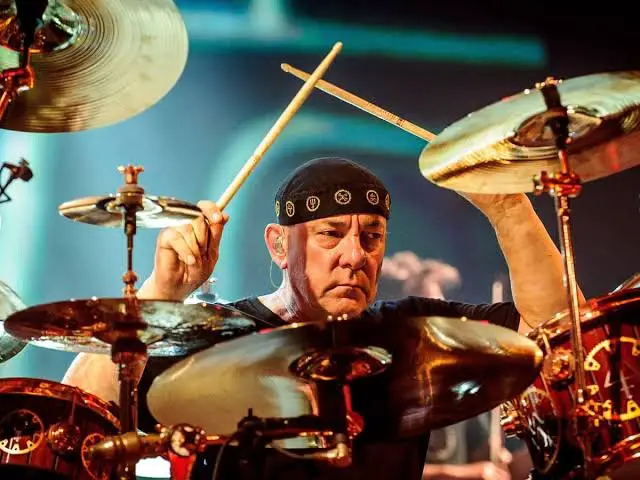
Today, January 7, 2026, marks the sixth anniversary of the passing of Neil Peart, the legendary drummer and chief lyricist of the Canadian rock band Rush. Peart died on January 7, 2020 at the age of 67 after a long and private battle with an aggressive form of brain cancer called glioblastoma. Though he is gone, his influence continues to shape the world of music and beyond.
A Life That Changed Rock Music
Neil Peart was born on September 12, 1952 in Hamilton, Ontario, Canada. He joined Rush in 1974, at a time when the band was still developing its identity. Almost immediately, his arrival changed the band’s direction forever. Peart’s drumming was not just loud or fast — it was complex, precise, and deeply musical. He blended styles from hard rock, jazz, big band, and progressive music, often in ways no one else had done before.
Fans still point to tracks like “Tom Sawyer,” “YYZ,” “La Villa Strangiato,” and “The Spirit of Radio” as shining examples of his skill. These songs aren’t just catchy — they are masterclasses in rhythm and stamina, inspiring generations of drummers to push their own limits.
But Peart wasn’t only a drummer. He was also Rush’s primary lyricist, and that role made him unique in rock history. At a time when many bands focused on love songs or party anthems, Peart wrote about philosophy, science fiction, self-reliance, and the challenges of being human. Albums like 2112, Hemispheres, Permanent Waves, and Moving Pictures were built around big ideas, encouraging listeners not just to rock out — but to think.
Triumph and Tragedy
Peart’s life wasn’t just defined by music. In the late 1990s, he suffered unimaginable personal loss when both his daughter and wife died within a year of each other. Rather than retreat completely, he chose a different path: he hit the road. His long motorcycle journeys across North America became the foundation for one of his most beloved books, Ghost Rider: Travels on the Healing Road. In it, he wrote openly about grief, healing, and rediscovering a reason to live — showing a side of himself that was reflective and deeply human.
Peart was also a lifelong learner. At the peak of his career, he studied with jazz teacher Freddie Gruber to rebuild his technique from scratch — a rare choice for someone already hailed as one of the best. It showed that even legends can grow.
Legacy and the Road Ahead
Rush retired from live performance after their R40 tour in 2015, mainly because years of intense playing had taken a toll on Peart’s body. After his death, the band went quiet — until recently. In 2026, Rush announced a reunion tour called the “Fifty Something Tour”, honoring their legacy and Peart’s contributions. Founding members Geddy Lee and Alex Lifeson will perform with acclaimed drummer Anika Nilles stepping in for Peart. The band and Peart’s family have given their blessing, framing this tour as a celebration of music that has inspired fans for decades.
Why Neil Peart Still Matters
Six years after his passing, Neil Peart’s legacy isn’t nostalgia — it’s influence. Countless drummers cite him as a major inspiration. Listeners still return to his lyrics for insight and meaning. And Rush’s music remains a testament to the idea that rock can be intelligent, emotional, powerful, and soulful all at once.
Peart didn’t seek immortality. He earned it.