
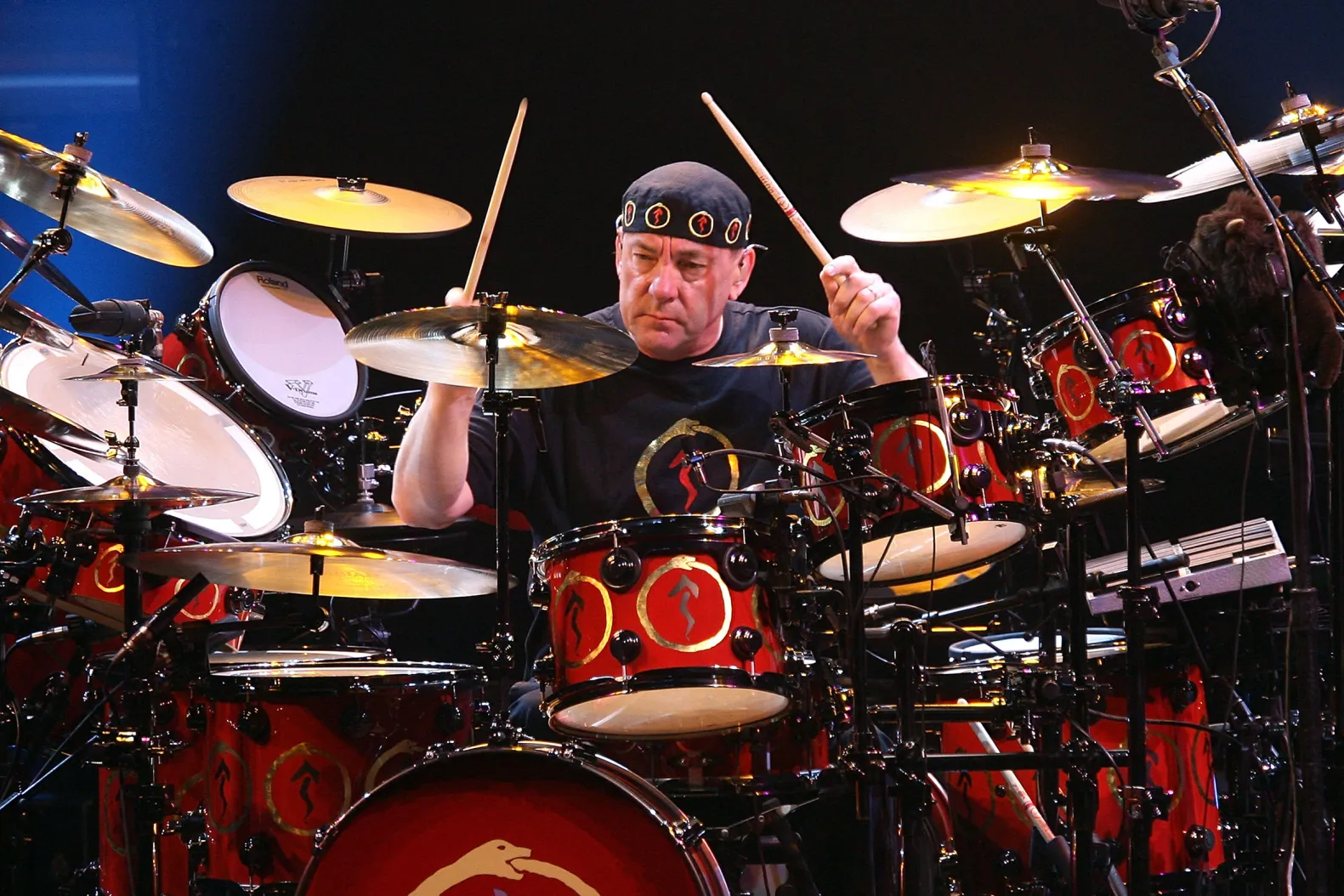
In the world of rock music, drummers are often judged by how loud, fast, or powerful they can play. Legends like John Bonham and Keith Moon set the bar high with their explosive styles. Yet somehow, Neil Peart of Rush stood apart from everyone else. His drumming was so precise and controlled that fans often joked it sounded like a machine was playing. But behind that laser-sharp accuracy was a thoughtful, humble musician who cared more about music than ego.
Unlike many musicians who chase fame or money, Neil Peart had a simple goal: to be a good musician. He believed his job was to serve the song, not steal attention from it. If the music felt right and complete, then he felt he had done his job well. That mindset shaped everything about his playing and explains why he admired such a wide range of drummers, from technical monsters to players known for restraint and feel.
One of the biggest examples of this was Ringo Starr. While many progressive rock fans focus on speed and complexity, Peart respected Ringo for the exact opposite reason. Ringo didn’t play too much. He listened closely to the band and played what the song needed. To Peart, that ability to support the music was just as impressive as any complex drum solo. Being a great drummer wasn’t about showing off — it was about making the band sound better.
Of course, Peart also loved technically skilled drummers. In the progressive rock world, players like Phil Collins and Bill Bruford stood out to him because they combined skill with taste. They could play difficult parts, but they also understood space, timing, and mood. Their drumming added texture and depth instead of overwhelming the music.
Before rock and prog, Peart’s roots were deeply connected to jazz drumming. Early in his life, he was inspired by legends like Buddy Rich and Gene Krupa. These drummers taught him discipline, control, and the mechanics of drumming. They showed him how powerful rhythm could be when paired with confidence and musical awareness. Jazz helped Peart understand that drums could be expressive, not just loud.
As music evolved, Peart continued to look forward instead of backward. One drummer who truly impressed him was Omar Hakim, known for his work in jazz fusion and with Weather Report. Hakim didn’t treat drumming like a competition. Instead, he treated it like a conversation with the other musicians. His playing was smooth, fluid, and full of feeling. Peart once said he felt an immediate connection to Hakim, not just as a drummer but as a person and artist.
Even after decades of success with Rush, Peart refused to believe he had nothing left to learn. In the 1990s, he made a bold move by studying with Freddie Gruber, a jazz drum teacher. This changed his approach completely. Peart focused more on groove, flow, and natural movement. This growth became especially noticeable on later Rush albums like Vapor Trails and Snakes & Arrows, where his playing felt more grounded and emotional.
Neil Peart’s story is not just about being great — it’s about never settling. He proved that mastery doesn’t mean stopping; it means staying curious. Whether he was inspired by jazz legends, rock icons, or modern fusion players, Peart always believed there was room to grow.
In the end, that’s why Neil Peart is remembered not just as one of the greatest drummers of all time, but as one of the most respected musicians in rock history. He listened, he learned, and he always played for the song — and that may be his greatest legacy of all. 🥁