
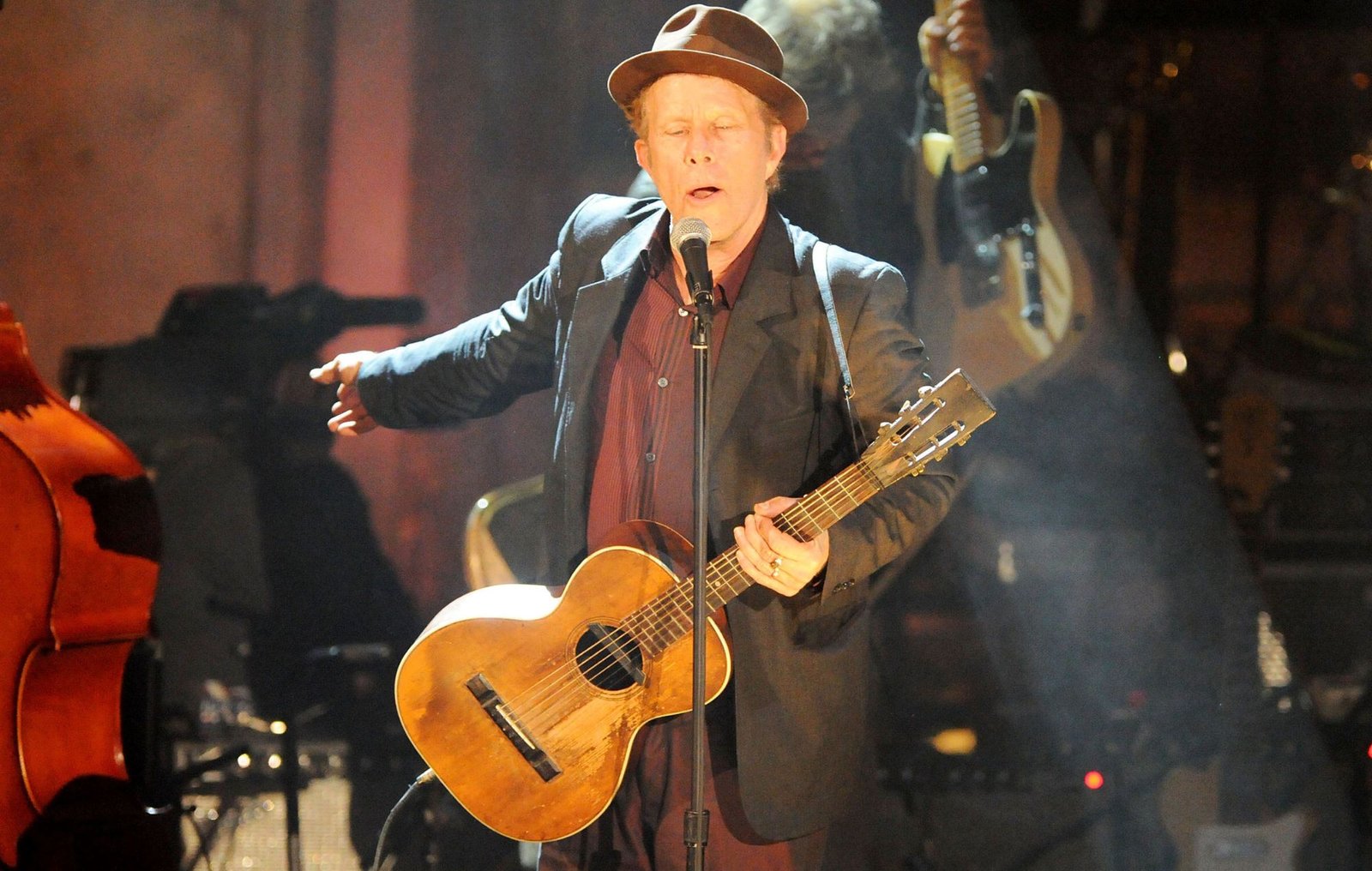
Before Tom Waits became known for his rough voice, strange characters, and junkyard poetry, he was a very different kind of artist. In the early 1970s, Waits was often seen as a lonely piano man, playing smoky barroom songs about heartbreak, late nights, and people who had nowhere else to go. His music felt intimate and worn, like a story told at 2 a.m. over a final drink.
One of the standout songs from this early period was “Ol’ ’55”, which appeared on his debut album Closing Time in 1973. On the surface, the song is about driving a car in the early morning hours. But like many Tom Waits songs, it’s really about something deeper — loneliness, reflection, and the quiet moments when life feels heavy. His version is slow, gentle, and emotional, with soft piano and a vulnerable vocal that feels personal and real.
Around the same time, The Eagles were rising quickly in the California rock scene. Glenn Frey and Don Henley had already found success with relaxed, radio-friendly songs like “Take It Easy” and “Tequila Sunrise.” While working on their 1974 album On the Border, the band decided to record their own version of “Ol’ ’55.”
The Eagles’ cover was very different from Waits’s original. They turned the song into a smooth rock track with layered harmonies and a polished sound. For many listeners, this version was their first introduction to the song. It fit perfectly with the Eagles’ image — sunny, clean, and easy to listen to on the radio.
But Tom Waits was not happy about it.
Later in interviews, Waits made it very clear that he didn’t care much for The Eagles or their music. He famously criticized the band, saying they were boring and overly safe. When speaking specifically about “Ol’ ’55,” he admitted that while it was flattering that a popular band wanted to cover one of his first songs, he felt their version missed the point. He described it as “antiseptic,” meaning it was too clean and stripped of emotion.
From Waits’s point of view, the song was never meant to be polished. His music was built around imperfections — cracked voices, crooked melodies, and stories that felt bruised and tired. “Ol’ ’55” was supposed to feel like a quiet drive after a long night, not a smooth ride down the highway with the windows down. When The Eagles added their glossy production, Waits felt the song lost the scars that made it meaningful.
The difference between the two versions says a lot about rock music in the 1970s. The Eagles represented a comfortable, radio-ready version of California rock. Tom Waits, on the other hand, lived in the shadows — writing songs about broken people, empty bars, and lives falling apart quietly. Both styles had their place, but they came from very different worlds.
Even though The Eagles became one of the biggest bands of the decade, “Ol’ ’55” was never a major part of their live shows. The song ultimately remained more connected to Tom Waits, who went on to build a legendary career doing things entirely his own way. He later worked with artists like Keith Richards and pushed his sound into darker, stranger territory.
In the end, Tom Waits didn’t write songs for stadiums or smooth harmonies. He wrote for the lonely, the restless, and the forgotten. And “Ol’ ’55,” in his eyes, was always meant to stay that way.