
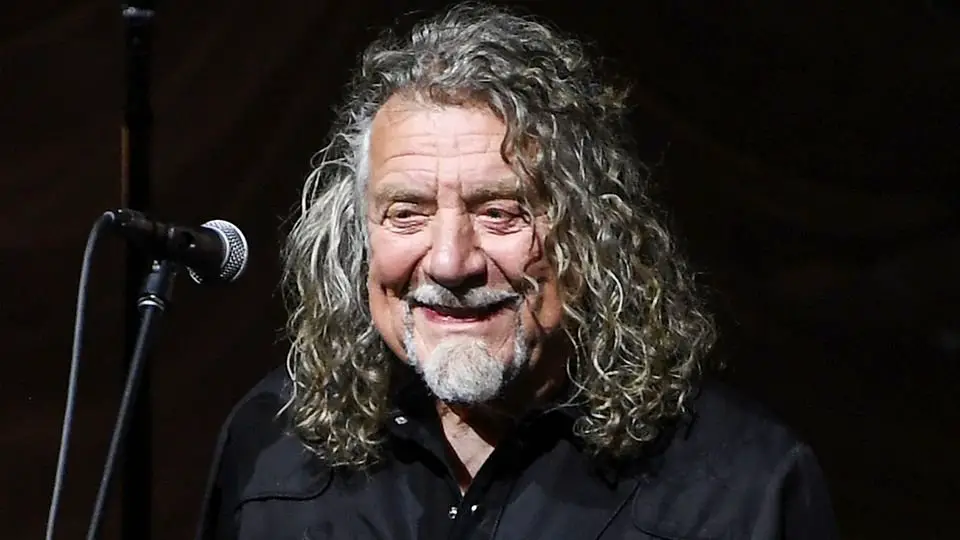
Robert Plant is best known as the legendary lead singer of Led Zeppelin, one of the most powerful rock bands of all time. When people talk about Plant, they often focus on his voice — the screaming high notes, the bluesy moans, and the raw energy that made songs like “Whole Lotta Love” unforgettable. But when you listen closely, you realize that Plant’s relationship with lyrics is very different from many other famous songwriters.
Plant has often said that he always felt more connected to how he sang rather than what he sang. In songs like “Whole Lotta Love,” the words sometimes feel loose, almost improvised. He stretches syllables, repeats phrases, and plays with sounds. Yet it never feels empty. His voice carries emotion, confidence, and intensity — so much so that the exact meaning of the words doesn’t always matter.
That doesn’t mean Plant didn’t care about lyrics. In fact, he deeply respected songwriters who were known for their words, especially in the folk music world.
Before Led Zeppelin became famous, Plant was involved in a group called Band of Joy, where he explored folk and acoustic music. This background explains why Zeppelin could suddenly switch from loud, heavy blues rock to gentle, emotional songs like “Babe I’m Gonna Leave You” or “Going to California.” Plant had always been interested in softer, more thoughtful music — he just expressed it differently.
When it came to folk influences, Bob Dylan was impossible to ignore. Dylan changed songwriting forever by turning songs into stories filled with symbolism, social commentary, and emotion. Plant admired Dylan’s ability to write from different perspectives and to make lyrics feel important and meaningful. However, Plant also admitted that he didn’t think like Dylan. Where Dylan’s lyrics bend and twist with ideas, Plant’s writing usually follows a more direct emotional path.
Another major influence was Leonard Cohen, a songwriter known for deep, poetic lyrics about love, heartbreak, faith, and personal struggles. Cohen didn’t write simple love songs — he wrote about relationships falling apart, people facing their inner demons, and the painful beauty of being human. Songs like “Bird on the Wire” and “Suzanne” felt honest and vulnerable in a way that few rock songs did.
Plant openly admitted that Cohen’s lyrics amazed him. He once said that after hearing “Bird on the Wire,” he wondered how anyone could even try to compete with that level of writing. Cohen’s words were pure poetry, and Plant knew they came from a different artistic world than Zeppelin’s blues-driven rock.
Still, Plant never believed his own work was inferior. Zeppelin songs like “The Lemon Song” served a different purpose — they were meant for sweaty clubs, loud speakers, and musical jams. Meanwhile, tracks like “No Quarter” and “Going to California” show that Plant could be mysterious, emotional, and almost spiritual with his lyrics when he wanted to be.
In the end, Robert Plant and Leonard Cohen represent two different kinds of genius. Cohen was a poet who used music as his canvas. Plant was a vocalist who used words as part of a much larger emotional performance. Both left a permanent mark on music history — just in very different ways.
And sometimes, as Robert Plant proved, a voice can say just as much as words ever could. 🎶