
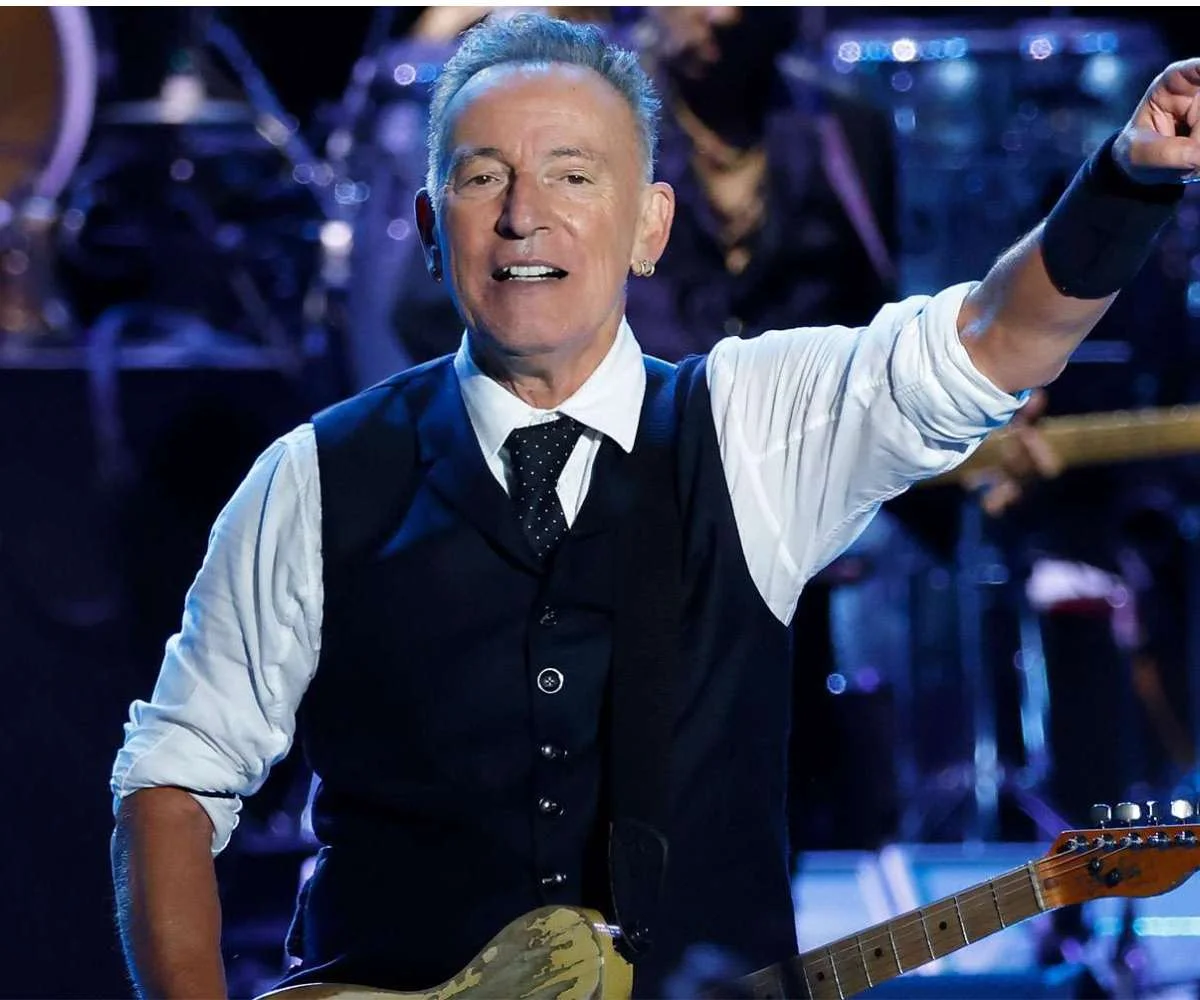
Every now and then, music creates artists who can do more than one thing well. Some musicians are great storytellers. Some are great instrumentalists. But once in a while, an artist comes along who blends both roles naturally. Bruce Springsteen is one of those rare artists.
Bruce Springsteen is best known as a songwriter who speaks for ordinary people. His songs are filled with stories about working-class life, dreams, struggles, love, and hope. When you hear a Springsteen song, it often feels honest and real, like he’s telling a story straight from the heart. With his scruffy look, raw energy, and emotional performances, he feels less like a distant rock star and more like someone you could meet down the street.
From the very beginning of his career, there has been a strong soul in Springsteen’s music. His lyrics grab your attention right away, pulling you into the world he creates. But if you listen closely, you’ll notice something important: the guitar plays a huge role in telling those stories.
Springsteen’s guitar isn’t just background noise. It is his companion. Even without lyrics, the emotion in his music can be felt through the way he plays. He has never been known as a flashy or technical guitar virtuoso. Instead, he is a “feel” player. His style focuses on rhythm, timing, and emotion—always serving the song rather than showing off. This is perfectly summed up in the famous line from “Thunder Road” when he sings, “I’ve got this guitar, and I learned how to make it talk.”
Given his songwriting style, many people assume Springsteen was inspired mainly by folk and blues artists like Bob Dylan or Muddy Waters. And while those musicians did influence him, one unexpected song played a massive role in shaping his guitar journey.
That song was “It’s All Over Now,” performed by The Rolling Stones. The Stones’ version was released early in their career, during a time when they were still proving themselves as a band. The song wasn’t about attitude or image—it was about tight playing and raw energy. That was exactly what caught Springsteen’s attention.
At the time, Springsteen had just been thrown out of his first band. Frustrated and angry, he went home feeling defeated. But instead of giving up, he made a decision. That night, he put on the Rolling Stones record and told himself, “Alright, I’m going to be a lead guitar player.”
There was something about Keith Richards’ guitar solo in that song that felt achievable. It wasn’t overly complex or fancy—it was simple, emotional, and powerful. Springsteen played the record over and over again, sitting up all night in his room, carefully listening and practicing until he could play a decent version of the solo himself. It became the first guitar solo he ever learned.
That moment mattered more than he probably realized at the time. It showed him that he didn’t need to be perfect—he just needed passion and commitment. That same mindset followed him throughout his career.
It’s also no coincidence that Springsteen became closely associated with the Fender Telecaster, the same guitar model Keith Richards famously used. In a way, that Rolling Stones song passed the torch to Springsteen, inspiring him to take rock music forward in his own honest and heartfelt way.
Bruce Springsteen’s story reminds us that sometimes, all it takes is one song, one moment, and one decision to change everything.