
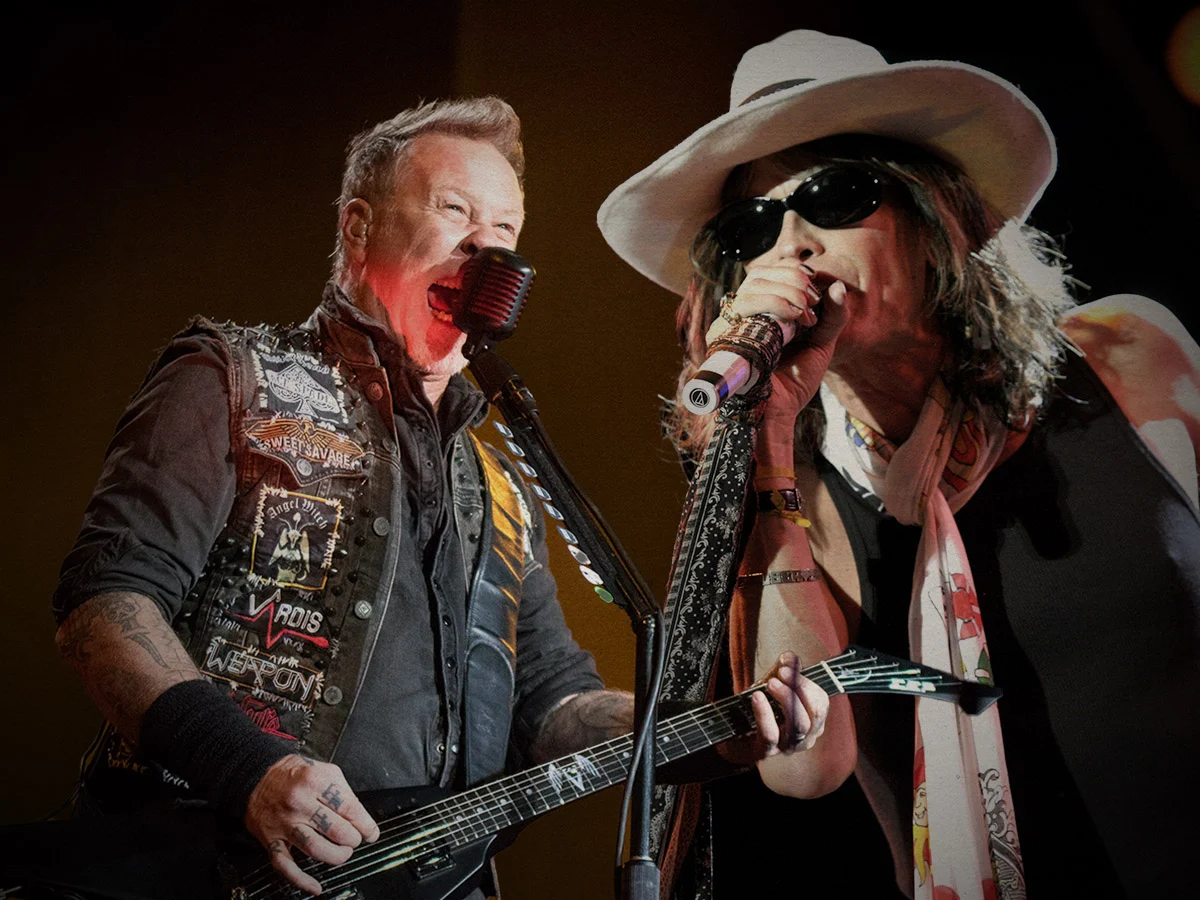
Metallica is one of the biggest metal bands in the world. For more than four decades, they have filled stadiums, sold millions of albums, and introduced heavy metal to people who might never have listened to the genre before. Because of that, they are often praised as one of the greatest metal acts of all time. But their story is not perfect. Alongside their huge successes, there are moments in their career that still confuse fans and critics. One thing, however, has always been clear: Metallica were music fans first, and their favorite bands shaped their sound in many obvious ways.
From the very beginning, Metallica were deeply influenced by the records they loved. James Hetfield and Lars Ulrich bonded over music before anything else. They spent hours listening to albums, trading tapes, and talking about bands that changed their lives. Black Sabbath was a huge influence, especially in terms of dark themes and heavy riffs. But even more important in the early days was the New Wave of British Heavy Metal. Bands like Diamond Head, Angel Witch, Saxon, and Iron Maiden helped define the fast, aggressive style that Metallica would later make famous.
Classic rock also played a major role. Deep Purple and Led Zeppelin were not just old legends to Metallica; they were blueprints for how powerful a rock band could sound. These influences came together on Metallica’s early albums, where speed, melody, and heaviness all mixed into something new.
As Metallica began writing their own music, they didn’t just hide their inspirations — they often built directly on them. One famous example is “The Four Horsemen” from their debut album Kill ’Em All. The breakdown section of the song clearly echoes the main riff from Lynyrd Skynyrd’s “Sweet Home Alabama.” It started almost as a joke during early rehearsals, but it stayed in the final version because it worked. Instead of sounding like Southern rock, Metallica turned it into something darker and more aggressive.
Another example appears on Master of Puppets, often considered Metallica’s greatest album. The song “Welcome Home (Sanitarium)” has a haunting, slow-building feel that was inspired by older metal ballads. Some fans have noticed similarities between its chord progression and songs by lesser-known British metal bands from the late 1970s. Whether intentional or not, it shows how deeply Metallica absorbed the music they listened to.
Years later, Metallica surprised everyone by working with the San Francisco Symphony Orchestra on the album S&M. This project showed a different side of the band, combining heavy metal with orchestral arrangements. One of the standout tracks was a brand-new song called “No Leaf Clover.” The song sounds massive and dramatic, especially with the orchestra backing it. Interestingly, the main riff has a groove that reminds many listeners of classic Aerosmith. James Hetfield has never hidden his love for Aerosmith, and the similarity feels more like a respectful nod than a direct copy.
This raises an important question: where is the line between influence and stealing? In music, chords and basic rhythms cannot be copyrighted. What matters is how artists use them. Metallica took familiar ideas and reshaped them into something that fit their own sound. Even when similarities are obvious, the final result usually feels completely different.
In the end, Metallica’s career proves that great bands are built on the music they love. Their songs are filled with echoes of their heroes, from British metal to classic American rock. Sometimes those echoes are subtle, and sometimes they are impossible to miss. But rather than hurting their legacy, these influences help explain it. Metallica didn’t just copy their idols — they learned from them and used those lessons to create a sound that changed metal forever.