
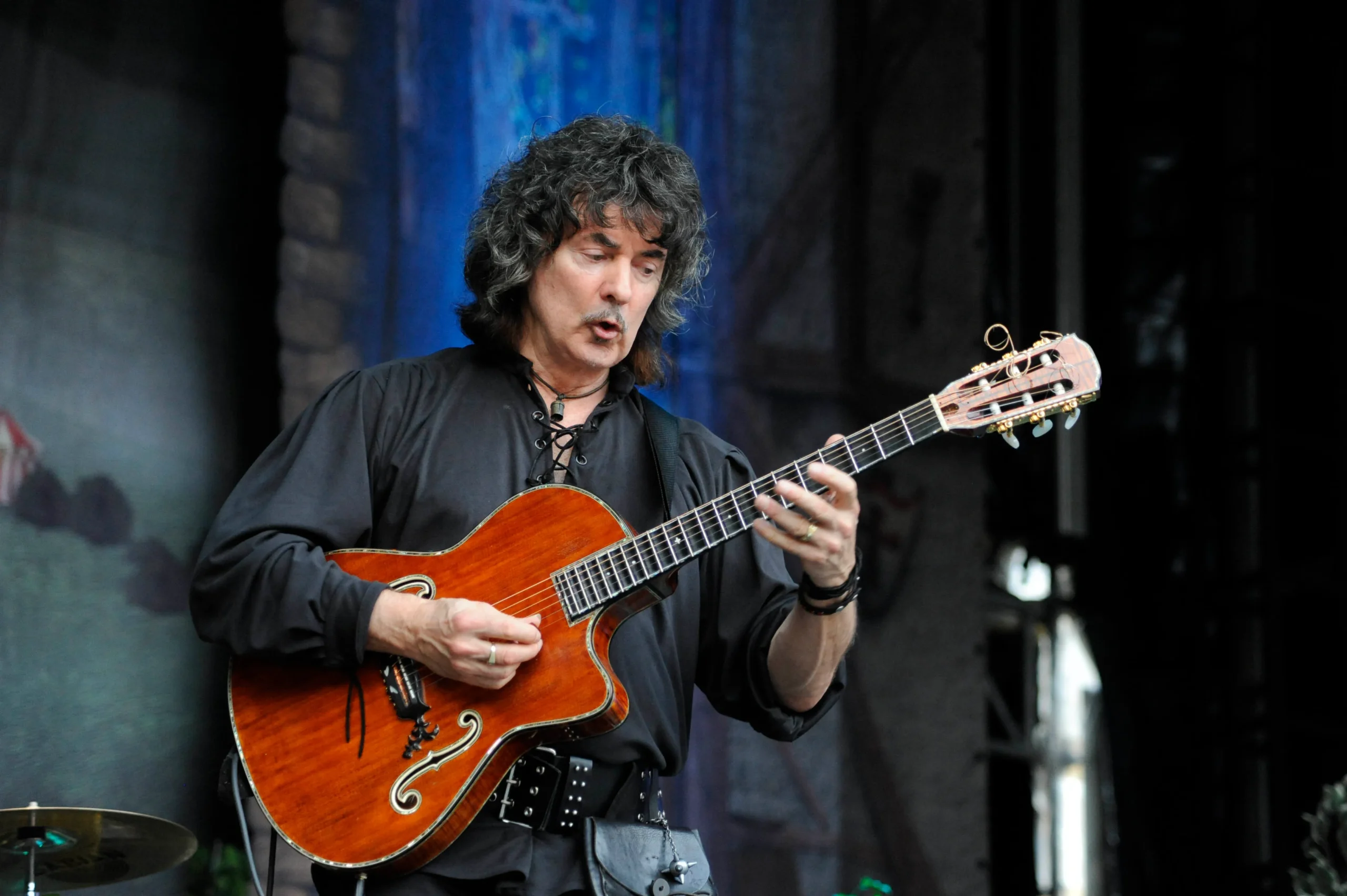
If the picture above doesn’t make you feel the magic of a Fender Stratocaster in the right hands, then it might be time to revisit one of rock’s most intriguing and influential guitarists: Ritchie Blackmore.
Sure — most people know him for “Smoke on the Water”, and that’s understandable. That simple, unforgettable riff changed the sound of rock music and is probably one of the most copied guitar parts ever. But Blackmore’s artistry goes way beyond that one moment. In his playing, you can hear a mix of blues, classical influences, jazz phrasing, and a unique touch that made him stand out from his generation. Many guitar fans overlook him when debating the greatest players of all time, but his impact deserves more credit.
Blackmore himself once gave an honest, sometimes controversial list of his favourite guitarists — and in doing so, revealed a lot about how his own style was shaped. Let’s unpack what he said and what it means for fans and guitar lovers everywhere.
Ritchie Blackmore on Influences: A 1991 Retrospective
In a now-classic 1991 interview with Guitar World, Blackmore talked candidly about some of the players who influenced him, and others he didn’t think lived up to the hype.
Jimi Hendrix — Brilliant Attitude, Unusual Technique
When asked whether Jimi Hendrix influenced his playing, Blackmore offered a surprising take. He said he was impressed by Hendrix’s attitude and performance style, but added that Hendrix wasn’t “a great player” in a traditional sense. Blackmore admired Hendrix’s charisma and the way he carried himself onstage, even if he didn’t think Hendrix was technically superior.
This comment might raise eyebrows — Hendrix is often number one on most guitarists’ favourite lists. But for Blackmore, the attitude and performance flair were just as important as the notes themselves.
Wes Montgomery and The Allman Brothers — A Deeper Musical Inspiration
Blackmore didn’t stop at rock guitarists. He said he was more into jazz great Wes Montgomery and also enjoyed the blues-rock of The Allman Brothers Band. Both played deeply expressive music with complex phrasing — something Blackmore admired and sought to bring into his own playing.
This reveals a lot about how Blackmore approached the guitar. He wasn’t chasing pure speed or flashy solos. Instead, he was listening for emotion, feel, and melody — elements that helped define his solos in Deep Purple and beyond.
Controversial Opinions on Stevie Ray Vaughan
Blackmore didn’t pull punches when talking about other big names. On Stevie Ray Vaughan, he said that while Vaughan’s death was tragic, he didn’t think Vaughan was as “brilliant” a player as many people claimed. Instead, Blackmore pointed to Buddy Guy, Albert Collins, Peter Green, Johnny Winter and Mick Taylor as blues players who were often underrated or overshadowed by Vaughan’s intensity.
Whether you agree or not, this gives valuable insight into his priorities: technical skill and musical subtlety mattered to him, even more than fiery emotional playing.
Eric Clapton and Vibrato: Styles Explained
Blackmore also talked about how he developed his finger vibrato — a signature part of his sound. He credited learning from watching Eric Clapton, although with a bit of a humorous anecdote about asking Clapton about his style. That moment marked a turning point in Blackmore’s technique, helping him refine his voice on the instrument.
thehighwaystar.com
But Who Was His Favourite Guitarist? Jeff Beck
While the 1991 interview focused on a handful of players, elsewhere Blackmore has said his favourite guitarist of all time was Jeff Beck. He praised Beck’s natural playing, his control over sustain and dynamics, and how effortless his technique seemed — even
This makes sense: Beck’s style wasn’t about speed or flash alone — it was about musicality, subtlety, and expression — qualities Blackmore admired deeply.
Why This Matters
So what does all this tell us? Ritchie Blackmore wasn’t just another classic rock guitarist. He was a thoughtful musician who listened to jazz, blues, and rock in equal measure, and then distilled all of that into something uniquely his own.
He wasn’t afraid to speak his mind on other players — sometimes to controversial effect — but his comments reveal a deep appreciation for musicianship, innovation, and feel over fame or popularity.